Questions
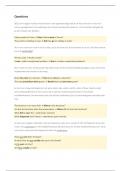
[B1] Een vraagzin maak je meestal door in de tegenwoordige tijd do of does vooraan in de zin te
zetten, gevolgd door het onderwerp en het hele werkwoord zonder to. In de verleden tijd gebruik
je did in plaats van do/does.
Fatima works at Tesco → Does Fatima work at Tesco?
They went on holiday in June → Did they go on holiday in June?
Als er een vorm van to be in de zin staat, zet je de vorm van to be vooraan in de zin. Dit heet inversie
(zie ook word order).
She is a cook → Is she a cook?
It was a rather complicated problem → Was it a rather complicated problem?
Als er twee of meer werkwoorden bij elkaar staan (in het werkwoordelijk gezegde), zet je het eerste
hulpwerkwoord vooraan in de vraag.
Brian has come to a decision → Has Brian come to a decision?
That trip would have been great! → Would that trip have been great?
Je kunt een vraag ook beginnen met who, what, why, where, which, when of how. Daarna volgt
eerst do/does/did of een vorm van to be en dan het onderwerp (inversie) en eventuele
hoofdwerkwoord. Het wh-woord kan ook zelf het onderwerp zijn. De woordvolgorde verandert dan
niet.
The brochure is on your desk → Where is the brochure?
Jim lost the brochure after the presentation → When did Jim lose the brochure?
What did he say? (he = onderwerp; inversie)
What happened next? (what = onderwerp; geen inversie)
Je kunt een vraagzin uitbreiden met een bijwoord, zoals ever, usually of still. Dit bijwoord zet je dan
tussen het onderwerp en het hoofdwerkwoord, behalve bij to be. Als het hoofdwerkwoord een vorm
van to be is, dan komt het bijwoord achter het onderwerp.
Have you ever been to Spain?
At what time do you usually take your lunch break?
Is she ever on time?
Are they usually so late?
[B1] Een vraagzin maak je meestal door in de tegenwoordige tijd do of does vooraan in de zin te
zetten, gevolgd door het onderwerp en het hele werkwoord zonder to. In de verleden tijd gebruik
je did in plaats van do/does.
Fatima works at Tesco → Does Fatima work at Tesco?
They went on holiday in June → Did they go on holiday in June?
Als er een vorm van to be in de zin staat, zet je de vorm van to be vooraan in de zin. Dit heet inversie
(zie ook word order).
She is a cook → Is she a cook?
It was a rather complicated problem → Was it a rather complicated problem?
Als er twee of meer werkwoorden bij elkaar staan (in het werkwoordelijk gezegde), zet je het eerste
hulpwerkwoord vooraan in de vraag.
Brian has come to a decision → Has Brian come to a decision?
That trip would have been great! → Would that trip have been great?
Je kunt een vraag ook beginnen met who, what, why, where, which, when of how. Daarna volgt
eerst do/does/did of een vorm van to be en dan het onderwerp (inversie) en eventuele
hoofdwerkwoord. Het wh-woord kan ook zelf het onderwerp zijn. De woordvolgorde verandert dan
niet.
The brochure is on your desk → Where is the brochure?
Jim lost the brochure after the presentation → When did Jim lose the brochure?
What did he say? (he = onderwerp; inversie)
What happened next? (what = onderwerp; geen inversie)
Je kunt een vraagzin uitbreiden met een bijwoord, zoals ever, usually of still. Dit bijwoord zet je dan
tussen het onderwerp en het hoofdwerkwoord, behalve bij to be. Als het hoofdwerkwoord een vorm
van to be is, dan komt het bijwoord achter het onderwerp.
Have you ever been to Spain?
At what time do you usually take your lunch break?
Is she ever on time?
Are they usually so late?