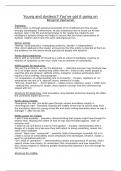
Young and dyslexic? You’ve got it going on
Benjamin Zephaniah
Summary:
Author takes us through personal anecdotes of his childhood and how he was
wrongly stereotyped. Furthermore, he also expresses how he found out he was
dyslexic later in his life and demonstrates to the reader the creativity and
intelligence dyslexia brings and hopes to ensure that the future generations of
dyslexic children don’t have the same upbringing as him.
Genre: article
Themes: racial prejudice, challenging authority, identity + independence
Title: direct address to the reader, announcing that this article is directed at them as
the audience for this article would typically be people with dyslexia
Points about beginning:
Starts with an anecdote of himself as a child at school immediately creating an
element of sympathy as the noun ‘child’ has an element of vulnerability.
WOW quotes for beginning:
‘We are the architects, we are the designers.’ – collective pronoun may illustrate how
he is no longer alone, representing others like him – links to title, wants people to
read this who are dyslexic, definite article, metaphor (creative professions don’t
require a lot of writing), first paragraph
‘no compassion, no understanding and no humanity’ – tricolon, repetition of ‘no’
emphasises the lack of it, abstract nouns, element of cruelty
“Shut up, stupid boy”. – direct speech – creates voices, sibilance, angry + bitter tone
– spitting like, shocking for reader, direct speech conveys how this comment has
stayed with him
Structure for beginning: child anecdotes, long detailed sentences showing the effect
the comments made had on him
Points about middle:
Throughout the text, the writer goes through various anecdotes roughly in
chronological order. Therefore, towards the middle of the text he moves away from
the anecdotes about his young school life and starts telling anecdotes when he was a
teenager + after he has left.
WOW quotes for middle:
‘I didn’t stab anybody’ – prejudice, demonstrating that people might have thought to
believe that, showing the extent of how he was discriminated against, ‘stab’ an
extreme verb
‘I stole his car and drove it into his front garden’ – honesty, intertextuality with a
danger of a single story because they both admit to doing something, makes him
seem more relatable
‘prison’ ‘black man’ ‘wrong side’ – semantic field of stereotype, asyndetic list is to
create a sense of vulnerability and to emphasise the stereotype, emotive, makes u
want to sympathise with him
“Do I need an operation?” – demonstrating naivety and ignorance of society, direct
speech shows how clearly, he remembers this conversation and how impactful it
was, shows progress is made by people knowing what dyslexia is but not enough for
him to know
Structure for middle:
Benjamin Zephaniah
Summary:
Author takes us through personal anecdotes of his childhood and how he was
wrongly stereotyped. Furthermore, he also expresses how he found out he was
dyslexic later in his life and demonstrates to the reader the creativity and
intelligence dyslexia brings and hopes to ensure that the future generations of
dyslexic children don’t have the same upbringing as him.
Genre: article
Themes: racial prejudice, challenging authority, identity + independence
Title: direct address to the reader, announcing that this article is directed at them as
the audience for this article would typically be people with dyslexia
Points about beginning:
Starts with an anecdote of himself as a child at school immediately creating an
element of sympathy as the noun ‘child’ has an element of vulnerability.
WOW quotes for beginning:
‘We are the architects, we are the designers.’ – collective pronoun may illustrate how
he is no longer alone, representing others like him – links to title, wants people to
read this who are dyslexic, definite article, metaphor (creative professions don’t
require a lot of writing), first paragraph
‘no compassion, no understanding and no humanity’ – tricolon, repetition of ‘no’
emphasises the lack of it, abstract nouns, element of cruelty
“Shut up, stupid boy”. – direct speech – creates voices, sibilance, angry + bitter tone
– spitting like, shocking for reader, direct speech conveys how this comment has
stayed with him
Structure for beginning: child anecdotes, long detailed sentences showing the effect
the comments made had on him
Points about middle:
Throughout the text, the writer goes through various anecdotes roughly in
chronological order. Therefore, towards the middle of the text he moves away from
the anecdotes about his young school life and starts telling anecdotes when he was a
teenager + after he has left.
WOW quotes for middle:
‘I didn’t stab anybody’ – prejudice, demonstrating that people might have thought to
believe that, showing the extent of how he was discriminated against, ‘stab’ an
extreme verb
‘I stole his car and drove it into his front garden’ – honesty, intertextuality with a
danger of a single story because they both admit to doing something, makes him
seem more relatable
‘prison’ ‘black man’ ‘wrong side’ – semantic field of stereotype, asyndetic list is to
create a sense of vulnerability and to emphasise the stereotype, emotive, makes u
want to sympathise with him
“Do I need an operation?” – demonstrating naivety and ignorance of society, direct
speech shows how clearly, he remembers this conversation and how impactful it
was, shows progress is made by people knowing what dyslexia is but not enough for
him to know
Structure for middle: