The origins of the Cold War, 1941-58
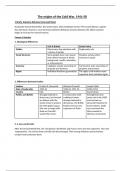
1) Early tensions between East and West
During the Second World War, the Soviet Union, USA and Britain formed ‘The Grand Alliance’ against
Nazi Germany. However, once Germany had been defeated, tensions between the allied countries
began to increase for several reasons.
Causes of tension
1. Ideological differences
USA & Britain Soviet Union
Politics Democracy: free elections with Single-party rule
a choice of parties
Social Structure Some people have more power Classless society where
than others because of family, everyone is equal
background, wealth, education,
or achievements
Economy Capitalist: private ownership of Communist: state ownership of
property and business property and business
Rights Individual freedoms guaranteed The rights of all workers more
important than individual rights
2. Differences between leaders
Leaders Frankin D. Roosevelt Winston Churchill Joseph Stalin
Date of leadership 1933-45 1940-45, 1951-55 1920s-1953
Country USA Britain Soviet Union
Politics and Beliefs Strongly believed in A conservative with Strengthened one-
democracy, but formed traditional values. party rule in the USSR
an alliance with the Strongly believed in and cut back on
Soviet Union to protect democracy, the British personal freedoms for
the USA against Japan. Empire and was very Soviet citizens. Stalin
Was not as tough with suspicious of Stalin. was convinced the
Stalin as Churchill West wanted to
wanted him to be. destroy communism.
3. A new world order
After the Second World War, the ‘old powers’ like Britain and France were now less important. Two new
‘superpowers’, the Soviet Union and the USA had emerged. Their strong militaries and economies
created rivalry between them.
,4. The Grand Alliance
Although Britain, the USA, and the Soviet Union united against Germany and Japan in the Second World
War, there was no real change in how they viewed each other. The USA and Britain were still suspicious
of the communist Soviet Union, whilst the USSR distrusted the capitalist world.
5. The Tehran, Yalta and Potsdam conferences
Conference Tehran Yalta Potsdam
Date November 1943 February 1945 July-August 1945
Leaders Roosevelt, Churchill, Roosevelt, Churchill, Truman, Attlee, Stalin
Stalin Stalin
Outcomes - The USA and Britain - Germany to be split - Germany split into
would attack Germany into four zones, each four zones, but the
in Western Europe, controlled by a economy would be run
helping the Soviets different power: the as a whole
fighting in the East. USA, Britain, France, - Berlin split into four
- Stalin would declare and the Soviet Union. zones controlled by
war against Japan and - Half of Germany’s $20 different countries,
help the USA to defeat billion reparations even though it was
them once the war in would go to the Soviet within the Soviet zone
Europe was over. Union; the Nazi Party of Germany
- Agreed that the aim would be banned, and - Each administering
of the war was war criminals country would take its
Germany’s prosecuted. reparations from the
unconditional - The United Nations zone of Germany it
surrender, and that it was set up controlled. As the
should be kept weak - The Soviet Union Soviet Union controlled
after the war. joined the war against the poorest zone, it
- Poland could take Japan could take a quarter of
land from Germany, - Stalin agreed the the industrial
and the USSR could future governments of equipment from other
keep land it had taken Eastern Europe would zones.
from Poland in 1939. be decided by free - Truman objected to
- An international elections Soviet control over the
organisation should be - Polish borders were countries of Eastern
set up to settle agreed, and free Europe and the
disputes through elections were arrangements for
discussion and guaranteed. Stalin Poland agreed at Yalta.
negotiation (later expected this to result
became the United in a pro-communist
Nations) government, whereas
Britain supported the
London Poles.
6. Developments in 1945-46
, The atom bomb:
The USA developed and used atom bombs to win the war against Japan. The USA dropped an atom
bomb over the Japanese city of Hiroshima on 6th August 1945 and over Nagasaki on 9th August 1945.
Around 120,000 Japanese civilians were killed altogether.
How did this increase tensions? How did this decrease tensions?
The Soviet Union became even more determined Both sides were much less willing to go to war, as
to spread its influence in order to create a buffer the risks became much higher and many more
zone between itself and Western Europe. would be killed.
The Soviet Union first successfully tested an atom
bomb on 29th August 1949. By 1964, Britain,
France, and China also had the atom bomb.
Both sides now had weapons capable of killing
millions
The Kennan Long telegram and the Novikov telegram:
These two reports from the ambassadors in the Soviet and American embassies show the attitudes
towards each other’s countries.
George Kennan’s Long Telegram to Washington Nikolai Novikov’s telegram to Moscow
- Reported that attitudes in Moscow were hostile - Believed the the US wanted to use their strong
towards the USA. military to dominate the world.
- Stalin held a firm belief in the destruction of - Told Moscow that the Americans no longer
capitalism. wanted to cooperate with the Soviets.
- Kennan believed that the Soviets would back
down if faced with tough resistance from the
West. This played a key role in American foreign
policy in the following years.
Churchill’s ‘Iron Curtain’ speech:
In March 1946, on a visit to the USA, Churchill made a speech criticising the Soviet Union as a threat to
world peace. Stalin took this to be a reflection of American beliefs, which encouraged the USSR to
strengthen its forces and increase anti-Western propaganda.
The creation of Soviet satellite states in Eastern Europe:
The countries that the Soviet Union freed from Nazi occupation between 1944 and 1945 became
satellite states under Soviet control after the end of the war. Stalin was reluctant to give up control of
these countries as they were a useful buffer zone between the Soviet Union and Germany. Truman saw
this as evidence that the Soviet Union wanted to spread communism worldwide.
1) Early tensions between East and West
During the Second World War, the Soviet Union, USA and Britain formed ‘The Grand Alliance’ against
Nazi Germany. However, once Germany had been defeated, tensions between the allied countries
began to increase for several reasons.
Causes of tension
1. Ideological differences
USA & Britain Soviet Union
Politics Democracy: free elections with Single-party rule
a choice of parties
Social Structure Some people have more power Classless society where
than others because of family, everyone is equal
background, wealth, education,
or achievements
Economy Capitalist: private ownership of Communist: state ownership of
property and business property and business
Rights Individual freedoms guaranteed The rights of all workers more
important than individual rights
2. Differences between leaders
Leaders Frankin D. Roosevelt Winston Churchill Joseph Stalin
Date of leadership 1933-45 1940-45, 1951-55 1920s-1953
Country USA Britain Soviet Union
Politics and Beliefs Strongly believed in A conservative with Strengthened one-
democracy, but formed traditional values. party rule in the USSR
an alliance with the Strongly believed in and cut back on
Soviet Union to protect democracy, the British personal freedoms for
the USA against Japan. Empire and was very Soviet citizens. Stalin
Was not as tough with suspicious of Stalin. was convinced the
Stalin as Churchill West wanted to
wanted him to be. destroy communism.
3. A new world order
After the Second World War, the ‘old powers’ like Britain and France were now less important. Two new
‘superpowers’, the Soviet Union and the USA had emerged. Their strong militaries and economies
created rivalry between them.
,4. The Grand Alliance
Although Britain, the USA, and the Soviet Union united against Germany and Japan in the Second World
War, there was no real change in how they viewed each other. The USA and Britain were still suspicious
of the communist Soviet Union, whilst the USSR distrusted the capitalist world.
5. The Tehran, Yalta and Potsdam conferences
Conference Tehran Yalta Potsdam
Date November 1943 February 1945 July-August 1945
Leaders Roosevelt, Churchill, Roosevelt, Churchill, Truman, Attlee, Stalin
Stalin Stalin
Outcomes - The USA and Britain - Germany to be split - Germany split into
would attack Germany into four zones, each four zones, but the
in Western Europe, controlled by a economy would be run
helping the Soviets different power: the as a whole
fighting in the East. USA, Britain, France, - Berlin split into four
- Stalin would declare and the Soviet Union. zones controlled by
war against Japan and - Half of Germany’s $20 different countries,
help the USA to defeat billion reparations even though it was
them once the war in would go to the Soviet within the Soviet zone
Europe was over. Union; the Nazi Party of Germany
- Agreed that the aim would be banned, and - Each administering
of the war was war criminals country would take its
Germany’s prosecuted. reparations from the
unconditional - The United Nations zone of Germany it
surrender, and that it was set up controlled. As the
should be kept weak - The Soviet Union Soviet Union controlled
after the war. joined the war against the poorest zone, it
- Poland could take Japan could take a quarter of
land from Germany, - Stalin agreed the the industrial
and the USSR could future governments of equipment from other
keep land it had taken Eastern Europe would zones.
from Poland in 1939. be decided by free - Truman objected to
- An international elections Soviet control over the
organisation should be - Polish borders were countries of Eastern
set up to settle agreed, and free Europe and the
disputes through elections were arrangements for
discussion and guaranteed. Stalin Poland agreed at Yalta.
negotiation (later expected this to result
became the United in a pro-communist
Nations) government, whereas
Britain supported the
London Poles.
6. Developments in 1945-46
, The atom bomb:
The USA developed and used atom bombs to win the war against Japan. The USA dropped an atom
bomb over the Japanese city of Hiroshima on 6th August 1945 and over Nagasaki on 9th August 1945.
Around 120,000 Japanese civilians were killed altogether.
How did this increase tensions? How did this decrease tensions?
The Soviet Union became even more determined Both sides were much less willing to go to war, as
to spread its influence in order to create a buffer the risks became much higher and many more
zone between itself and Western Europe. would be killed.
The Soviet Union first successfully tested an atom
bomb on 29th August 1949. By 1964, Britain,
France, and China also had the atom bomb.
Both sides now had weapons capable of killing
millions
The Kennan Long telegram and the Novikov telegram:
These two reports from the ambassadors in the Soviet and American embassies show the attitudes
towards each other’s countries.
George Kennan’s Long Telegram to Washington Nikolai Novikov’s telegram to Moscow
- Reported that attitudes in Moscow were hostile - Believed the the US wanted to use their strong
towards the USA. military to dominate the world.
- Stalin held a firm belief in the destruction of - Told Moscow that the Americans no longer
capitalism. wanted to cooperate with the Soviets.
- Kennan believed that the Soviets would back
down if faced with tough resistance from the
West. This played a key role in American foreign
policy in the following years.
Churchill’s ‘Iron Curtain’ speech:
In March 1946, on a visit to the USA, Churchill made a speech criticising the Soviet Union as a threat to
world peace. Stalin took this to be a reflection of American beliefs, which encouraged the USSR to
strengthen its forces and increase anti-Western propaganda.
The creation of Soviet satellite states in Eastern Europe:
The countries that the Soviet Union freed from Nazi occupation between 1944 and 1945 became
satellite states under Soviet control after the end of the war. Stalin was reluctant to give up control of
these countries as they were a useful buffer zone between the Soviet Union and Germany. Truman saw
this as evidence that the Soviet Union wanted to spread communism worldwide.