Client Acceptance/Client Continuation
Obtaining audit engagements
Advertising, publicity and obtaining professional work
Members:
Should not obtain or seek work in an unprofessional manner
Can advertise, but should have regard to relevant advertising codes and standards
Should not make disparaging references to or comparisons with the work of others
Audit fee
It is estimated according to charge out rates and work planned
Lowballing is offering audit services at less than the market rate; undercutting others in a tender
It can be an independence threat as such a fee is less than the work is worth
However, audit does have a fluctuating market price and firms can reduce fees
Steps Before Accepting an Audit Client
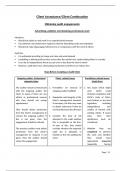
Outgoing auditor- Professional Client- related issues Practitioner-related issues
etiquette letter (Audit firm)
The auditor should communicate 1. Formalities (of removal of 1. Any issues which might
with the outgoing auditor the outgoing auditor fulfilled) arise which could
client to assess if there are any threaten compliance with
ethical or professional reasons 2. Reputation and integrity of the ACCA’s Code of Ethics
why they should not accept client’s management assessed- and Conduct or any local
appointment. If necessary, the firm may want legislation, including
to obtain references if they do independence and
They should obtain permission not formally know the directors conflict of interest with
from the client’s management to existing clients. If issues
contact the outgoing auditor; if 3. Consider the level of risk arise, then their
this is not given, then the attached to the audit whether significance must be
engagement should be refused. this is acceptable to the firm. considered.
As part of this, they should
The previous auditor must obtain consider whether the expected 2. Whether they are
permission from the client’s audit fee is adequate in competent to perform
management to respond; if not relation to the risk auditing the the work and whether
given, then the auditor should client they would have
refuse the engagement. appropriate resources
(especially human
Page | 33
, Client screening resource and time!)
The purpose of client screening available, as well as any
procedures is to determine specialist skills or
whether the prospective client is knowledge required for
suitable for the firm. the audit
The firm should evaluate the
potential risk to the firm of
acceptance.
When a client is deemed to
represent a high audit risk to the
firm, the firm should carefully
consider the implications arising
should it fail in meeting its
objective of giving an accurate
audit opinion. If the firm is not
confident that the benefit to be
derived from accepting the
appointment outweighs the
potential risks (including financial
and reputational risk of being
sued), then the firm should decline
the appointment.
Indicators of high-risk clients
include:
Poor performances, lack of finance,
odd accounting, unskilled finance
director, significant related party or
unusual transactions
Factors to consider:
- The state of the economic
sector in which the client
operates (a depressed sector
may indicate risk).
- The client’s previous audit
history (frequent changes of
auditors, and/or qualified
reports, are obviously bad
news).
Page | 34
Obtaining audit engagements
Advertising, publicity and obtaining professional work
Members:
Should not obtain or seek work in an unprofessional manner
Can advertise, but should have regard to relevant advertising codes and standards
Should not make disparaging references to or comparisons with the work of others
Audit fee
It is estimated according to charge out rates and work planned
Lowballing is offering audit services at less than the market rate; undercutting others in a tender
It can be an independence threat as such a fee is less than the work is worth
However, audit does have a fluctuating market price and firms can reduce fees
Steps Before Accepting an Audit Client
Outgoing auditor- Professional Client- related issues Practitioner-related issues
etiquette letter (Audit firm)
The auditor should communicate 1. Formalities (of removal of 1. Any issues which might
with the outgoing auditor the outgoing auditor fulfilled) arise which could
client to assess if there are any threaten compliance with
ethical or professional reasons 2. Reputation and integrity of the ACCA’s Code of Ethics
why they should not accept client’s management assessed- and Conduct or any local
appointment. If necessary, the firm may want legislation, including
to obtain references if they do independence and
They should obtain permission not formally know the directors conflict of interest with
from the client’s management to existing clients. If issues
contact the outgoing auditor; if 3. Consider the level of risk arise, then their
this is not given, then the attached to the audit whether significance must be
engagement should be refused. this is acceptable to the firm. considered.
As part of this, they should
The previous auditor must obtain consider whether the expected 2. Whether they are
permission from the client’s audit fee is adequate in competent to perform
management to respond; if not relation to the risk auditing the the work and whether
given, then the auditor should client they would have
refuse the engagement. appropriate resources
(especially human
Page | 33
, Client screening resource and time!)
The purpose of client screening available, as well as any
procedures is to determine specialist skills or
whether the prospective client is knowledge required for
suitable for the firm. the audit
The firm should evaluate the
potential risk to the firm of
acceptance.
When a client is deemed to
represent a high audit risk to the
firm, the firm should carefully
consider the implications arising
should it fail in meeting its
objective of giving an accurate
audit opinion. If the firm is not
confident that the benefit to be
derived from accepting the
appointment outweighs the
potential risks (including financial
and reputational risk of being
sued), then the firm should decline
the appointment.
Indicators of high-risk clients
include:
Poor performances, lack of finance,
odd accounting, unskilled finance
director, significant related party or
unusual transactions
Factors to consider:
- The state of the economic
sector in which the client
operates (a depressed sector
may indicate risk).
- The client’s previous audit
history (frequent changes of
auditors, and/or qualified
reports, are obviously bad
news).
Page | 34