The Review Stage of Audit
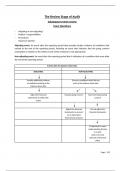
Subsequent events review
Exam Questions
- Adjusting or non-adjusting?
- Auditor’s responsibilities
- Procedures
- Impact on opinion
Adjusting event: An event after the reporting period that provides further evidence of conditions that
existed at the end of the reporting period, including an event that indicates that the going concern
assumption in relation to the whole or part of the enterprise is not appropriate.
Non-adjusting event: An event after the reporting period that is indicative of a condition that arose after
the end of the reporting period.
Events after the balance sheet date
ADJUSTING NON-ADJUSTING
Provide additional evidence Concern conditions which did not
of conditions existing at the exist at the balance sheet date
balance sheet date
Adjust the financial Impacts going concern Does not impact going
statements to reflect the concern
event
Adjust the financial Do not adjust the
statements to present financial statements
on an alternative
basis( break-up basis)
If important to users
understanding disclose
in a note:
nature of event
estimate of financial
effect
Page | 123
,Examples of adjusting events
→ The bankruptcy of a customer indicates that their debt was irrecoverable at the reporting date
→ The sale of inventory at less than cost indicates that it should have been valued at NRV in the
accounts
→ The resolution after the reporting date of a court case giving rise to a liability
→ Invoices received in respect of goods or services received before the year end
→ Discovery of fraud or errors showing that financial statements were incorrect
→ Determination of employee bonuses
→ The tax rates applicable to the financial year are announced
→ The auditors submit their fee
Examples of non-adjusting events
Destruction of major assets in natural disasters
A purchase or sale of a non-current asset
The announcement of plans to discontinue an operation
Dividends declared on equity after the reporting date
Auditor’s responsibilities-ISA 560
Page | 124
, For the purposes of ISA 560, subsequent events are those events that occur between the reporting date
and the date of approval of the financial statements and the signing of the auditor’s report.
Period between the year-end date and the date the auditor’s report is signed
The auditor shall perform audit procedures designed to obtain sufficient appropriate audit evidence
that all events occurring between the date of the financial statements and the date of the auditor’s
report that require adjustment of, or disclosure in, the financial statements have been identified.
A. Review procedures management has established to ensure that subsequent events are identified.
B. Inspect: Read minutes of board meetings, shareholder meetings and audit committees that have
taken place since the year-end.
C. Obtain and review the latest available interim financial statements and/or management
accounts, budgets and other related management reports.
D. Perform normal post balance sheet work( e.g. checking receipts from trade receivables after the
yearend)
E. Enquire of the entity’s legal counsel concerning litigation and claims.
F. Enquire of management as to whether any subsequent events have occurred which might affect
the financial statements
G. Checking whether any events have occurred that could call into question the validity of the going
concern assumption
Page | 125
Subsequent events review
Exam Questions
- Adjusting or non-adjusting?
- Auditor’s responsibilities
- Procedures
- Impact on opinion
Adjusting event: An event after the reporting period that provides further evidence of conditions that
existed at the end of the reporting period, including an event that indicates that the going concern
assumption in relation to the whole or part of the enterprise is not appropriate.
Non-adjusting event: An event after the reporting period that is indicative of a condition that arose after
the end of the reporting period.
Events after the balance sheet date
ADJUSTING NON-ADJUSTING
Provide additional evidence Concern conditions which did not
of conditions existing at the exist at the balance sheet date
balance sheet date
Adjust the financial Impacts going concern Does not impact going
statements to reflect the concern
event
Adjust the financial Do not adjust the
statements to present financial statements
on an alternative
basis( break-up basis)
If important to users
understanding disclose
in a note:
nature of event
estimate of financial
effect
Page | 123
,Examples of adjusting events
→ The bankruptcy of a customer indicates that their debt was irrecoverable at the reporting date
→ The sale of inventory at less than cost indicates that it should have been valued at NRV in the
accounts
→ The resolution after the reporting date of a court case giving rise to a liability
→ Invoices received in respect of goods or services received before the year end
→ Discovery of fraud or errors showing that financial statements were incorrect
→ Determination of employee bonuses
→ The tax rates applicable to the financial year are announced
→ The auditors submit their fee
Examples of non-adjusting events
Destruction of major assets in natural disasters
A purchase or sale of a non-current asset
The announcement of plans to discontinue an operation
Dividends declared on equity after the reporting date
Auditor’s responsibilities-ISA 560
Page | 124
, For the purposes of ISA 560, subsequent events are those events that occur between the reporting date
and the date of approval of the financial statements and the signing of the auditor’s report.
Period between the year-end date and the date the auditor’s report is signed
The auditor shall perform audit procedures designed to obtain sufficient appropriate audit evidence
that all events occurring between the date of the financial statements and the date of the auditor’s
report that require adjustment of, or disclosure in, the financial statements have been identified.
A. Review procedures management has established to ensure that subsequent events are identified.
B. Inspect: Read minutes of board meetings, shareholder meetings and audit committees that have
taken place since the year-end.
C. Obtain and review the latest available interim financial statements and/or management
accounts, budgets and other related management reports.
D. Perform normal post balance sheet work( e.g. checking receipts from trade receivables after the
yearend)
E. Enquire of the entity’s legal counsel concerning litigation and claims.
F. Enquire of management as to whether any subsequent events have occurred which might affect
the financial statements
G. Checking whether any events have occurred that could call into question the validity of the going
concern assumption
Page | 125