Fraud
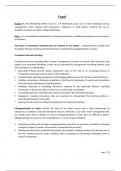
Fraud: ISA 240 (Redrafted) defines fraud as: ‘An intentional act by one or more individuals among
management, those charged with governance, employees, or third parties, involving the use of
deception to obtain an unjust or illegal advantage.’
Error: is an unintentional misstatement in financial statements, including the omission of an amount or
a disclosure.
Two types of intentional misstatements are relevant to the auditor – misstatements resulting from
fraudulent financial reporting and misstatements resulting from misappropriation of assets.
Fraudulent financial reporting
Fraudulent financial reporting often involves management override of controls that otherwise may
appear to be operating effectively. Fraud can be committed by management overriding controls using
such techniques as intentionally:
Recording fictitious journal entries, particularly close to the end of an accounting period, to
manipulate operating results or achieve other objectives.
Inappropriately adjusting assumptions and changing judgments used to estimate account balances.
Omitting, advancing or delaying recognition in the financial statements of events and transactions
that have occurred during the reporting period.
Omitting, obscuring or misstating disclosures required by the applicable financial reporting
framework, or disclosures that are necessary to achieve fair presentation.
Concealing facts that could affect the amounts recorded in the financial statements.
Engaging in complex transactions that are structured to misrepresent the financial position or
financial performance of the entity
Altering records and terms related to significant and unusual transactions
Misappropriation of assets involves the theft of an entity’s assets and is often perpetrated by
employees in relatively small and immaterial amounts. However, it can also involve management who
are usually more able to disguise or conceal misappropriations in ways that are difficult to detect.
Misappropriation of assets can be accomplished in a variety of ways including:
• Embezzling receipts (for example, misappropriating collections on accounts receivable or diverting
receipts in respect of written-off accounts to personal bank accounts).
• Stealing physical assets or intellectual property (for example, stealing inventory for personal use or
for sale, stealing scrap for resale, colluding with a competitor by disclosing technological data in
return for payment).
Page | 172
Fraud: ISA 240 (Redrafted) defines fraud as: ‘An intentional act by one or more individuals among
management, those charged with governance, employees, or third parties, involving the use of
deception to obtain an unjust or illegal advantage.’
Error: is an unintentional misstatement in financial statements, including the omission of an amount or
a disclosure.
Two types of intentional misstatements are relevant to the auditor – misstatements resulting from
fraudulent financial reporting and misstatements resulting from misappropriation of assets.
Fraudulent financial reporting
Fraudulent financial reporting often involves management override of controls that otherwise may
appear to be operating effectively. Fraud can be committed by management overriding controls using
such techniques as intentionally:
Recording fictitious journal entries, particularly close to the end of an accounting period, to
manipulate operating results or achieve other objectives.
Inappropriately adjusting assumptions and changing judgments used to estimate account balances.
Omitting, advancing or delaying recognition in the financial statements of events and transactions
that have occurred during the reporting period.
Omitting, obscuring or misstating disclosures required by the applicable financial reporting
framework, or disclosures that are necessary to achieve fair presentation.
Concealing facts that could affect the amounts recorded in the financial statements.
Engaging in complex transactions that are structured to misrepresent the financial position or
financial performance of the entity
Altering records and terms related to significant and unusual transactions
Misappropriation of assets involves the theft of an entity’s assets and is often perpetrated by
employees in relatively small and immaterial amounts. However, it can also involve management who
are usually more able to disguise or conceal misappropriations in ways that are difficult to detect.
Misappropriation of assets can be accomplished in a variety of ways including:
• Embezzling receipts (for example, misappropriating collections on accounts receivable or diverting
receipts in respect of written-off accounts to personal bank accounts).
• Stealing physical assets or intellectual property (for example, stealing inventory for personal use or
for sale, stealing scrap for resale, colluding with a competitor by disclosing technological data in
return for payment).
Page | 172