
TI_Final_Study_Guide_Nursing_care_of_children
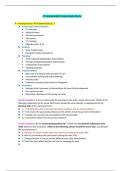
• Chapter 12: Bacterial Meningitis (starting on page 59) o Couple questions on the ATI Final o Nursing Care for Meningitis (Highlights) ▪ Reportable findings: The presence of petechiae or a purpuric-type rash requires immediate medical attention ▪ Isolate the client as soon as meningitis is suspected and maintain droplet precautions per facility protocol. • Droplet precautions require a private room or a room with clients who have an infection from the same microorganism, ensuring that each client has his or her own designated equipment. • Providers and visitors should wear a mask. • Maintain respiratory isolation for a minimum of 24 hr. after initiation of antibiotic therapy. ▪ Decrease environmental stimuli • Such as providing a quiet environment • Minimize exposure to bright light (which includes natural and electric form of lighting) ▪ For newborns and infants, monitor head circumference and fontanels for presence of or changes in bulging o Expected Findings of Meningitis ▪ Headache ▪ Nuchal rigidity ▪ Bulging fontanels ▪ Positive Kernig’s sign ▪ Vomiting ▪ Fever and Chills ▪ Irritability ▪ Photophobia ▪ Petechiae (2 years of age or older) o Need to be familiar with signs and symptoms associated with increased intracranial pressure (Table 49.3) Page 1383 ▪ **bulging fontanelles ▪ **high pitch cry; change in a baby’s cry ▪ **headache ▪ **Eye Changes (e.g. Diplopia) ▪ **Vomiting ▪ **Vital Sign Changes • Elevated temperature and blood pressure; • decreased pulse and respiration rates o CSF analysis indicative of meningitis. ▪ BACTERIAL • Cloudy color (only bacterial will be cloudy) • Elevated WBC count • Elevated protein content • Decreased glucose content • Positive Gram stain ▪ VIRAL • Clear color • Slightly elevated WBC count • Normal or slightly elevated protein content • Normal glucose content • Negative Gram stain o Treatment/management of Meningitis • Corticosteroid (such as dexamethasone) to reduce ICP caused by Meningitis and help prevent hearing loss • Osmotic Diuretic (such as Mannitol) to reduce ICP caused by Meningitis and help prevent hearing loss • Antibiotics (if it is a bacterial infection type of Meningitis) • Drug Therapy could last up to 10 days • Educate the family about the need to complete the entire course of medication • Important note: • CSF analysis obtained by lumbar puncture confirms the diagnosis. • CSF results indicative of meningitis include increased white blood cell and protein levels, increased ICP, and a glucose level less than 60% of blood glucose (because bacteria have fed on the glucose). • Chapter 17: Post-op nursing care for Tonsillectomy Care (page 91 to 92) o 3-4 questions on the ATI Final • Chapter 17: Epiglottitis (Page 96) o 2 questions on the ATI Final o ***Few questions on the final on how to prevent it and also what we would do if the airway was blocked** o • Chapter 19: Cystic Fibrosis (page 105) o About 2 question on the ATI Final o Cystic Fibrosis exacerbation ▪ Oxygen saturation of 85% o Cystic Fibrosis Diet ▪ Well-balanced ▪ High in protein & Calories ▪ Unrestricted fat ▪ Ensure adequate fluid intake • Chapter 21: Sickle Cell Anemia Section (page 126 to 128); o 2-3 questions on the ATI Final o KNOW ABOUT VASO-OCCLUSIVE (ATI KEEPS ASKING ABOUT IT) ▪ Vaso-occlusive is a manifestation and painful episode of sickle cell disease ▪ Manifestation of Acute Vaso-Occlusive • Acute Vaso-Occlusive is related to dehydration and decreased oxygen • Swollen joints, hands, and feet • Hematuria • Visual disturbances ▪ Manifestation of Chronic Vaso-occlusive • Enlarged Heart • Enuresis • Leg Ulcers • Retinal detachment o Nursing Care for Sickle Cell Anemia ▪ Promote rest to decrease oxygen consumption. • Administer oxygen as prescribed if hypoxia is present. • **Provide intense hydration therapy while maintaining fluid and electrolyte balance o Ex. Children often accept flavored popsicles as a source of fluid ▪ Monitor I&O. ▪ Give oral fluids ▪ Administer IV fluids with electrolyte replacement ▪ Caution with potassium replacement. ▪ Treat and prevent infections o Screening for Sickle Cell Anemia ▪ Laboratory Test for Sickle Cell Anemia • Screening for Sickle Cell Anemia in newborns is mandatory in all 50 U.S. states and territories • CBC o to detect anemia • Sickle-Turbidity o Screening tool detects the presence of HbS but will differentiate the trait from the disease o The nurse should perform a finger stick on a toddler as a component of the sickle-turbidity test. ▪ If the test is positive, hemoglobin electrophoresis is required to distinguish between children who have the genetic trait and children who have the disease. • Hemoglobin Electrophoresis • Chapter 21: Hematologic Disorders ATI Note: o Determining Priority Client ▪ Acute vs Chronic; Urgent vs Nonurgent; Stable vs Unstable • A client who has an acute problem takes priority over a client who has a chronic problem • A client who has an urgent need takes priority over a client who has a nonurgent need • A client who has unstable findings takes priority over a client who has stable findings .................................................................................................CONTINUE
Document information
- Uploaded on
- July 23, 2023
- Number of pages
- 31
- Written in
- 2022/2023
- Type
- Exam (elaborations)
- Contains
- Questions & answers


