Unit 1 - Using Counselling Skills
Core Counselling Skills
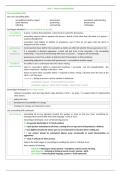
nine core counselling skills:
- unconditional positive regard - genuineness - empathetic understanding
- active listening - questioning - paraphrasing
- reflecting - summarising - challenging
Carl Rogers identified three core conditions for growth:
unconditional to grow + achieve their potential, a client must be valued for themselves.
positive regard counsellors must be able to separate the actions + beliefs of the client from the client as a person, +
suspend all judgments.
counsellors must display an attitude of acceptance, even if they do not agree with the client or
disapprove of their actions.
genuineness most important basic skill for the counsellor as clients can often tell whether they are genuine or not.
(aka. if a counsellor is deemed ungenuine, a client will lack trust in the counsellor + the counselling
congruence) relationship, + may not be forthcoming with issues of concern… + progress will not develop.
genuineness comes from a desire to help the client find solutions to their problems.
suspending judgement, increases both genuineness + unconditional positive regard.
empathetic the ability to try to understand what the client is feeling.
understanding refers to counsellor’s ability to understand sensitively + accurately - but not sympathetically - the
client’s experience + feelings in the here + now.
shown to client when counsellor listens + responds to them; seeing a situation from the eyes of the
client + not their own.
sympathy = feeling of sorrow + pity for another’s misfortune.
sympathetic response - “I know exactly how you feel.”
empathetic response - reflect client’s feelings + check if that is correct.
Gerard Egan developed a three stage model:
- believed counsellors must also help clients make decisions, clarify + set goals, + to support them in implementing
their actions.
1 getting the story.
2 development of possibilities for change.
3 strategies for change and closing the session.
core counselling skills continued:
active listening orientating all of your attention towards the speaker or client so that you ‘hear’ everything inc.
messages they transmit with their body language + tone of voice.
Gerard Egan developed a non-verbal listening process:
S = sit squarely (preferably at 5 o’clock position)
O = open posture maintained at all times; crossing arms or legs can be interpreted as a defence.
L = lean slightly towards the client; says you are interested in what the client is telling you.
E = eye contact should be maintained (glance away occasionally to avoid interpretation as
aggressive).
R = relax; it will put the client at ease.
helps in the initial stages of counselling by enabling the client to ‘tell their story’.
three aspects of listening:
- linguistic = listening to words, phrases + metaphors used to convey meaning.
- para-linguistic = listening to timing of words, accent, volume + pitch.
- non-verbal = observing body language, posture + facial expression.
Core Counselling Skills
nine core counselling skills:
- unconditional positive regard - genuineness - empathetic understanding
- active listening - questioning - paraphrasing
- reflecting - summarising - challenging
Carl Rogers identified three core conditions for growth:
unconditional to grow + achieve their potential, a client must be valued for themselves.
positive regard counsellors must be able to separate the actions + beliefs of the client from the client as a person, +
suspend all judgments.
counsellors must display an attitude of acceptance, even if they do not agree with the client or
disapprove of their actions.
genuineness most important basic skill for the counsellor as clients can often tell whether they are genuine or not.
(aka. if a counsellor is deemed ungenuine, a client will lack trust in the counsellor + the counselling
congruence) relationship, + may not be forthcoming with issues of concern… + progress will not develop.
genuineness comes from a desire to help the client find solutions to their problems.
suspending judgement, increases both genuineness + unconditional positive regard.
empathetic the ability to try to understand what the client is feeling.
understanding refers to counsellor’s ability to understand sensitively + accurately - but not sympathetically - the
client’s experience + feelings in the here + now.
shown to client when counsellor listens + responds to them; seeing a situation from the eyes of the
client + not their own.
sympathy = feeling of sorrow + pity for another’s misfortune.
sympathetic response - “I know exactly how you feel.”
empathetic response - reflect client’s feelings + check if that is correct.
Gerard Egan developed a three stage model:
- believed counsellors must also help clients make decisions, clarify + set goals, + to support them in implementing
their actions.
1 getting the story.
2 development of possibilities for change.
3 strategies for change and closing the session.
core counselling skills continued:
active listening orientating all of your attention towards the speaker or client so that you ‘hear’ everything inc.
messages they transmit with their body language + tone of voice.
Gerard Egan developed a non-verbal listening process:
S = sit squarely (preferably at 5 o’clock position)
O = open posture maintained at all times; crossing arms or legs can be interpreted as a defence.
L = lean slightly towards the client; says you are interested in what the client is telling you.
E = eye contact should be maintained (glance away occasionally to avoid interpretation as
aggressive).
R = relax; it will put the client at ease.
helps in the initial stages of counselling by enabling the client to ‘tell their story’.
three aspects of listening:
- linguistic = listening to words, phrases + metaphors used to convey meaning.
- para-linguistic = listening to timing of words, accent, volume + pitch.
- non-verbal = observing body language, posture + facial expression.