

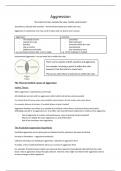
Aggression
The intent to harm outside the rules; hostile environment
Sometimes confused with assertion = well-motivated behaviour within the rules
Aggression is unwelcome as it may result in injury and can lead to over-arousal
Aggression: Assertion
- The intend to harm - Controlled
- Outside the rules - Well motivated
- Reactive - Generally within the rules
- Out of control - Goal-directed
- Deliberate and hostile - Not intended to harm
e.g. punching someone after a foul in rugby e.g. 50/50 challenge in football
Instrumental Aggression = has an intent but is within the rules
There can be aspects of both assertion and aggression
For example, in boxing a punch is within the rules
however it has the intent to cause harm
This occurs when there is intent but is within the rules
The Theories behind causes of Aggression
Instinct Theory
When aggression is spontaneous and innate
All individuals are born with an aggressive instinct which will surface when provoked
It is claimed that all humans retain some ritualistic animal instincts that will surface when under threat
For example, defences of territory heartfelt defence of goal in football
Aggressive instincts can surface as a reaction to a bad foul, when there is a threat of injury may lead to
defending yourself or an aggressive act. You either calm yourself down (catharsis) or continue to be aggressive
- Not all aggression is reactive and spontaneous, some is learned and pre-intended
- Players can display the same aggression on and off the pitch
- Not all our ancestors were aggressive
The frustration-aggression hypothesis
Inevitable aggression occurs when goals are blocked and the performer becomes frustrated
Increase in frustration -> aggressive tendencies
Catharsis will reduce an individual’s aggression, reduction in aggressive drive
If unable, a form of self-punishment will occur, increase in aggressive drive
For example, if fouled a player might react and push their opponent immediately (skirmish) but then calm
down, reduce aggression and go through catharsis. However, they might not release their aggression and try
to have revenge on their opponent.
,Aggressive cue hypothesis (Berkowitz)
Suggests that aggression is caused by a learned trigger
A ‘cue’ is needed for the individual to become aggressive
For example, a coach may say to his players to not get pushed around at a corner, they may push others for
every corner they face, the corner is the ‘cue’
Social Learning Theory (Albert Bandura)
Learning by associating with others and copying behaviour
Observe -> Identify -> Reinforce -> Copy
For example, an experienced player may perform a tactical foul preventing a goal and unsettling their
opponent. You copy this act in the future.
Aggression is learnt from significant others or role models, behaviour is more likely to be copied than recorded
behaviour
Aggressive behaviour is more likely to be copied if it is consistent, powerful and bright
- Aggression can be instinctive and reactive rather than being learned
- Some players react aggressively without being in a situation where they could observe and copy
others
Causes of Aggression: playing poorly, lack of work ethic from teammates, disagreement with officials,
provocation from fans, religious reasons, important games, natural aggressive personality, social learning,
over-arousal or contact sport
Catharsis – cleansing the emotions, using sport as an outlet for aggression
‘Letting off steam’, release of channelling aggression
Reasons for aggression due to frustration: losing, poor performance by you or teammate, disagreement with
referee, a hostile crowd, pressure of success, important game or being fouled
Some individuals can control themselves and release their aggressive drive
Strategies to prevent Aggression
Aggression is not desirable in sport since it can cause injury, a loss of concentration and I an increase in arousal
and anxiety in an individual
Coaches, players and referees can play a part in reducing aggression by:
- Promote peer-group pressure within the
- Not reinforcing aggressive acts in training team
- Punish aggression with fines - Walk away from the situation
- Punish players by sending them off - Apply the rules consistently and fairly
- Substituting/removing a player from a - Use mental rehearsal or relaxation to lower
situation arousal
- Reinforce non-aggression - Point out responsibilities to the team
- Calm players down - Point out non-aggressive role models
- Channel aggression into assertion - Set non-aggressive goals
- Apply sanctions immediately
, Anxiety
A level of nerves and irrational thinking
Anxiety usually occurs when an individual has a high perception on the importance of an event
Competitive Trait Anxiety
A disposition to suffer from nervousness in most sporting situations
Usually when an individual is nervous before most games, and could be just their genetic make-up
It is displayed before all competitions, regardless of the importance of the event
Competitive State Anxiety
A nervous response to specific sporting situations
More temporary and is a response to a particular moment in a game, therefore the level of state anxiety can
change throughout the game
Martens: ‘There is a link between trait and state anxiety’
High trait anxiety will likely mean high state anxiety
Cognitive and Somatic Anxiety
Cognitive – a psychological response such as worrying about losing
They may believe they don’t have the ability to complete the task nervousness + loss of concentration
Somatic – a physiological response to a threat such as increased heart rate
Examples are sweating, muscular tension and sometimes sickness – some somatic anxiety can be good
Anxiety to Performance Anxiety to Time to Competition
Can vary depending on the individual
Cognitive – as it increases, performance
decreases Cognitive anxiety is high long before the event,
however decreases during the event
Somatic – similar to inverted ‘u’, there is an
optimal level Somatic anxiety rises shortly before competition,
but during competition is slowly decreases.
Therefore the coach must try and control cognitive anxiety well before competition, and then introduce
techniques to control somatic anxiety as the competition approaches
The intent to harm outside the rules; hostile environment
Sometimes confused with assertion = well-motivated behaviour within the rules
Aggression is unwelcome as it may result in injury and can lead to over-arousal
Aggression: Assertion
- The intend to harm - Controlled
- Outside the rules - Well motivated
- Reactive - Generally within the rules
- Out of control - Goal-directed
- Deliberate and hostile - Not intended to harm
e.g. punching someone after a foul in rugby e.g. 50/50 challenge in football
Instrumental Aggression = has an intent but is within the rules
There can be aspects of both assertion and aggression
For example, in boxing a punch is within the rules
however it has the intent to cause harm
This occurs when there is intent but is within the rules
The Theories behind causes of Aggression
Instinct Theory
When aggression is spontaneous and innate
All individuals are born with an aggressive instinct which will surface when provoked
It is claimed that all humans retain some ritualistic animal instincts that will surface when under threat
For example, defences of territory heartfelt defence of goal in football
Aggressive instincts can surface as a reaction to a bad foul, when there is a threat of injury may lead to
defending yourself or an aggressive act. You either calm yourself down (catharsis) or continue to be aggressive
- Not all aggression is reactive and spontaneous, some is learned and pre-intended
- Players can display the same aggression on and off the pitch
- Not all our ancestors were aggressive
The frustration-aggression hypothesis
Inevitable aggression occurs when goals are blocked and the performer becomes frustrated
Increase in frustration -> aggressive tendencies
Catharsis will reduce an individual’s aggression, reduction in aggressive drive
If unable, a form of self-punishment will occur, increase in aggressive drive
For example, if fouled a player might react and push their opponent immediately (skirmish) but then calm
down, reduce aggression and go through catharsis. However, they might not release their aggression and try
to have revenge on their opponent.
,Aggressive cue hypothesis (Berkowitz)
Suggests that aggression is caused by a learned trigger
A ‘cue’ is needed for the individual to become aggressive
For example, a coach may say to his players to not get pushed around at a corner, they may push others for
every corner they face, the corner is the ‘cue’
Social Learning Theory (Albert Bandura)
Learning by associating with others and copying behaviour
Observe -> Identify -> Reinforce -> Copy
For example, an experienced player may perform a tactical foul preventing a goal and unsettling their
opponent. You copy this act in the future.
Aggression is learnt from significant others or role models, behaviour is more likely to be copied than recorded
behaviour
Aggressive behaviour is more likely to be copied if it is consistent, powerful and bright
- Aggression can be instinctive and reactive rather than being learned
- Some players react aggressively without being in a situation where they could observe and copy
others
Causes of Aggression: playing poorly, lack of work ethic from teammates, disagreement with officials,
provocation from fans, religious reasons, important games, natural aggressive personality, social learning,
over-arousal or contact sport
Catharsis – cleansing the emotions, using sport as an outlet for aggression
‘Letting off steam’, release of channelling aggression
Reasons for aggression due to frustration: losing, poor performance by you or teammate, disagreement with
referee, a hostile crowd, pressure of success, important game or being fouled
Some individuals can control themselves and release their aggressive drive
Strategies to prevent Aggression
Aggression is not desirable in sport since it can cause injury, a loss of concentration and I an increase in arousal
and anxiety in an individual
Coaches, players and referees can play a part in reducing aggression by:
- Promote peer-group pressure within the
- Not reinforcing aggressive acts in training team
- Punish aggression with fines - Walk away from the situation
- Punish players by sending them off - Apply the rules consistently and fairly
- Substituting/removing a player from a - Use mental rehearsal or relaxation to lower
situation arousal
- Reinforce non-aggression - Point out responsibilities to the team
- Calm players down - Point out non-aggressive role models
- Channel aggression into assertion - Set non-aggressive goals
- Apply sanctions immediately
, Anxiety
A level of nerves and irrational thinking
Anxiety usually occurs when an individual has a high perception on the importance of an event
Competitive Trait Anxiety
A disposition to suffer from nervousness in most sporting situations
Usually when an individual is nervous before most games, and could be just their genetic make-up
It is displayed before all competitions, regardless of the importance of the event
Competitive State Anxiety
A nervous response to specific sporting situations
More temporary and is a response to a particular moment in a game, therefore the level of state anxiety can
change throughout the game
Martens: ‘There is a link between trait and state anxiety’
High trait anxiety will likely mean high state anxiety
Cognitive and Somatic Anxiety
Cognitive – a psychological response such as worrying about losing
They may believe they don’t have the ability to complete the task nervousness + loss of concentration
Somatic – a physiological response to a threat such as increased heart rate
Examples are sweating, muscular tension and sometimes sickness – some somatic anxiety can be good
Anxiety to Performance Anxiety to Time to Competition
Can vary depending on the individual
Cognitive – as it increases, performance
decreases Cognitive anxiety is high long before the event,
however decreases during the event
Somatic – similar to inverted ‘u’, there is an
optimal level Somatic anxiety rises shortly before competition,
but during competition is slowly decreases.
Therefore the coach must try and control cognitive anxiety well before competition, and then introduce
techniques to control somatic anxiety as the competition approaches


