LAND LAW SARA AHMED
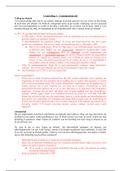
BASICS FITTIGS AND FIXTURES
Crown owns all the land. The courts have applied two tests to decide whether an object has
become a fixture. They look at (1) the degree of annexation; and (2) the
Individual landowners hold an estate in the land derived ultimately from the Crown. There are purpose of annexation.
two estates in land: freehold and leasehold.
The degree of annexation test provides that the greater the degree of
The freehold estate is the closest thing in English and Welsh law to absolute ownership. It is attachment to the land, the more likely the item is to be a fixture. Thus,
an estate of uncertain duration. things nailed, screwed, or bolted to walls often are found to be fixtures,
especially if removal of the thing will cause damage to the remaining
In contrast, a leasehold estate has a fixed maximum duration. This means that it is possible to structure.
ascertain when the lease will come to an end. Despite this technical distinction, a person who
holds the freehold estate is still often described as a ‘landowner’. The purpose of annexation test looks to whether the item was brought
onto the land with an intent to make a permanent improvement or only
Real property’ (that is, land, or an interest in land) and ‘personal property’ (for example, a car a temporary one. If the item was brought to make a permanent
or a refrigerator, which historically were referred to as ‘chattels’). improvement, it is a fixture regardless of the degree of annexation. For
example, a freestanding statue that is part of the architectural design of
When property becomes so attached to land that it becomes part of the land—that is, a a house or the focal point of a garden may be considered a fixture even
fixture—as opposed to personal property which is not so affixed—that is, a fitting. though it is not attached at all.
BASICS FITTIGS AND FIXTURES
Crown owns all the land. The courts have applied two tests to decide whether an object has
become a fixture. They look at (1) the degree of annexation; and (2) the
Individual landowners hold an estate in the land derived ultimately from the Crown. There are purpose of annexation.
two estates in land: freehold and leasehold.
The degree of annexation test provides that the greater the degree of
The freehold estate is the closest thing in English and Welsh law to absolute ownership. It is attachment to the land, the more likely the item is to be a fixture. Thus,
an estate of uncertain duration. things nailed, screwed, or bolted to walls often are found to be fixtures,
especially if removal of the thing will cause damage to the remaining
In contrast, a leasehold estate has a fixed maximum duration. This means that it is possible to structure.
ascertain when the lease will come to an end. Despite this technical distinction, a person who
holds the freehold estate is still often described as a ‘landowner’. The purpose of annexation test looks to whether the item was brought
onto the land with an intent to make a permanent improvement or only
Real property’ (that is, land, or an interest in land) and ‘personal property’ (for example, a car a temporary one. If the item was brought to make a permanent
or a refrigerator, which historically were referred to as ‘chattels’). improvement, it is a fixture regardless of the degree of annexation. For
example, a freestanding statue that is part of the architectural design of
When property becomes so attached to land that it becomes part of the land—that is, a a house or the focal point of a garden may be considered a fixture even
fixture—as opposed to personal property which is not so affixed—that is, a fitting. though it is not attached at all.