
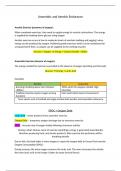
Anaerobic and Aerobic Endurance
Aerobic Exercise (presence of oxygen):
When somebody exercises, they need to supply energy for muscle contractions. The energy
is supplied by breaking down glucose using oxygen
Aerobic exercise occurs at low to moderate levels of exertion (walking and jogging), when
energy can be produced by oxygen. Relatively gentle exercises which can be maintained for
a long period of time, as oxygen can be supplied to the working muscles
Glucose + Oxygen Energy + Carbon Dioxide + Water
Anaerobic Exercise (absence of oxygen):
The energy needed for exercise is provided in the absence of oxygen (sprinting and shot put)
Glucose Energy + Lactic Acid
Examples
Aerobic Anaerobic
Running (anything above two minutes/ 100m sprint (no oxygen needed, high
+800m) intensity)
Triathlon (muscle require oxygen as long Pole Vault (short burst of movement)
duration)
Team sports such as football and rugby involve both aerobic and anaerobic endurance
EPOC + Oxygen Debt
Lactic Acid – waste products from anaerobic exercise
Oxygen Debt – temporary oxygen shortage due to strenuous exercise
EPOC – increase rate of oxygen intake following strenuous activity
During a short intense, burst of exercise (sprinting), energy is generated anaerobically
therefore producing lactic acid (waste product). After exercise the performer will be
breathing heavily
Due to this, the body takes in extra oxygen to repay the oxygen debt or Excess Post-exercise
Oxygen Consumption (EPOC)
During recovery the extra oxygen removes the lactic acid. The more strenuous the activity
the more lactic acid so the longer it takes to repay (several hours)
, Immediate effects of exercise (during exercise)
During exercise, the demand for oxygen increases in the working muscles
Heart rate increases - normal = 70-80 bpm, exercise = 100 – 150 bpm depending on
how hard exercise is
Increase in stroke volume of the heart – contracts more powerfully so blood is
pumped around the body to supply the muscles with glucose and oxygen
Breathing rate increases – normal 25 breaths per min, +breathing rate and +depth of
breath, increasing the tidal volume
Body temperature increases – muscles contract generating heat, the body sweats to
lose heat by evaporation and skin goes red as blood vessels near the skins surface to
lose heat by radiation
Short-term effects of exercise (24 – 36 hours after exercise)
Effect Cause
Fatigue – strenuous Muscles working really hard and become swollen with
exercise fluids and feel heavy, passes within 1 – 2 days
Dizziness and Light-headed Low blood sugar or drop in blood pressure, likely if
someone has heavily sweated
Nausea (feeling of sickness Over-exertion, lack of water intake and ending an exercise
during or after exercise) session too abruptly
Delayed Onset Muscle Eccentric muscle contractions, why causes tiny tears in
Soreness (DOMS - muscle fibres, leading to swelling. Muscle is supposed to
pain/stiffness felt following tear, so it can repair stronger and adapt to prevent muscle
strenuous exercises) damage and soreness
Cramp (painful involuntary Fatigue, strain of the muscle, dehydration and loss of
contraction of a muscle) minerals due to excessive sweating
Aerobic Exercise (presence of oxygen):
When somebody exercises, they need to supply energy for muscle contractions. The energy
is supplied by breaking down glucose using oxygen
Aerobic exercise occurs at low to moderate levels of exertion (walking and jogging), when
energy can be produced by oxygen. Relatively gentle exercises which can be maintained for
a long period of time, as oxygen can be supplied to the working muscles
Glucose + Oxygen Energy + Carbon Dioxide + Water
Anaerobic Exercise (absence of oxygen):
The energy needed for exercise is provided in the absence of oxygen (sprinting and shot put)
Glucose Energy + Lactic Acid
Examples
Aerobic Anaerobic
Running (anything above two minutes/ 100m sprint (no oxygen needed, high
+800m) intensity)
Triathlon (muscle require oxygen as long Pole Vault (short burst of movement)
duration)
Team sports such as football and rugby involve both aerobic and anaerobic endurance
EPOC + Oxygen Debt
Lactic Acid – waste products from anaerobic exercise
Oxygen Debt – temporary oxygen shortage due to strenuous exercise
EPOC – increase rate of oxygen intake following strenuous activity
During a short intense, burst of exercise (sprinting), energy is generated anaerobically
therefore producing lactic acid (waste product). After exercise the performer will be
breathing heavily
Due to this, the body takes in extra oxygen to repay the oxygen debt or Excess Post-exercise
Oxygen Consumption (EPOC)
During recovery the extra oxygen removes the lactic acid. The more strenuous the activity
the more lactic acid so the longer it takes to repay (several hours)
, Immediate effects of exercise (during exercise)
During exercise, the demand for oxygen increases in the working muscles
Heart rate increases - normal = 70-80 bpm, exercise = 100 – 150 bpm depending on
how hard exercise is
Increase in stroke volume of the heart – contracts more powerfully so blood is
pumped around the body to supply the muscles with glucose and oxygen
Breathing rate increases – normal 25 breaths per min, +breathing rate and +depth of
breath, increasing the tidal volume
Body temperature increases – muscles contract generating heat, the body sweats to
lose heat by evaporation and skin goes red as blood vessels near the skins surface to
lose heat by radiation
Short-term effects of exercise (24 – 36 hours after exercise)
Effect Cause
Fatigue – strenuous Muscles working really hard and become swollen with
exercise fluids and feel heavy, passes within 1 – 2 days
Dizziness and Light-headed Low blood sugar or drop in blood pressure, likely if
someone has heavily sweated
Nausea (feeling of sickness Over-exertion, lack of water intake and ending an exercise
during or after exercise) session too abruptly
Delayed Onset Muscle Eccentric muscle contractions, why causes tiny tears in
Soreness (DOMS - muscle fibres, leading to swelling. Muscle is supposed to
pain/stiffness felt following tear, so it can repair stronger and adapt to prevent muscle
strenuous exercises) damage and soreness
Cramp (painful involuntary Fatigue, strain of the muscle, dehydration and loss of
contraction of a muscle) minerals due to excessive sweating


