[A Heart Cleft in Twain]
The Dilemma of Shakespeare’s Gertrude by Rebecca Smith
NOTES:
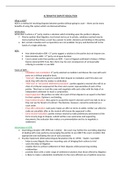
● “Heart cleft in twain” as she has divided loyalties to husband and son.
● Film directors base Gertrude off of the men’s reactions, however she is actually a
soft, obedient, dependent, unimaginative woman.
● Standard presentation: Gertrude is a vain, self-satisfied woman of strong physical
and sexual appetites.
● Rebecca Smith interprets his anti-motherly feelings: “Hamlet’s violent emotions
toward his mother are obvious from his first soliloquy, in which 23 of the 31 lines
express his anger and disgust at what he perceives to be Gertrude’s weakness,
insensitivity, and, most important, bestiality”.
● “Gertrude believes that quiet women best please men, and pleasing men is
Gertrude’s main interest”
● She is caught between two mighty opposites.
● Defends Gertrude against the traditional critic attacks and shows that she is, instead,
a “soft, obedient, dependent, unimaginative woman” who is the victim of “divided
loyalties between her husband and son”.
● Analyzes Hamlet’s first soliloquy in the first act where he voices his disgust for his
mother and his shame for her and women in general.
● Gertrude embodies the usual stereotypes of adultery calculated that it offers a
traditional interpretation of the assumption that only a woman can arouse strong and
violent reaction in men in the drama.
● She notes that finding answers to these difficult questions about the fact that
Gertrude learned most of the other characters, and since it is a stimulant and the
object of violent, emotional reaction to the spirit, Hamlet and Claudius, they offer us
the extreme descriptions.
● “Hamlet seems obsessed with Gertrude as a sex object”
● “He attacks what he perceives to be the brevity of women’s love, women’s
wantonness and ability to make ‘monsters’ of men”.
● This is true as he had completely lost his trust in women after his mother’s fast
remarriage to Claudius and his continuous accusation of his mother’s incestuous
actions and he comes to the conclusion that ‘frailty thy name is women’.
● The character of Gertrude is the figure of an ageing, sexual female monarch appears
as a troubling figure for the central character. Through her marriage to Claudius,
Queen Gertrude maintains a position of political authority within the court, and
appears on-stage alongside Claudius in most court scenes. Gertrude’s position both
as a mother, a sexual woman, and a political figure.
● To maintain her political power, Elizabeth would need to remain single; but to ensure
England’s safety she would need to marry. So her femininity and sexuality were
therefore important elements in the control of her image. But as the Queen aged, this
representation of herself as the sexually desirable maiden became harder to
manage.
The Dilemma of Shakespeare’s Gertrude by Rebecca Smith
NOTES:
● “Heart cleft in twain” as she has divided loyalties to husband and son.
● Film directors base Gertrude off of the men’s reactions, however she is actually a
soft, obedient, dependent, unimaginative woman.
● Standard presentation: Gertrude is a vain, self-satisfied woman of strong physical
and sexual appetites.
● Rebecca Smith interprets his anti-motherly feelings: “Hamlet’s violent emotions
toward his mother are obvious from his first soliloquy, in which 23 of the 31 lines
express his anger and disgust at what he perceives to be Gertrude’s weakness,
insensitivity, and, most important, bestiality”.
● “Gertrude believes that quiet women best please men, and pleasing men is
Gertrude’s main interest”
● She is caught between two mighty opposites.
● Defends Gertrude against the traditional critic attacks and shows that she is, instead,
a “soft, obedient, dependent, unimaginative woman” who is the victim of “divided
loyalties between her husband and son”.
● Analyzes Hamlet’s first soliloquy in the first act where he voices his disgust for his
mother and his shame for her and women in general.
● Gertrude embodies the usual stereotypes of adultery calculated that it offers a
traditional interpretation of the assumption that only a woman can arouse strong and
violent reaction in men in the drama.
● She notes that finding answers to these difficult questions about the fact that
Gertrude learned most of the other characters, and since it is a stimulant and the
object of violent, emotional reaction to the spirit, Hamlet and Claudius, they offer us
the extreme descriptions.
● “Hamlet seems obsessed with Gertrude as a sex object”
● “He attacks what he perceives to be the brevity of women’s love, women’s
wantonness and ability to make ‘monsters’ of men”.
● This is true as he had completely lost his trust in women after his mother’s fast
remarriage to Claudius and his continuous accusation of his mother’s incestuous
actions and he comes to the conclusion that ‘frailty thy name is women’.
● The character of Gertrude is the figure of an ageing, sexual female monarch appears
as a troubling figure for the central character. Through her marriage to Claudius,
Queen Gertrude maintains a position of political authority within the court, and
appears on-stage alongside Claudius in most court scenes. Gertrude’s position both
as a mother, a sexual woman, and a political figure.
● To maintain her political power, Elizabeth would need to remain single; but to ensure
England’s safety she would need to marry. So her femininity and sexuality were
therefore important elements in the control of her image. But as the Queen aged, this
representation of herself as the sexually desirable maiden became harder to
manage.