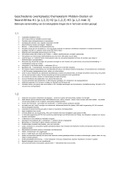
AFSB 153 Sample Exam The surety relationship includes all of the following parties, EXCEPT: a. Surety b. Fiduciary c. Obligee d. Principal - ✔✔b. Fiduciary All of the following are recognized bond terms, EXCEPT: a. Noncancelable (open term) b. Definite term c. Continuous term d. Revolving term - ✔✔d. Revolving term In addition to assisting bond applicants to complete applications and indemnity agreements, some surety producers a. Investigate commercial surety bond losses. b. Design commercial surety bond forms. c. Have underwriting authority to execute bonds. d. Investigate applicants' credit reports, financial statements, and loss experience. - ✔✔c. Have underwriting authority to ex ecute bonds A surety would use an indemnity agreement rather than a bond application when a. The underwriter is concerned that the surety faces a greater -than-average risk of loss. b. Several subsidiaries of a corporation require a number of bonds. c. A producer with power of attorney and underwriting authority executes a bond. d. The surety reuqires signed indmenity agreements for all bonds. - ✔✔b. Several subsidiaries of a corporation require a number of bonds. An underwriter determines the surety 's ability to cancel a bond and the period of subsequent liability by a. Reviewing the bond form and the applicable laws. b. Reading the SAA documentation for that particular class of bonds. c. Studying court decisions in similar bond cases. d. None of the above determines the surety's ability to cancel or the liaiblity period. - ✔✔a. Reviewing the bond form and the applicable laws. In addition to the amount of the expected loss and investigative expenses, claim representatives should consider the followin g when setting reserves on commercial surety bond losses: a. Legislative loss reserve requirements. b. Producer commissions. c. Obligee's financial worth. d. Payment of interest. - ✔✔d. Payment of interest. Which one of the following SAA classifications o f license and permit bonds do sureties consider the most hazardous? a. Compliance bond with third -party liability b. Reclamation and environmental protection bonds c. Forfeiture bonds d. Merchandising and dealer bonds - ✔✔b. Reclamation and environmental p rotection bonds When should an underwriter require collateral for license and permit bonds? a. When the underwriter is certain that the principal will default on the bond obligation b. After the principal has defaulted on the bond obligation c. When the p rincipal presents a higher -than-average risk of default on the bond obligation d. When the principal fails to meet all underwriting requirements - ✔✔c. When the principal presents a higher -than-average risk of default on the bond obligation When might a court interpret bond language to include lawyers' fees that exceed the bond penalty when combined with other damages (excess awards)? a. Courts routinely allow lawyers' fees as excess awards when bond cases are tried. b. Bond language prohibit s courts from ever allowing excess awards. c. Courts often allow lawyers' fees as excess awards in bond claims presented by damaged third parties. d. Courts sometimes allow excess awards to punish a surety for bad faith or unfair claim settlement practices . - ✔✔d. Courts sometimes allow excess awards to punish a surety for bad faith or unfair claim settlement practices. Packers and Stockyards Act bonds are designed to protect
Exam (elaborations)
AFSB 153 Sample Exam | 80 Questions with 100% Correct Answers | Updated & Verified | 27 Pages
Rating
Sold
1
Pages
27
Grade
A+
Uploaded on
17-07-2023
Written in
2022/2023
The surety relationship includes all of the following parties, EXCEPT: a. Surety b. Fiduciary c. Obligee d. Principal - b. Fiduciary All of the following are recognized bond terms, EXCEPT: a. Noncancelable (open term) b. Definite term c. Continuous term d. Revolving term - d. Revolving term In addition to assisting bond applicants to complete applications and indemnity agreements, some surety producers a. Investigate commercial surety bond losses. b. Design commercial surety bond forms. c. Have underwriting authority to execute bonds. d. Investigate applicants' credit reports, financial statements, and loss experience. - c. Have underwriting authority to execute bonds A surety would use an indemnity agreement rather than a bond application when
Show more
Read less
Institution
AFSB 153
Course
AFSB 153
Content preview
Written for
- Institution
- AFSB 153
- Course
- AFSB 153
Document information
- Uploaded on
- July 17, 2023
- Number of pages
- 27
- Written in
- 2022/2023
- Type
- Exam (elaborations)
- Contains
- Questions & answers
Subjects
$18.99
Get access to the full document:
Wrong document? Swap it for free
Within 14 days of purchase and before downloading, you can choose a different document. You can simply spend the amount again.
Written by students who passed
Immediately available after payment
Read online or as PDF