Quiz #3
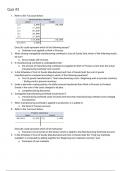
1. Refer to the T-account below:
Entry (4) could represent which of the following except?
a. Overhead cost applied to Work in Process.
2. When closing overapplied manufacturing overhead to Cost of Goods Sold, which of the following would
be true?
a. Gross margin will increase.
3. If manufacturing overhead is underapplied, then:
a. the amount of manufacturing overhead cost applied to Work in Process is less than the actual
manufacturing overhead cost incurred.
4. In the Schedule of Cost of Goods Manufactured and Cost of Goods Sold, the cost of goods
manufactured is computed according to which of the following equations?
a. Cost of goods manufactured = Total manufacturing costs + Beginning work in process inventory
− Ending work in process inventory
5. Under a job-order costing system, the dollar amount transferred from Work in Process to Finished
Goods is the sum of the costs charged to all jobs:
a. completed during the period.
6. Overapplied manufacturing overhead would result if:
a. manufacturing overhead costs incurred were less than manufacturing overhead costs charged
to production.
7. When manufacturing overhead is applied to production, it is added to:
a. the Work in Process account.
8. Refer to the T-account below:
Entry (8) could represent which of the following?
a. Insurance cost incurred on the factory which is added to the Manufacturing Overhead account.
9. In the Schedule of Cost of Goods Manufactured and Cost of Goods Sold, the “Total raw materials
available” is computed by adding together the “Beginning raw materials inventory” and:
a. Purchases of raw materials
1. Refer to the T-account below:
Entry (4) could represent which of the following except?
a. Overhead cost applied to Work in Process.
2. When closing overapplied manufacturing overhead to Cost of Goods Sold, which of the following would
be true?
a. Gross margin will increase.
3. If manufacturing overhead is underapplied, then:
a. the amount of manufacturing overhead cost applied to Work in Process is less than the actual
manufacturing overhead cost incurred.
4. In the Schedule of Cost of Goods Manufactured and Cost of Goods Sold, the cost of goods
manufactured is computed according to which of the following equations?
a. Cost of goods manufactured = Total manufacturing costs + Beginning work in process inventory
− Ending work in process inventory
5. Under a job-order costing system, the dollar amount transferred from Work in Process to Finished
Goods is the sum of the costs charged to all jobs:
a. completed during the period.
6. Overapplied manufacturing overhead would result if:
a. manufacturing overhead costs incurred were less than manufacturing overhead costs charged
to production.
7. When manufacturing overhead is applied to production, it is added to:
a. the Work in Process account.
8. Refer to the T-account below:
Entry (8) could represent which of the following?
a. Insurance cost incurred on the factory which is added to the Manufacturing Overhead account.
9. In the Schedule of Cost of Goods Manufactured and Cost of Goods Sold, the “Total raw materials
available” is computed by adding together the “Beginning raw materials inventory” and:
a. Purchases of raw materials