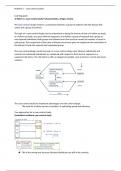
Problem 4 - confounding
Learning goals:
1) What is confounding? (criteria / types)
The term confounding refers to a situation in which a noncausal association between a given
exposure and outcome is observed as a result of the influence of a third factors (confounder)
Confounding results in distortion of the effect of the exposure on disease due to one or more
extraneous variables.
Confounding is more likely to occur in observational than in experimental studies
In an experimental study, the use of randomization reduces the likelihood that the groups
under comparison differ with regard to both known and unknown confounding factors.
Confounding is based on the counterfactual model. This explanation relies on the notion that the
attribution of causation to a particular exposure is based on the concept that the risk of the outcome
observed among individual exposed would have been different in the same individuals if exposure
had been absent.
The common theme with regard to confounding is that the association between an exposure and
outcome is induced, strengthened, weakened or eliminated by a third variable or group of variables.
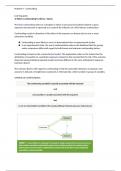
CRITERIA OF CONFOUNDING
, Problem 4 - confounding
Unidirectional arrow = causal association
Bidirectional arrow = noncausal association
TYPES OF CONFOUNDING
- Positive confounding / bias = away from the null-value
o E.g.: 2 2.5
o Positive association for both the exposure and outcome
o Negative association for both the exposure and outcome
- Negative confounding / bias = towards the null-value
o E.g.: 2 1.5
o Positive for the outcome and negative for the exposure (or the other way around)
- Switch-over confounding / bias (qualitative) = across the null-value
o E.g. 0.7 1,7
The size of the bias due to confounding depends on the strength of the association between the
confounder and outcome and between the confounder and exposure.
Table 8
2) How can you correct and prevent for confounding?
PREVENT
Design:
- Randomization
- Restriction
- Matching
CORRECT
Assessment of confounding effects is carried out for variables that are known or suspected
confounders. The identification of potential confounders is usually based on prior knowledge. In
addition to the prior knowledge about these associations, it is important to verify whether
confounding is present in the study.
There are several approaches for assessing the presence of confounding, which are related to the
following questions:
- Is the confounding variable related to both the exposure and the outcome in the study?
- Does the exposure-outcome association seen in the crude analysis have the same direction
and similar magnitude as the associations seen within strata of confounding variables?
- Does the exposure-outcome association seen in the crude analysis have the same direction
and similar magnitude as that is seen of controlling (adjusting) for the confounding variables?
Is the confounding variable related to both the exposure and outcome variable
Calculation association between exposure and confounder factor:
- Cohort study in total population
- Case-control study in controls
Calculation association between outcome and confounder:
Learning goals:
1) What is confounding? (criteria / types)
The term confounding refers to a situation in which a noncausal association between a given
exposure and outcome is observed as a result of the influence of a third factors (confounder)
Confounding results in distortion of the effect of the exposure on disease due to one or more
extraneous variables.
Confounding is more likely to occur in observational than in experimental studies
In an experimental study, the use of randomization reduces the likelihood that the groups
under comparison differ with regard to both known and unknown confounding factors.
Confounding is based on the counterfactual model. This explanation relies on the notion that the
attribution of causation to a particular exposure is based on the concept that the risk of the outcome
observed among individual exposed would have been different in the same individuals if exposure
had been absent.
The common theme with regard to confounding is that the association between an exposure and
outcome is induced, strengthened, weakened or eliminated by a third variable or group of variables.
CRITERIA OF CONFOUNDING
, Problem 4 - confounding
Unidirectional arrow = causal association
Bidirectional arrow = noncausal association
TYPES OF CONFOUNDING
- Positive confounding / bias = away from the null-value
o E.g.: 2 2.5
o Positive association for both the exposure and outcome
o Negative association for both the exposure and outcome
- Negative confounding / bias = towards the null-value
o E.g.: 2 1.5
o Positive for the outcome and negative for the exposure (or the other way around)
- Switch-over confounding / bias (qualitative) = across the null-value
o E.g. 0.7 1,7
The size of the bias due to confounding depends on the strength of the association between the
confounder and outcome and between the confounder and exposure.
Table 8
2) How can you correct and prevent for confounding?
PREVENT
Design:
- Randomization
- Restriction
- Matching
CORRECT
Assessment of confounding effects is carried out for variables that are known or suspected
confounders. The identification of potential confounders is usually based on prior knowledge. In
addition to the prior knowledge about these associations, it is important to verify whether
confounding is present in the study.
There are several approaches for assessing the presence of confounding, which are related to the
following questions:
- Is the confounding variable related to both the exposure and the outcome in the study?
- Does the exposure-outcome association seen in the crude analysis have the same direction
and similar magnitude as the associations seen within strata of confounding variables?
- Does the exposure-outcome association seen in the crude analysis have the same direction
and similar magnitude as that is seen of controlling (adjusting) for the confounding variables?
Is the confounding variable related to both the exposure and outcome variable
Calculation association between exposure and confounder factor:
- Cohort study in total population
- Case-control study in controls
Calculation association between outcome and confounder: