Antibodies
What are antibodies ?
cells / secreted plasma cells
produced by
B by .
→ Antibodies are proteins specific to an antigen
body infected self material specific
-
When the is
by non -
,
a B cell produces a
antibody .
The
•
Each
antibody has two identical binding sites .
antibody binding sites are
complementary to
a specific antigen .
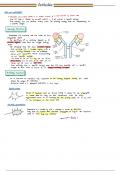
Antibody structure %
xnxx.vn#x-xE
antigen
"
Antibodies proteins and made of four
µ µ
-
are are
polypeptide chains .
{
-
of
The
specificity antibody depends its
-
an on
\
GO
-
variable
regions ,
which form the
antigen binding
} g. r light
sites .
variable n chain
-
All antibodies have the same constant
regions .
regions -
r
has
-
Each antibody variable with disulfide
a
region a
•
bridge
unique tertiary structure ( due to different hinge
) that's region
amino acid sequences complementary r
> heavy
to one
specific antigen .
constant chain
'
The chains of one pair are
long and are called regions ( blue)
heavy chains ,
which the chains of the other pair are
shorter and chains
are known as
light .
Each
antibody has specific that fits precisely onto specific
a
binding site very
a
•
antigen to form what is known as an
antigen antibody -
complex .
Antibody Function
←ÉÉ¥
It is
important to do not directly but rather
understand that antibodies
destroy antigens
•
the for destruction
prepare antigen .
destruction in two
Antibodies assist in a
pathogen 's ways
:
•
Agglutination
It Clumps of bacterial cells formed
making it easier for the phagocytes
'
are ,
the
to locate them as
they are less spread-out within body .
yy.y.y.gg •
to
Agglutination
two pathogens
occurs as
at
an
the
antibody
s am e time
has
.
two binding sites ,
so it can bind
Antibody organisation
µ
µµ ✗ by which destruction
Opsonisation is process pathogen marked
by
.
a a is .
They markers that stimulate
phagocytes to
engulf the bacterial
'
e- serve as
cells to which attached
Y they are .
Y y
- Ariki
What are antibodies ?
cells / secreted plasma cells
produced by
B by .
→ Antibodies are proteins specific to an antigen
body infected self material specific
-
When the is
by non -
,
a B cell produces a
antibody .
The
•
Each
antibody has two identical binding sites .
antibody binding sites are
complementary to
a specific antigen .
Antibody structure %
xnxx.vn#x-xE
antigen
"
Antibodies proteins and made of four
µ µ
-
are are
polypeptide chains .
{
-
of
The
specificity antibody depends its
-
an on
\
GO
-
variable
regions ,
which form the
antigen binding
} g. r light
sites .
variable n chain
-
All antibodies have the same constant
regions .
regions -
r
has
-
Each antibody variable with disulfide
a
region a
•
bridge
unique tertiary structure ( due to different hinge
) that's region
amino acid sequences complementary r
> heavy
to one
specific antigen .
constant chain
'
The chains of one pair are
long and are called regions ( blue)
heavy chains ,
which the chains of the other pair are
shorter and chains
are known as
light .
Each
antibody has specific that fits precisely onto specific
a
binding site very
a
•
antigen to form what is known as an
antigen antibody -
complex .
Antibody Function
←ÉÉ¥
It is
important to do not directly but rather
understand that antibodies
destroy antigens
•
the for destruction
prepare antigen .
destruction in two
Antibodies assist in a
pathogen 's ways
:
•
Agglutination
It Clumps of bacterial cells formed
making it easier for the phagocytes
'
are ,
the
to locate them as
they are less spread-out within body .
yy.y.y.gg •
to
Agglutination
two pathogens
occurs as
at
an
the
antibody
s am e time
has
.
two binding sites ,
so it can bind
Antibody organisation
µ
µµ ✗ by which destruction
Opsonisation is process pathogen marked
by
.
a a is .
They markers that stimulate
phagocytes to
engulf the bacterial
'
e- serve as
cells to which attached
Y they are .
Y y
- Ariki