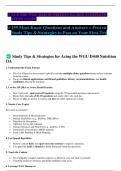
➢ ACE THE WGU D440 NUTRITION OA 2025: COMPLETE
STUDY GUIDE
➢159 Must-Know Questions and Answers + Proven
Study Tips & Strategies to Pass on Your First Try
Study Tips & Strategies for Acing the WGU D440 Nutrition
OA
1. Understand the Exam Format
• The OA (Objective Assessment) typically includes multiple-choice questions based on key concepts
from the course.
• Focus on clinical applications, nutritional guidelines, dietary recommendations, and health
conditions affected by nutrition.
2. Use the 159 Q&A as Active Recall Practice
• Don’t just read—quiz yourself regularly using the 159 provided questions and answers.
• Break them into sets of 20–30 questions and study a few sets each day.
• Focus on why an answer is correct and why the other options are wrong.
3. Master Core Topics
Key areas to prioritize:
• Macronutrients & Micronutrients
• Dietary Guidelines (e.g., MyPlate, DRI, RDA)
• Digestion & Absorption
• Nutrition Across the Lifespan
• Chronic Diseases and Nutrition (e.g., diabetes, CVD)
• Nutritional Assessments (ABCD method)
• Food Label Reading & Meal Planning
4. Use Spaced Repetition
• Review content daily, but space out your sessions to improve retention.
• Use apps like Anki or Quizlet to make flashcards from the questions.
5. Teach the Content
• Try explaining complex nutrition topics to a friend or even out loud to yourself.
• Teaching reinforces memory and helps highlight weak areas.
6. Leverage WGU Resources
, • Revisit Course Tips, Cohort Recordings, and Instructor Announcements.
• Use the Course Instructor Q&A forum for clarifications.
7. Simulate Exam Conditions
• Time yourself when practicing with the Q&A set.
• Mimic test conditions to reduce anxiety and improve time management.
8. Create a Study Schedule
• Set daily or weekly goals.
• For example: “Finish reviewing 50 questions by Thursday, take mock test Friday.”
9. Join WGU Study Communities
• Use platforms like Reddit (r/WGU) or Discord to connect with others who are preparing.
• Share tips, discuss tough questions, and stay motivated.
10. Stay Healthy
• Stay hydrated, take study breaks, and get good sleep—your brain retains more when you're well-rested
and focused.
1. Describe the significance of monitoring glucose levels during total
parenteral nutrition (TPN).
Monitoring glucose helps in determining the patient's hydration
status.
Monitoring glucose levels during TPN is crucial to prevent
hyperglycemia and ensure proper metabolic function.
Glucose levels are monitored to assess protein intake.
Monitoring glucose levels is unnecessary during TPN.
2. A patient is told she is allowed to have ground or finely diced meats,
flaked fish, cottage cheese, cheese, rice, potatoes, pancakes, light
breads, cooked vegetables, cooked or canned fruits, bananas, soups,
peanut butter, eggs that are not fried. What type of diet is she on?
Clear Liquid
, Pureed
Mechanical Soft
Full Liquid
3. Which vitamin is primarily associated with sources such as beef, liver, and
clams?
B12
C
A
D
4. What are the symptoms of Vitamin B12 deficiency?
, Nausea and vomiting
Dry skin and hair loss
Fatigue and weakness
Ataxia and tremors
5. Describe the role of magnesium in the human diet as indicated in the
reference document.
Magnesium is primarily used for energy production and is found in
dairy products.
Magnesium is important for blood clotting and is mainly found in
fruits.
Magnesium is essential for various bodily functions, including
muscle and nerve function, and is found in foods like cocoa,
legumes, and nuts.
Magnesium is crucial for DNA synthesis and is abundant in meats.
6. An open feeding set needs to be changed:
24 hours
72 hours
7. Sodium can be found in which food sources
table salts
condiments
salty food
all of the above
8. Describe the significance of Vitamin B12 in the diet and its primary food
sources.
, Vitamin B12 is essential for red blood cell formation and
neurological function, and it is primarily found in animal
products such as beef, liver, and dairy.
Vitamin B12 is important for skin health and is found in fruits and
vegetables.
Vitamin B12 is crucial for bone health and is mainly found in nuts
and seeds.
Vitamin B12 is necessary for muscle repair and is found in whole
grains.
9. Describe the implications of hypocalcemia for patient care and dietary
management.
Hypocalcemia is a normal condition that requires no dietary
changes.
Hypocalcemia indicates high calcium levels, which can improve
bone health.
Hypocalcemia indicates low calcium levels, which can lead to
various health issues requiring dietary adjustments.
Hypocalcemia is unrelated to dietary management.
10. What is the first action a nurse should take before administering feeding
through a nasogastric (NG) tube?
remove
flush
check
insert
11. Describe the difference between complete and incomplete proteins in
terms of amino acid composition.
STUDY GUIDE
➢159 Must-Know Questions and Answers + Proven
Study Tips & Strategies to Pass on Your First Try
Study Tips & Strategies for Acing the WGU D440 Nutrition
OA
1. Understand the Exam Format
• The OA (Objective Assessment) typically includes multiple-choice questions based on key concepts
from the course.
• Focus on clinical applications, nutritional guidelines, dietary recommendations, and health
conditions affected by nutrition.
2. Use the 159 Q&A as Active Recall Practice
• Don’t just read—quiz yourself regularly using the 159 provided questions and answers.
• Break them into sets of 20–30 questions and study a few sets each day.
• Focus on why an answer is correct and why the other options are wrong.
3. Master Core Topics
Key areas to prioritize:
• Macronutrients & Micronutrients
• Dietary Guidelines (e.g., MyPlate, DRI, RDA)
• Digestion & Absorption
• Nutrition Across the Lifespan
• Chronic Diseases and Nutrition (e.g., diabetes, CVD)
• Nutritional Assessments (ABCD method)
• Food Label Reading & Meal Planning
4. Use Spaced Repetition
• Review content daily, but space out your sessions to improve retention.
• Use apps like Anki or Quizlet to make flashcards from the questions.
5. Teach the Content
• Try explaining complex nutrition topics to a friend or even out loud to yourself.
• Teaching reinforces memory and helps highlight weak areas.
6. Leverage WGU Resources
, • Revisit Course Tips, Cohort Recordings, and Instructor Announcements.
• Use the Course Instructor Q&A forum for clarifications.
7. Simulate Exam Conditions
• Time yourself when practicing with the Q&A set.
• Mimic test conditions to reduce anxiety and improve time management.
8. Create a Study Schedule
• Set daily or weekly goals.
• For example: “Finish reviewing 50 questions by Thursday, take mock test Friday.”
9. Join WGU Study Communities
• Use platforms like Reddit (r/WGU) or Discord to connect with others who are preparing.
• Share tips, discuss tough questions, and stay motivated.
10. Stay Healthy
• Stay hydrated, take study breaks, and get good sleep—your brain retains more when you're well-rested
and focused.
1. Describe the significance of monitoring glucose levels during total
parenteral nutrition (TPN).
Monitoring glucose helps in determining the patient's hydration
status.
Monitoring glucose levels during TPN is crucial to prevent
hyperglycemia and ensure proper metabolic function.
Glucose levels are monitored to assess protein intake.
Monitoring glucose levels is unnecessary during TPN.
2. A patient is told she is allowed to have ground or finely diced meats,
flaked fish, cottage cheese, cheese, rice, potatoes, pancakes, light
breads, cooked vegetables, cooked or canned fruits, bananas, soups,
peanut butter, eggs that are not fried. What type of diet is she on?
Clear Liquid
, Pureed
Mechanical Soft
Full Liquid
3. Which vitamin is primarily associated with sources such as beef, liver, and
clams?
B12
C
A
D
4. What are the symptoms of Vitamin B12 deficiency?
, Nausea and vomiting
Dry skin and hair loss
Fatigue and weakness
Ataxia and tremors
5. Describe the role of magnesium in the human diet as indicated in the
reference document.
Magnesium is primarily used for energy production and is found in
dairy products.
Magnesium is important for blood clotting and is mainly found in
fruits.
Magnesium is essential for various bodily functions, including
muscle and nerve function, and is found in foods like cocoa,
legumes, and nuts.
Magnesium is crucial for DNA synthesis and is abundant in meats.
6. An open feeding set needs to be changed:
24 hours
72 hours
7. Sodium can be found in which food sources
table salts
condiments
salty food
all of the above
8. Describe the significance of Vitamin B12 in the diet and its primary food
sources.
, Vitamin B12 is essential for red blood cell formation and
neurological function, and it is primarily found in animal
products such as beef, liver, and dairy.
Vitamin B12 is important for skin health and is found in fruits and
vegetables.
Vitamin B12 is crucial for bone health and is mainly found in nuts
and seeds.
Vitamin B12 is necessary for muscle repair and is found in whole
grains.
9. Describe the implications of hypocalcemia for patient care and dietary
management.
Hypocalcemia is a normal condition that requires no dietary
changes.
Hypocalcemia indicates high calcium levels, which can improve
bone health.
Hypocalcemia indicates low calcium levels, which can lead to
various health issues requiring dietary adjustments.
Hypocalcemia is unrelated to dietary management.
10. What is the first action a nurse should take before administering feeding
through a nasogastric (NG) tube?
remove
flush
check
insert
11. Describe the difference between complete and incomplete proteins in
terms of amino acid composition.