uworld NCLEX Questions with correct answers
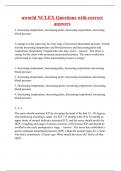
2. Increasing temperature, decreasing pulse, decreasing respirations, increasing blood pressure A change in vital signs may be a late sign of increased intracranial pressure. Trends include increasing temperature and blood pressure and decreasing pulse and respirations. Respiratory irregularities also may occur. - Answer The nurse is caring for the client with increased intracranial pressure. The nurse would note which trend in vital signs if the intracranial pressure is rising? 1. Increasing temperature, increasing pulse, increasing respirations, decreasing blood pressure 2. Increasing temperature, decreasing pulse, decreasing respirations, decreasing blood pressure 3. Decreasing temperature, decreasing pulse, increasing respirations, decreasing blood pressure 4. Decreasing temperature, increasing pulse, decreasing respirations, increasing blood pressure 2, 3, 4 The nurse should maintain ICP by elevating the head of the bed 15 - 20 degrees and monitoring neurologic status. An ICP >15 mmHg with 20 to 25 mmHg as upper limits of normal indicates increased ICP, and the nurse should notify the HCP. Coughing and range of motion exercises will increase ICP and should be avoided in the early postoperative stage. - Answer The nurse has established a goal to maintain intracranial pressure (ICP) within the normal range for a client who had a craniotomy 12 hours ago. What should the nurse do? Select all that apply.
Written for
- Institution
- NCLEX RN
- Course
- NCLEX RN
Document information
- Uploaded on
- June 30, 2023
- Number of pages
- 18
- Written in
- 2022/2023
- Type
- Exam (elaborations)
- Contains
- Questions & answers
Subjects
-
uworld nclex questions with correct answers

Also available in package deal