Kettering TMC Modules questions and correct answers
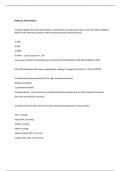
A balloon-tipped, flow-directed catheter is positioned in the pulmonary artery with the balloon deflated. Which of the following pressures will be measured by the proximal lumen? A) CVP B) PAP C) PWP D) MAP - correct answers A. CVP Swans gans catheter for hemodynamic monitoring. Distal deflated is PAP, Distal inflated is PWP All of the following could cause a capnography reading to change from 36 torr to 30 torr EXCEPT A) endotracheal tube positioned in the right mainstem bronchus B) hyperventilation C) pulmonary emboli D) hypovolemia - correct answers A. endotracheal tube positioned in the right mainstem bronchus. This will cause PeTCO to increase A patient in the intensive care unit has the following hemodynamic measurements: CVP: 9 mmHg Mean PAP: 24 mmHg PCWP: 9 mmHg MAP 93 mmHg Cardiac Output (QT): 5.4 L/min Cardiac index (QI): 2.9 Lmin/m2 A) right heart failure B) left heart failure C) pulmonary embolism D) normal cardiac fuction - correct answers C. pulmonary embolism CVP-High, Mean PAP-High(lungs), PCWP-Normal (rules out left heart problem), MAP-normal, QT-normal, QI-normal All of the following will affect the accuracy of a capnograph EXCEPT A) long sampling line B) low sampling flow C) condensation in the tubing D) use of a desiccant - correct answers D. use of a desiccant-chemical that removes moisture from the gas creating a more accurate measurement Long sampling line will take longer for gas to pass thru to reach analyzer, low sampling flow wont give enough info for good reading, condensation in the tubing can cause obstruction in line A 1000 g neonate is stable in the NICU. Which of the following should the respiratory therapist use to monitor the neonate's overall cardiopulmonary status? A) TcPCO2 and TcPO2 monitor B) Arterial blood gas analysis Q4 hours C) SpO2 monitor D) Capillary gas analysis Q8 hours - correct answers A. TcPCO2 and TcPO2 monitor is noninvasive and continuously monitoring ventilation/O2 ABG is invasive and Q4, SpO2 monitor only measures O2, Cap Gases not accurate(worst answer) A unilateral wheez would most likely indicate which of the following? A) asthma B) atelectasis C) foreign body aspiration D) epiglotitis - correct answers C. foreign body aspiration Asthma is bilateral wheeze, atelectasis is diminished, epiglotits is stridor All of the following would be associated with the presence of a pnewumothorax EXCEPT: A) tracheal deviation B) dull percussion C) absent breath sounds D) respiratory distress - correct answers B. dull percussion- makes a high pitched tympanic sound tracheal deviation pushed away from PNX While suctioning a patient who is being mechanically ventilated, the respiratory therapist notes the following ECG pattern: A) Normal sinus rhythm B) Left bundle branch block C) Normal sinus rhythm w/multifocal PVC D) Normal sinus rhythm w/artifact - correct answers C. Normal sinus rhythm w/multifocal PVC B. Administer 100% oxygen lidocaine can treat PVC but not 1st, atropine for bradycardia, epinephrine-ER drug for pulseless Vtach - correct answers While suctioning a patient who is being mechanically ventilated, the respiratory therapist notes the following ECG pattern on the monitor: A) Administer lidocaine B) administer 100% O2 C) administer atropine D) administer epinephrine What is the normal range for the mean pulmonary artery pressure in an adult? A) 2-6 mm Hg B) 4-12 mm Hg C) 9-18 mm Hg D) 21-28 mm Hg - correct answers C. 9-18 mmHg A 44-year-old woman has just undergone a cholecystectomy. Over the last 48 hours the patient has the following laboratory findings: K+: 2 mEq/L Na+: 135 mEq/L Cl-: 100 mEq/L HCO3-: 32 mEq/L Urine output: 40 mL/hour Based upon this information, the respiratory therapist would conclude that the patient - correct answers D. metabolic alkalosis K(low), Na(normal), Cl(normal), HCO3(high) confirming answer While reviewing a patient's medical record, the respiratory therapist notes that the patient has the following clinical data: pH: 7.45 PaCO2: 36 torr PaO2: 89 torr SpO2: 94% Na: 139 mEq/L K: 3.9 mEq/L Cl: 90 mEq/L Hb: 8 g/dL BUN: 15 mg/dL Glucose: 90 mg/dL The patient is receiving oxygen at 5 LPM via nasal cannula and is complaining of shortness of breath. The respiratory therapist would conclude that the patient has: - correct answers C. Anemia all values are normal but Hb A patient in the intensive care unit has the following hemodynamic measurements: CVP: 4 mm Hg PAP: 48/16 mm Hg PCWP: 8 mm Hg MAP: 92 mm Hg Cardiac Output: 5 L/min. Cardiac Index: 2.5 L/min/m2 The respiratory therapist should recommend the administration of A.bumex. B.dopamine. C.lidocaine. D.oxygen. - correct answers D. Oxygen (vasodilation decreasing pressures) Bumex (diuretic), dopamine(vasopresser for shock), lidocaine(anti-arrhythmic PVC) The pulmonary physician has made his patient rounds in the intensive care unit. The physician has remarked in the progress notes that he would like to make a change to the patient's ventilator settings. The therapist's most appropriate action should be to: A. initiate the ventilator changes B. write a verbal order for the change C. ask the nurse to write the order D. contact the physician to write the order - correct answers D. contact the physician to write the order A patient in the emergency department has frothy secretions, moist crackles, and tachypnea. The patient has marked dyspnea and a history of heart disease. Which of the following should the respiratory therapist recommend? 1. Suction immediately 2. Administer 100% oxygen 3. Place in Fowlers position 4. Administer furosemide A.1, 2 & 3 only B.1, 3 & 4 only C.1, 2 & 4 only D.2, 3, & 4 only - correct answers D. O2, fowlers, furosemide PT has severe pulmonary edema treat it aggressively SXN only delays good therapy A nasopharyngeal airway is indicated for which of the following patients? A. unconscious patient with a closed head injury B. conscious patient with an ineffective cough C. alert patient who is expectorating a large amount of secretions D. uncooperative patient - correct answers B. conscious patient with an ineffective cough An 18-month-old child admitted to the pediatric unit is playing with marbles. The child suddenly develops violent coughing and inspiratory stridor. The respiratory therapist has administered back blows and chest thrusts without success. Which of the following should the respiratory therapist now recommend? A.Chest compressions B.Rigid bronchoscopy C.Blind finger sweep D.Mouth to mouth resuscitation - correct answers B. rigid bronchoscopy Which of the following is the most appropriate technique for insertion of a nasopharyngeal airway? A. insert the airway in the opposite direction of its shape and rotate 180 degrees B. insert the airway in the opposite direction of its shape and rotate 90 degrees C. insert the airway in the same direction of its shape into the airway and do not rotate D. insert the airway in the same direction of its shape and rotate 180 degrees - correct answers C. insert airway in the same direction of its shape and do not rotate which of the following describes the proper technique when using a stylet? A. The distal end should be recessed at least 1 cm from the tip of the endotracheal tube B. The distal end should be positioned at the level of the beveled end C. The distal end should be proximal to the "Murphy's Eye" D. The distal end should be positioned proximal to the cuff - correct answers A. The distal end should be recessed at least 1 cm from the tip of the endotracheal tube A tracheostomy tube has just been changed on a patient receiving continuous ventilation. The patient suddenly becomes dyspneic and develops subcutaneous emphysema. This is most likely due to: A. Patient needs to be suctioned immediately B. Patient is having an allergic reaction to the Teflon tube C. Tracheostomy tube is malpositioned D. A larger tracheostomy tube needs to be inserted - correct answers C. Trach tube is malpositioned Which of the following describes the proper technique when using a stylet? A. The distal end should be recessed at least 1 cm from the tip of the endotracheal tube B. The distal end should be positioned at the level of the beveled end C. The distal end should be proximal to the "Murphy's Eye" D. The distal end should be positioned proximal to the cuff - correct answers A. The distal end should be recessed at least 1 cm from the tip of the endotracheal tube A. Loss of PEEP bradycardia happened from loss of PEEP, PT hasn't been suctioned yet - correct answers A patient being mechanically ventilated requires endotracheal suctioning. The patient is on high levels of PEEP therapy and has periods of hypotension. The respiratory therapist hyperoxygenates the patient before beginning the procedure. As the therapist disconnects the patient from the ventilator circuit, the following pattern is seen on the ECG monitor: A. Loss of PEEP B. Inadequate hyperoxygenation time C. Vagus nerve stimulation D. Normal response to suctioning A patient is diagnosed with a necrotizing pulmonary fistula in the right lung. The physician has requested that the right lung be ventilated at a pressure 10 cmH2O lower than the left lung. The respiratory therapist should recommend providing this type of ventilation via a: A. Transtracheal catheter device B. Double-lumen endobronchial tube C. Cricothyroidotomy D. 14 gauge endotracheal catheter - correct answers D. Double-lumen endobranchial tube A patient has been intubated in order to receive volume control ventilation. To inflate the endotracheal tube cuff, the respiratory therapist should add air to the cuff A. until no leak is heard during inspiration. B. and then remove it until a slight leak is heard at peak inspiration. C. to establish a pressure of 20 mmHg. D. to establish a pressure of 40 cmH2O. - correct answers C. to establish a pressure of 20 mmHg A 16-year-old male patient involved in a motorcycle accident presents to the ER with massive maxillary and nasal trauma. Which of the following devices would be most appropriate for maintaining the patient's airway? A. nasal endotracheal tube B. fenestrated tracheostomy tube C. oral pharyngeal airway D. oral endotracheal tube - correct answers B. fenesrated tracheostomy tube Shortly after extubating a patient, the therapist notes an increase in the patient's work of breathing, intercostal retractions, marked stridor and a decreased SpO2. The therapist should recommend: A. Cool aerosol therapy with 50% oxygen B. Assisted ventilation with a resuscitation bag and mask C. CPAP therapy with 40% oxygen D. Reintubate orally - correct answers D. Reintubate orally A 48-year-old postoperative patient in the recovery room is still unconscious. Vital signs are all stable and the SpO2 is 95%. Which of the following should the therapist recommend to prevent a soft tissue obstruction from occurring? A. Oropharyngeal airway B. Nasopharyngeal airway C. Laryngeal mask airway D. Esophageal obturator airway - correct answers A. Oropharyngeal airway What is the function of the one-way valve on a mouth-to-valve mask resuscitation device? A. Increase the delivered FIO2 B. Prevent the patient from exhaling back C. Prevent the patient from breathing room air D. Control the flow of gas to the patient - correct answers B. Prevent the patient from exhaling back A 57-year-old post-op patient is receiving volume control ventilation. The respiratory therapist is having difficulty removing secretions when suctioning. The patient weighs 85 kg (187 lb), is orally intubated with a size 9.0 mm ID endotracheal tube, the vacuum level is set at 90 mm Hg and the suction catheter being used is a size 14 Fr. The therapist should A. switch to a larger catheter size. B. increase the vacuum level. C. switch to a Coude catheter. D. instill normal saline prior to suctioning. - correct answers B. increase the vacuum level
Written for
- Institution
- Kettering TMC Modules
- Course
- Kettering TMC Modules
Document information
- Uploaded on
- June 30, 2023
- Number of pages
- 135
- Written in
- 2022/2023
- Type
- Exam (elaborations)
- Contains
- Questions & answers
Subjects
-
kettering tmc modules questions and answers

Also available in package deal