
GCSE Biology- Blood & the Heart
2.65
The heart func>ons like a pump that helps to push blood around the body.
The heart is part of a circulatory system, which is made up of
1) a pump – heart
2) vessels to carry the blood (arteries, capillaries, veins)
3) valves that ensure the 1-way flow of blood
Some vessels bring blood to the heart and other take it away.: the heart has chambers that
accept blood and that send blood away.
Arteries: carry oxygenated blood away from the heart to the organs
Veins: carry deoxygenated blood to the heart from the organs
The only excep>ons to this rule are the pulmonary artery and the pulmonary vein
Pulmonary artery: carries deoxygenated blood from the heart to the lungs
Pulmonary vein: carries oxygenated blood from the lungs to the heart
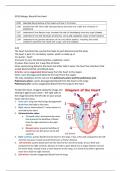
To label the heart, imagine taking the image and
s>cking it against your chest – the right side on
the image becomes the leO side on your actual
heart and vice versa.
1. Vena cava: a big vein that brings deoxygenated
blood from the body to the heart
2. Right atrium: where blood 1st enters when it is 10
received by the heart
3. Atrioventricular valves
a. Tricuspid valve: atrioventricular valve 3a 3b
that prevents the backflow of blood
from the right ventricle to the right
atrium
b. Bicuspid valve: prevents backflow of
blood from the left atrium to the left
ventricle
4. Right ventricle: pushes blood from the heart to the lungs. It has a thin wall compared to the left
ventricle, because it needs to push blood over a shorter distance.
5. Left ventricle: pushes blood out from the heart to the rest of the body. It has a thick wall
compared to the right ventricle, because it needs to push blood over a longer distance around
the entire body, instead of just a short distance to the lungs, so it needs to be able to generate
more force than the right ventricle
6. Left atrium: receives oxygenated blood from the lungs
2.65
The heart func>ons like a pump that helps to push blood around the body.
The heart is part of a circulatory system, which is made up of
1) a pump – heart
2) vessels to carry the blood (arteries, capillaries, veins)
3) valves that ensure the 1-way flow of blood
Some vessels bring blood to the heart and other take it away.: the heart has chambers that
accept blood and that send blood away.
Arteries: carry oxygenated blood away from the heart to the organs
Veins: carry deoxygenated blood to the heart from the organs
The only excep>ons to this rule are the pulmonary artery and the pulmonary vein
Pulmonary artery: carries deoxygenated blood from the heart to the lungs
Pulmonary vein: carries oxygenated blood from the lungs to the heart
To label the heart, imagine taking the image and
s>cking it against your chest – the right side on
the image becomes the leO side on your actual
heart and vice versa.
1. Vena cava: a big vein that brings deoxygenated
blood from the body to the heart
2. Right atrium: where blood 1st enters when it is 10
received by the heart
3. Atrioventricular valves
a. Tricuspid valve: atrioventricular valve 3a 3b
that prevents the backflow of blood
from the right ventricle to the right
atrium
b. Bicuspid valve: prevents backflow of
blood from the left atrium to the left
ventricle
4. Right ventricle: pushes blood from the heart to the lungs. It has a thin wall compared to the left
ventricle, because it needs to push blood over a shorter distance.
5. Left ventricle: pushes blood out from the heart to the rest of the body. It has a thick wall
compared to the right ventricle, because it needs to push blood over a longer distance around
the entire body, instead of just a short distance to the lungs, so it needs to be able to generate
more force than the right ventricle
6. Left atrium: receives oxygenated blood from the lungs


