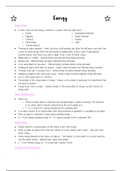
Notes
● Transformations
○ y=-x³ → reflection on the x-axis i.e. y=-x³ and y-axis i.e. y=(-x)³
● Dilation the x-axis
○ Larger dilation factor (a>1) is narrower
○ Smaller dilation factor (a>0 and a<1) is wider
○ y=ax³ → a is a dilation factor on the x axis
○ y=(x/a)³ → a is a dilation factor on the y axis
● Translations
○ y=x³+k → k units in the positive y direction
○ y=x³-k → k units in the negative y direction
○ y=(x+k)³ → k units in the negative x direction
○ y=(x-k)³ → k units in the positive y direction
● Sketching graphs
○ y=x³
○ y=ax³+bx²+cx+d → general form
1. Find y-int
2. Find x-int
○ y=a(x-h)³+k → point of inflection form
1. Find point of inflection (h,k)
● E.g. y=(2x-1)³+1
● TP is (½,1)
2. Find y-int
3. Find x-int
● -k=(x-h)³
● ³√-k=x-h
● Transformations
○ y=-x³ → reflection on the x-axis i.e. y=-x³ and y-axis i.e. y=(-x)³
● Dilation the x-axis
○ Larger dilation factor (a>1) is narrower
○ Smaller dilation factor (a>0 and a<1) is wider
○ y=ax³ → a is a dilation factor on the x axis
○ y=(x/a)³ → a is a dilation factor on the y axis
● Translations
○ y=x³+k → k units in the positive y direction
○ y=x³-k → k units in the negative y direction
○ y=(x+k)³ → k units in the negative x direction
○ y=(x-k)³ → k units in the positive y direction
● Sketching graphs
○ y=x³
○ y=ax³+bx²+cx+d → general form
1. Find y-int
2. Find x-int
○ y=a(x-h)³+k → point of inflection form
1. Find point of inflection (h,k)
● E.g. y=(2x-1)³+1
● TP is (½,1)
2. Find y-int
3. Find x-int
● -k=(x-h)³
● ³√-k=x-h