food hygiene and safety Questions and Answers 2023
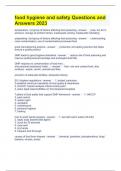
food hygiene and safety Questions and Answers 2023 temperature- 1st group of factors affecting food poisoning prep. too far in advance, storage at ambient temps, inadequate cooling, inadequatte reheating preparating- 2nd group of factors affecting food poisoning undercooking, cross contamination, use of contaminated processed food good manufacturing practice production and testing practice that helps ensure a quality product GMP leads to good hygiene standards reduce risk of food poisoning and improve quality(reduced spoilage and prolonged shelf life) GMP requires no contamination of food from... and personal cleaniness/ habit.... floor, raw and cooked food, dirty surfaces , waste, vermin, animals and flies provision of adequate facilities, adequate training EU- Hygiene regulations 1. protect consumer, lish minimum standards of food quality & cleanliness 3. HACCP: hazard analysis critical control point 4. place legal responsibilities on food preparers/supplies 7 pillars of food safety that support GMP framework 1. HACCP 2. pest control 3. waste mgmt 4. sanitation 5. maintenance 6. personal hygiene 7, training how to wash hands properly 1. wet with warm water (32-43C) 2. apply soap (bactericidal agent) 3. scrub for 30 seconds 4. rinse well 5. dry hands 6. frequent and thorough causes of food born disease chemical, parasites, phytoplanktons, fungi, bacteria, viruses, prions requirements for host invasion- food patho 1. survive acidic environment of the stomach pH less than 2 2. attach and colonise intestinal wall 3. overcome host defence mecanisms 4. compete with resident GIT microflora 5. multiply and produce toxins or cross epithelial lining 3 groups of pahtogens- salmonella 1. host restricted serotypes of S. enterica sub. wp. enterica 2. host adapted serovars 3. unrestriced serovars enteritis (non-typhoidal)- salmonella incub: 6-72h sympt.: headache, fever, nasuea, cramps, diarrhea infective: as few as 1 cell duration: 4-7 days carrier state: 5% can last long time systemic disease (typhoid)- salmonella incub: 3-56days sympt: fever, constipation, abdominal tenderness, rose spots, infective dose: 15-20 cells durtion: 2-4 wks carrier: months/ yrs treatment; antibiotics campylobacter spp. habitat is it also...... GIT of birds, 98% irish broiler chickens have it most commonly reported gastrointestinal bacterial pathogen campylobacteriosis incub: 2-5 days infec. dose: 400-500 cells sympt: headache, malaise, fever, abdominal pain, dur: 2-10 dys replaspes: 25%cases excretion in faeces: 2-3 wks phases of typhoid fever 1. fever, lethargy, gastrointestinal symptoms 2. infected bile reinfects SI. perforation of intestine= peritonitis campulobacter non sporeforming, gram negative, curved s shape rod, they are microaeriphiiic- growing optimally at oxygen concentrations between 3&5% and between 5&10% CO2 staphylococcus aureus habitiat hair, skin, mucous membranes of warm blooded vertebrates also in air dust water etc. staphylococcus aureus incub: 2-7h infect. dose: cfu/g sympt:nasea, cramps, vomiting dur: hours-2dys staphylococcus aureus- implicated foods meat, meat products, bakery products confectionary, food that requires a lot of handling cryptosporidium parcum- dets infects many herd animals, obligate intracellular parasite, undergo sexual repro, resulting oocysts are shed in faeces, resistant to disenfectants, tranmission is via faecal(oral route) cryptosporidium parcum icub: 7-10days infec. dose: 10-100 oocysts immuncompetent dur: 2-14dys sympt:vomiting, nasuea, immunocompromised dur: >30 dys incidence ofcryptosporidium parcum humans swallow oocysts, then oocysts hatch and release sporozoites, then those attach to cells of the airways or gut and produce oocysys which exit in faeces or reinfect the host scombroid himtamine poisoning- dets high levels histamine/vasoactive amines, tuna, mahi mahi, sardins, onset:immediate-30 min sympt. tingling, burning snesation in mouth, upper body rash, itching pufferfish/tetrodon poisoning min lethal dose: 2-3mg onset: 20min-3hr symt: stage 1: numbness lips and tongue, feeling of lightness, headache, vomiting stage2: paralyss, speech impairment, convulstions mycotoxins dets 2C metabolits, mutagenix, carinogenic, target liver kidney, immune sysem, stable to storage and processing conditionsm difficulut to remove in cereals, nuts, coffee, meat, eggs,
Written for
- Institution
- Food safety
- Course
- Food safety
Document information
- Uploaded on
- June 26, 2023
- Number of pages
- 3
- Written in
- 2022/2023
- Type
- Exam (elaborations)
- Contains
- Questions & answers
Subjects
-
food hygiene and safety questions and answers 2023
-
temperature 1st group of factors affecting food p
-
gmp requires no contamination of food from and
-
eu hygiene regulations 1 protect consumer
-
2e

Also available in package deal