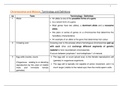
Economy and Society - Themes
Alexander II Alexander III Nicholas II Provisional Lenin Stalin Khrushchev
Government
Housing/ 10% living in cities Most st petersburg houses Severe overcrowding = Extreme overcrowding - Prefabricated housing
living so overcrowding had 26 men per house in 1910, c.100,000 25% sharing room with nicknamed
conditions and disease is not with around 6 men per died in St. Petersburg another family. “Khrushchyovka. “
a massive problem. room. of cholera. WW2 = 25 million More than 13,000
> ½ of all housing homeless, not addressed residential houses built.
constructed from wood until Stalin died in 1953. Housing stock doubled
Peasants lived in and prone to fire Communal housing w/ but electricity and
single room; damage. rents kept low. Lowest running water
wooden huts called Only 74 towns had paid workers often only unreliable.
an izba. access to electricity. had to find 2 or 3 roubles Between 1855 and
Living space was 8.5m2 per month = 2% of their 1964 the housing stock
income. doubled.
Living space = 5.8m2 12% of housing had to
Squalid living be evacuated due to
conditions in growing poor workmanship.
towns, high levels of In Magnitogorsk in the
alcoholism and worker 1930s 15% of the
discontent increase in population lived in New ‘agro-towns’ in the
worker strikes (1886 - permanent brick provinces became
94 av. of 33 strikes a apartments, 25 % lived in overcrowded and faced
year, in 1903 there mud huts they had built public health problems
were 550 strikes themselves and by 1939 found in the major
involving 138,877 there were enough public cities. The 6th five year
workers) bath houses to allow plan’s target was for
every inhabitant to have the construction of 650
7 baths a year. million sq metres of
accommodation - but
only 72 million sq
In Moscow and Leningrad metres were built.
– food rationing –
consumption of meat,
milk and fruit declined by
2/3 1928-33.
Education 1864 reforms. Lower class children were According to the first Universities granted 1919 “liquidation of By 1930 18 million 1959 education law.
Women to attend banned from attending duma universal full autonomy. literacy” children were attending The central idea was
uni. Students school in 1884, and primary education was Education funded locally; primary schools. formulated as
discouraged from universities lost their to be achieved by so people took over Tsarist “strengthening ties
studying history autonomy over their 1932. schools and kept them between school and
and English which curriculum. fee-paying; richest kids Use of Komsol to target life” at all levels of the
would encourage only. Just 3% w-c finished illiteracy – 2 million educational system.
critical thinking. Stolypin promised secondary. members in 1927
compulsory universal Established free
education would be polytechnic schools. Students given the
Zemstva takes est. w/i 10 years from The paramount task of opportunity to stay in
control of 1908. Although not higher learning was to education until 19.
education from the been achieved by "Without literacy there provide specialized
Russian Orthodox 1914, spending on can be no politics, vocational training within
church. elementary schools there can only be the framework of Special funds were
rose from 1.8% of rumours, gossip and manpower policy and introduced for the
budget to 4.2% prejudice." economic plans; strict poorest.
Carried out most between 1907 and control of the student’s
reforms with the 1912. program was to be
Zemstva taking Progress hindered by the imposed by the central School fees abolished
some control civil war authorities. for secondary and
resulting in Literacy rate rose to Instrument for the tertiary education.
attendance 40% in 1914 from transformation to a 99% literacy.
doubling by 1870 under 30%. communist society. Brigade method
, Economy and Society - Themes
however during introduced which
Shift to the Right encouraged collective
Tolstoy restricted thinking > individual
some of these number of primary thinking.
powers - lit only schools double 1905-
28% by his death 1914 and literacy
improved 51% of men
After 1864 the were literate in 1897 1938 – The History of the
semstva became All-Union Communist
an important Party published. –
agency in the rewrote history. –
provision of public devalue Trotsky as
services, nothing more than a
administering ‘bourgeois opportunist’.
primary schools 1948 – 34 million copies
through school sold in USSR.
boards.
Wages A survey in Saratov in The industrial wage Wages fall between Under War Communism paid on a piece-rate Real wages increased
1893 revealed that food only rose from 245 to 10-16% in 90% of all wages paid to system. Wages tied to by 50%.
and rent was ¾ of wage. 264 roubles per month, Petrograd between workers by the start of the work they produced –
whilst inflation raised January and 1921 were ‘in kind’. per unit.
prices by 40 per cent in October. Between 1960 and
the same period. Cost of living had 1965 personal income
risen by over 10% deducted from wages The value of wages increased by 4.1% per
1400%. for petty wrongdoings. halved between 1928 capita annually.
and 1932.
Wages only rose by Wages in 1918 reckoned Disposable income of
100% to be at 3% of the 1913 Wage differentials state employees was
level and the average introduced to reward 30% > collective
worker spent ¾ of this on those who stayed in their workers.
food. jobs – access to closed
shops, better housing
and closed.
Wages at 2% in 1919 of
their level at 1913.
Forced labour – 300,000
prisoners worked on the
Baltic White Sea Canal.
Working 11 hour working days max 8 hour day 48 hour 10-12 hour working days 7 hour working days.
Hours week for workers under the first Five Year
Plan.
Working week remained
Alexander II Alexander III Nicholas II Provisional Lenin Stalin Khrushchev
Government
Housing/ 10% living in cities Most st petersburg houses Severe overcrowding = Extreme overcrowding - Prefabricated housing
living so overcrowding had 26 men per house in 1910, c.100,000 25% sharing room with nicknamed
conditions and disease is not with around 6 men per died in St. Petersburg another family. “Khrushchyovka. “
a massive problem. room. of cholera. WW2 = 25 million More than 13,000
> ½ of all housing homeless, not addressed residential houses built.
constructed from wood until Stalin died in 1953. Housing stock doubled
Peasants lived in and prone to fire Communal housing w/ but electricity and
single room; damage. rents kept low. Lowest running water
wooden huts called Only 74 towns had paid workers often only unreliable.
an izba. access to electricity. had to find 2 or 3 roubles Between 1855 and
Living space was 8.5m2 per month = 2% of their 1964 the housing stock
income. doubled.
Living space = 5.8m2 12% of housing had to
Squalid living be evacuated due to
conditions in growing poor workmanship.
towns, high levels of In Magnitogorsk in the
alcoholism and worker 1930s 15% of the
discontent increase in population lived in New ‘agro-towns’ in the
worker strikes (1886 - permanent brick provinces became
94 av. of 33 strikes a apartments, 25 % lived in overcrowded and faced
year, in 1903 there mud huts they had built public health problems
were 550 strikes themselves and by 1939 found in the major
involving 138,877 there were enough public cities. The 6th five year
workers) bath houses to allow plan’s target was for
every inhabitant to have the construction of 650
7 baths a year. million sq metres of
accommodation - but
only 72 million sq
In Moscow and Leningrad metres were built.
– food rationing –
consumption of meat,
milk and fruit declined by
2/3 1928-33.
Education 1864 reforms. Lower class children were According to the first Universities granted 1919 “liquidation of By 1930 18 million 1959 education law.
Women to attend banned from attending duma universal full autonomy. literacy” children were attending The central idea was
uni. Students school in 1884, and primary education was Education funded locally; primary schools. formulated as
discouraged from universities lost their to be achieved by so people took over Tsarist “strengthening ties
studying history autonomy over their 1932. schools and kept them between school and
and English which curriculum. fee-paying; richest kids Use of Komsol to target life” at all levels of the
would encourage only. Just 3% w-c finished illiteracy – 2 million educational system.
critical thinking. Stolypin promised secondary. members in 1927
compulsory universal Established free
education would be polytechnic schools. Students given the
Zemstva takes est. w/i 10 years from The paramount task of opportunity to stay in
control of 1908. Although not higher learning was to education until 19.
education from the been achieved by "Without literacy there provide specialized
Russian Orthodox 1914, spending on can be no politics, vocational training within
church. elementary schools there can only be the framework of Special funds were
rose from 1.8% of rumours, gossip and manpower policy and introduced for the
budget to 4.2% prejudice." economic plans; strict poorest.
Carried out most between 1907 and control of the student’s
reforms with the 1912. program was to be
Zemstva taking Progress hindered by the imposed by the central School fees abolished
some control civil war authorities. for secondary and
resulting in Literacy rate rose to Instrument for the tertiary education.
attendance 40% in 1914 from transformation to a 99% literacy.
doubling by 1870 under 30%. communist society. Brigade method
, Economy and Society - Themes
however during introduced which
Shift to the Right encouraged collective
Tolstoy restricted thinking > individual
some of these number of primary thinking.
powers - lit only schools double 1905-
28% by his death 1914 and literacy
improved 51% of men
After 1864 the were literate in 1897 1938 – The History of the
semstva became All-Union Communist
an important Party published. –
agency in the rewrote history. –
provision of public devalue Trotsky as
services, nothing more than a
administering ‘bourgeois opportunist’.
primary schools 1948 – 34 million copies
through school sold in USSR.
boards.
Wages A survey in Saratov in The industrial wage Wages fall between Under War Communism paid on a piece-rate Real wages increased
1893 revealed that food only rose from 245 to 10-16% in 90% of all wages paid to system. Wages tied to by 50%.
and rent was ¾ of wage. 264 roubles per month, Petrograd between workers by the start of the work they produced –
whilst inflation raised January and 1921 were ‘in kind’. per unit.
prices by 40 per cent in October. Between 1960 and
the same period. Cost of living had 1965 personal income
risen by over 10% deducted from wages The value of wages increased by 4.1% per
1400%. for petty wrongdoings. halved between 1928 capita annually.
and 1932.
Wages only rose by Wages in 1918 reckoned Disposable income of
100% to be at 3% of the 1913 Wage differentials state employees was
level and the average introduced to reward 30% > collective
worker spent ¾ of this on those who stayed in their workers.
food. jobs – access to closed
shops, better housing
and closed.
Wages at 2% in 1919 of
their level at 1913.
Forced labour – 300,000
prisoners worked on the
Baltic White Sea Canal.
Working 11 hour working days max 8 hour day 48 hour 10-12 hour working days 7 hour working days.
Hours week for workers under the first Five Year
Plan.
Working week remained