Introduction to Electrode Potentials and Cells
more negative = oxidation =left
more positive = reduction = right
Electrochemical cells use a redox reaction as the electron transfer between products creates a
flow of electrons.
The flow of charged particles is an electrical current which flows between electrodes in the cell.
A potential difference is then produced between the two electrodes which can be measured.
Most electrochemical cells consist of two metal electrodes and a salt bridge.
A salt bridge is a tube of un-reactive ions that can move between the two solutions to carry the
flow of charge but will not interfere with the reaction.
Each solution is a half cell which makes up the full chemical cell.
These half cells have a cell potential which indicates how it will react either as an oxidation
reaction or reduction reaction.
The reactions that occur on the cell are reversible.
The conversion of metals to ions or ions to metals occurs on the surface of the electrode.
Electrons flow from the most reactive metal to the least.
The electrode the electrons flow to is the positive electrode.
The electrode the electrons flow away from is the negative electrode.
The reactions are called half reactions although they are reversible they are written with the
reduction reaction going in the forwards direction. Electrons are added to the left hand side.
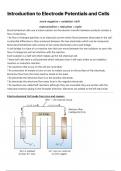
Electrochemical Cell made from zinc and copper:
more negative = oxidation =left
more positive = reduction = right
Electrochemical cells use a redox reaction as the electron transfer between products creates a
flow of electrons.
The flow of charged particles is an electrical current which flows between electrodes in the cell.
A potential difference is then produced between the two electrodes which can be measured.
Most electrochemical cells consist of two metal electrodes and a salt bridge.
A salt bridge is a tube of un-reactive ions that can move between the two solutions to carry the
flow of charge but will not interfere with the reaction.
Each solution is a half cell which makes up the full chemical cell.
These half cells have a cell potential which indicates how it will react either as an oxidation
reaction or reduction reaction.
The reactions that occur on the cell are reversible.
The conversion of metals to ions or ions to metals occurs on the surface of the electrode.
Electrons flow from the most reactive metal to the least.
The electrode the electrons flow to is the positive electrode.
The electrode the electrons flow away from is the negative electrode.
The reactions are called half reactions although they are reversible they are written with the
reduction reaction going in the forwards direction. Electrons are added to the left hand side.
Electrochemical Cell made from zinc and copper: