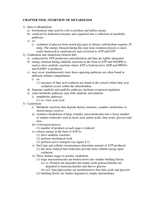
CHAPTER NINE: OVERVIEW OF METABOLISM
1) Intro to Metabolism
a) biochemical steps used by cells to produce and utilize energy
b) catalyzed by dedicated enzymes and organized into a collection of metabolic
pathways
c) ex:
i) oxidation of glucose from stored glycogen or dietary carbohydrate requires 20
steps. The energy released during this step-wise oxidation process is more
easily harnessed in small parcels and converted to ATP and GTP
2) Catabolism and Anabolism General Info
a) connected by ATP production and utilization and thus are tightly integrated
b) energy released during catabolic reactions in the form of ATP and NADPH is
used to drive anabolic reactions where ATP is hydrolysed to ADP and HPO42-
and NADP+ is produced
c) may occur simultaneously since these opposing pathways are often found in
different cellular compartments
i) ex:
(1) enzymes of fatty acid synthesis are found in the cytosol whilst fatty acid
oxidation occurs within the mitochondria.
d) Separate catabolic and anabolic pathways facilitate reciprocal regulation
e) some metabolic pathways may both catabolic and anabolic
i) amphibolic pathways
(1) ex: citric acid cycle
3) Catabolism
i) Metabolic reactions that degrade dietary nutrients, complex metabolites or
stored energy reserves
ii) oxidative breakdown of large complex macromolecules into a fewer number
of smaller molecules such as lactic acid, amino acids, fatty acids, glycerol and
urea
iii) Convergent process
(1) number of products at each stage is reduced
iv) release energy in the form of ATP to:
(1) drive anabolic reactions
(2) perform mechanical work
(3) perform active transport (see figure 9.1).
v) Fuel type and cellular circumstances determine amount of ATP produced
(1) the more reduced fuel molecules provide more cellular energy upon
oxidation
vi) Three distinct stages to aerobic catabolism
(1) large macromolecules are broken down into smaller building blocks
(a) ex: Proteins are degraded into amino acids polysaccharides are
degraded to monosaccharides and then to glucose
(b) ex2: triacylglycerides are metabolized to free fatty acids and glycerol
(2) building blocks are further degraded to simple intermediates
1) Intro to Metabolism
a) biochemical steps used by cells to produce and utilize energy
b) catalyzed by dedicated enzymes and organized into a collection of metabolic
pathways
c) ex:
i) oxidation of glucose from stored glycogen or dietary carbohydrate requires 20
steps. The energy released during this step-wise oxidation process is more
easily harnessed in small parcels and converted to ATP and GTP
2) Catabolism and Anabolism General Info
a) connected by ATP production and utilization and thus are tightly integrated
b) energy released during catabolic reactions in the form of ATP and NADPH is
used to drive anabolic reactions where ATP is hydrolysed to ADP and HPO42-
and NADP+ is produced
c) may occur simultaneously since these opposing pathways are often found in
different cellular compartments
i) ex:
(1) enzymes of fatty acid synthesis are found in the cytosol whilst fatty acid
oxidation occurs within the mitochondria.
d) Separate catabolic and anabolic pathways facilitate reciprocal regulation
e) some metabolic pathways may both catabolic and anabolic
i) amphibolic pathways
(1) ex: citric acid cycle
3) Catabolism
i) Metabolic reactions that degrade dietary nutrients, complex metabolites or
stored energy reserves
ii) oxidative breakdown of large complex macromolecules into a fewer number
of smaller molecules such as lactic acid, amino acids, fatty acids, glycerol and
urea
iii) Convergent process
(1) number of products at each stage is reduced
iv) release energy in the form of ATP to:
(1) drive anabolic reactions
(2) perform mechanical work
(3) perform active transport (see figure 9.1).
v) Fuel type and cellular circumstances determine amount of ATP produced
(1) the more reduced fuel molecules provide more cellular energy upon
oxidation
vi) Three distinct stages to aerobic catabolism
(1) large macromolecules are broken down into smaller building blocks
(a) ex: Proteins are degraded into amino acids polysaccharides are
degraded to monosaccharides and then to glucose
(b) ex2: triacylglycerides are metabolized to free fatty acids and glycerol
(2) building blocks are further degraded to simple intermediates