#separator:tab
#html:true
#deck column:1
#tags column:4
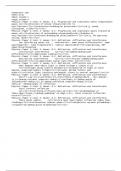
Physics::Paper 1::Unit 3: Waves::3.1: Progressive and stationary waves longitudinal
waves <ul><li>direction of motion <b>parallel</b> to
oscillations</li><li>can<b>not</b> be polarised</li><li>e.g. sound,
ultrasound, slinky</li></ul>
Physics::Paper 1::Unit 3: Waves::3.1: Progressive and stationary waves transverse
waves <ul><li>direction of motion <b>perpendicular</b> to
oscillations</li><li><b>can</b> be polarised<br></li><li>e.g. EM spectrum,
string, water</li></ul>
Physics::Paper 1::Unit 3: Waves::3.2: Refraction, diffraction and interference
two interfering waves are... coherent<br>- same phase difference<br>- same
wavelength<br>- same frequency<br>- similar amplitude<br><br>superposing, NOT
super<b>im</b>posing
Physics::Paper 1::Unit 3: Waves::3.2: Refraction, diffraction and interference
constructive interference <ul><li>\(n\lambda\) path
difference</li><li>amplitudes combine</li></ul>
Physics::Paper 1::Unit 3: Waves::3.2: Refraction, diffraction and interference
destructive interference <ul><li>\((n+\frac12)\lambda\) path
difference<br></li><li>amplitudes cancel each other out</li></ul>
Physics::Paper 1::Unit 3: Waves::3.2: Refraction, diffraction and interference
what happens when white light is shone through a single slit?
<ul><li>bright white cnetral maxima</li><li>spectrum of light on outer
maxima, separated bydark fringes</li><li>outer maxima fainter and
wider</li><li>blue light (shortest wavlength) closer to central maxima</li></ul>
Physics::Paper 1::Unit 3: Waves::3.2: Refraction, diffraction and interference
Snell's Law \(n_1\sin\theta_1=n_2\sin\theta_2\) where...<br>- \
(n_1=\) incident index<br>- \(\sin\theta_1=\) angle of
incidence<br>- \(n_2=\) refracted index<br>- \(\sin\
theta_2= \) angle of refraction
Physics::Paper 1::Unit 3: Waves::3.2: Refraction, diffraction and interference
total internal reflection
<ul><li>\(\sin\theta_c=\frac{n_2}{n_1}\)<br></li><li>when \(\
theta_1>\theta_c\) and \(n_1>n_2\), total internal reflection
occurs</li></ul>
Physics::Paper 1::Unit 3: Waves::3.2: Refraction, diffraction and interference
fibre optic cables <ul><li>core must have higher refractive index than
cladding</li><li>attenuation reduces power</li><li>dispersion spreads pulse \
(\rightarrow\) pulse broadening</li></ul>
#html:true
#deck column:1
#tags column:4
Physics::Paper 1::Unit 3: Waves::3.1: Progressive and stationary waves longitudinal
waves <ul><li>direction of motion <b>parallel</b> to
oscillations</li><li>can<b>not</b> be polarised</li><li>e.g. sound,
ultrasound, slinky</li></ul>
Physics::Paper 1::Unit 3: Waves::3.1: Progressive and stationary waves transverse
waves <ul><li>direction of motion <b>perpendicular</b> to
oscillations</li><li><b>can</b> be polarised<br></li><li>e.g. EM spectrum,
string, water</li></ul>
Physics::Paper 1::Unit 3: Waves::3.2: Refraction, diffraction and interference
two interfering waves are... coherent<br>- same phase difference<br>- same
wavelength<br>- same frequency<br>- similar amplitude<br><br>superposing, NOT
super<b>im</b>posing
Physics::Paper 1::Unit 3: Waves::3.2: Refraction, diffraction and interference
constructive interference <ul><li>\(n\lambda\) path
difference</li><li>amplitudes combine</li></ul>
Physics::Paper 1::Unit 3: Waves::3.2: Refraction, diffraction and interference
destructive interference <ul><li>\((n+\frac12)\lambda\) path
difference<br></li><li>amplitudes cancel each other out</li></ul>
Physics::Paper 1::Unit 3: Waves::3.2: Refraction, diffraction and interference
what happens when white light is shone through a single slit?
<ul><li>bright white cnetral maxima</li><li>spectrum of light on outer
maxima, separated bydark fringes</li><li>outer maxima fainter and
wider</li><li>blue light (shortest wavlength) closer to central maxima</li></ul>
Physics::Paper 1::Unit 3: Waves::3.2: Refraction, diffraction and interference
Snell's Law \(n_1\sin\theta_1=n_2\sin\theta_2\) where...<br>- \
(n_1=\) incident index<br>- \(\sin\theta_1=\) angle of
incidence<br>- \(n_2=\) refracted index<br>- \(\sin\
theta_2= \) angle of refraction
Physics::Paper 1::Unit 3: Waves::3.2: Refraction, diffraction and interference
total internal reflection
<ul><li>\(\sin\theta_c=\frac{n_2}{n_1}\)<br></li><li>when \(\
theta_1>\theta_c\) and \(n_1>n_2\), total internal reflection
occurs</li></ul>
Physics::Paper 1::Unit 3: Waves::3.2: Refraction, diffraction and interference
fibre optic cables <ul><li>core must have higher refractive index than
cladding</li><li>attenuation reduces power</li><li>dispersion spreads pulse \
(\rightarrow\) pulse broadening</li></ul>