

Strategic drift 14/12/2022
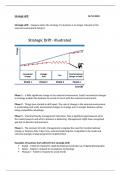
Strategic drift – Happens when the strategy of a business is no longer relevant to the
external environment facing it.
Phase 1 – Is little significant change in the external environment. Small, incremental changes
to strategy enables the business to remain in touch with the external environment.
Phase 2 – Things have started to drift apart. The rate of change in the external environment
is accelerating and small, incremental changes in strategy aren’t enough. Business will be
losing competitive advantage.
Phase 3 – Characterised by management indecision. Now a significant gap between what
the market expects and what a business is delivering. Management might have recognised
gap but no decisive improvement.
Phase 4 – The moment of truth. Management recognise the need for transformational
change or business fails. Takes new, external leadership for recognition to be made and
relevant strategic change programme implemented.
Examples of business that suffered from strategic drift:
Kodak – Failed to respond to rapid development and take-up of digital photography
Nokia – Failed to respond to smartphone technology.
Myspace – Failed to respond to social trends
Strategic drift – Happens when the strategy of a business is no longer relevant to the
external environment facing it.
Phase 1 – Is little significant change in the external environment. Small, incremental changes
to strategy enables the business to remain in touch with the external environment.
Phase 2 – Things have started to drift apart. The rate of change in the external environment
is accelerating and small, incremental changes in strategy aren’t enough. Business will be
losing competitive advantage.
Phase 3 – Characterised by management indecision. Now a significant gap between what
the market expects and what a business is delivering. Management might have recognised
gap but no decisive improvement.
Phase 4 – The moment of truth. Management recognise the need for transformational
change or business fails. Takes new, external leadership for recognition to be made and
relevant strategic change programme implemented.
Examples of business that suffered from strategic drift:
Kodak – Failed to respond to rapid development and take-up of digital photography
Nokia – Failed to respond to smartphone technology.
Myspace – Failed to respond to social trends


