TOPIC 1: ATOMIC STRUCTURE AND THE PERIODIC TABLE
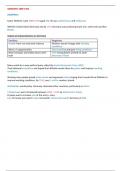
ATOMS, ELEMENTS AND COMPOUNDS
Atoms
All substances are made of atoms. An atom is the smallest part of an element that can exist.
Examples= gold atoms, oxygen atoms
Elements
A substance made of only one type of atom.
There are 100 different elements which are shown on the periodic table.
Examples= hydrogen, helium, lithium
Compounds
Two or more different elements chemically joined together
Can only be separated into elements by chemical reactions.
Examples= carbon dioxide, ammonia, water, hydrochloric acid, stainless steel
Mixtures
Two or more elements or compounds not chemically joined together
Mixtures can be separated by physical processes.
Examples= air, salt & water
Molecules
Any elements chemically joined together.
Examples = oxygen, chlorine, water
SEPARATING TECHNIQUES
There are 5 different techniques used to separate mixtures:
1) Filtration
2) Crystallisation
3) Simple distillation
4) Fractional distillation
5) Chromatography
Filtration
Used to separate an insoluble solid from a liquid
e.g. sand from water
Filter paper has tiny holes in it to allow small molecules to pass
through. It is folded in a cone shape.
EQUIPMENT:
Filter paper
Beaker
,Crystallisation
Used to separate a soluble solid from a liquid
e.g. copper from copper sulphate solution
Liquid evaporates, and solid crystals remain.
EQUIPMENT:
Evaporating basin
Heat
Simple distillation
Used to separate a liquid from a solution
e.g. pure water from seawater
1. Solution is heated
2. Part of the solution with the lowest boiling point
evaporates first
3. Vapour is cooled, condensed and collected
EQUIPMENT:
Only used to separate things with very different boiling points. Thermometer
Condenser
Heat
Beaker
Fractional distillation
Used to separate a mixture of different liquids
Liquids must have different boiling points
e.g. crude oil into fuels
1. Solution is heated
2. Part of the solution with the lowest boiling point evaporates first
3. Vapour is cooled, condensed and collected
4. Other liquids are evaporated, cooled and collected in order of
different boiling points
EQUIPMENT:
Fractionating column is coolest at the top Thermometer
Condenser
Heat
Fractionating column
Beaker
Fractions
, Chromatography
Used to separate soluble substances
e.g. dyes in ink/food colours/plant dye
Gives information to help identify substances.
➢ Pure substances = produce one spot
➢ Impure substances= produce a number of spots
Mobile phase: Solvent (water/ethanol)
Stationery phase: Chromatography Paper EQUIPMENT:
Filter paper
Each chemical is attracted to the stationery phase to a different extent Beaker
Strongly attracted chemicals will not move very far Lid
Weakly attracted chemicals will move far Pencil
Starting line must be drawn in pencil:
Pencil will not dissolve in the solvent, but ink would
Solvent height must be lower than the pencil line:
Otherwise the substances would dissolve into the solvent
SUBATOMIC PARTICLES
Atoms are very small with a radius of 1 x 10 -10 m
Radius of a nucleus is less than 1/10000 of the radius of an atom
Between nucleus + electrons = empty space
Atoms have no overall charge because the number of electrons =
number of protons
Charge Mass
Proton +1 1
Neutron 0 1
Electron -1 Negligible
ATOMS, ELEMENTS AND COMPOUNDS
Atoms
All substances are made of atoms. An atom is the smallest part of an element that can exist.
Examples= gold atoms, oxygen atoms
Elements
A substance made of only one type of atom.
There are 100 different elements which are shown on the periodic table.
Examples= hydrogen, helium, lithium
Compounds
Two or more different elements chemically joined together
Can only be separated into elements by chemical reactions.
Examples= carbon dioxide, ammonia, water, hydrochloric acid, stainless steel
Mixtures
Two or more elements or compounds not chemically joined together
Mixtures can be separated by physical processes.
Examples= air, salt & water
Molecules
Any elements chemically joined together.
Examples = oxygen, chlorine, water
SEPARATING TECHNIQUES
There are 5 different techniques used to separate mixtures:
1) Filtration
2) Crystallisation
3) Simple distillation
4) Fractional distillation
5) Chromatography
Filtration
Used to separate an insoluble solid from a liquid
e.g. sand from water
Filter paper has tiny holes in it to allow small molecules to pass
through. It is folded in a cone shape.
EQUIPMENT:
Filter paper
Beaker
,Crystallisation
Used to separate a soluble solid from a liquid
e.g. copper from copper sulphate solution
Liquid evaporates, and solid crystals remain.
EQUIPMENT:
Evaporating basin
Heat
Simple distillation
Used to separate a liquid from a solution
e.g. pure water from seawater
1. Solution is heated
2. Part of the solution with the lowest boiling point
evaporates first
3. Vapour is cooled, condensed and collected
EQUIPMENT:
Only used to separate things with very different boiling points. Thermometer
Condenser
Heat
Beaker
Fractional distillation
Used to separate a mixture of different liquids
Liquids must have different boiling points
e.g. crude oil into fuels
1. Solution is heated
2. Part of the solution with the lowest boiling point evaporates first
3. Vapour is cooled, condensed and collected
4. Other liquids are evaporated, cooled and collected in order of
different boiling points
EQUIPMENT:
Fractionating column is coolest at the top Thermometer
Condenser
Heat
Fractionating column
Beaker
Fractions
, Chromatography
Used to separate soluble substances
e.g. dyes in ink/food colours/plant dye
Gives information to help identify substances.
➢ Pure substances = produce one spot
➢ Impure substances= produce a number of spots
Mobile phase: Solvent (water/ethanol)
Stationery phase: Chromatography Paper EQUIPMENT:
Filter paper
Each chemical is attracted to the stationery phase to a different extent Beaker
Strongly attracted chemicals will not move very far Lid
Weakly attracted chemicals will move far Pencil
Starting line must be drawn in pencil:
Pencil will not dissolve in the solvent, but ink would
Solvent height must be lower than the pencil line:
Otherwise the substances would dissolve into the solvent
SUBATOMIC PARTICLES
Atoms are very small with a radius of 1 x 10 -10 m
Radius of a nucleus is less than 1/10000 of the radius of an atom
Between nucleus + electrons = empty space
Atoms have no overall charge because the number of electrons =
number of protons
Charge Mass
Proton +1 1
Neutron 0 1
Electron -1 Negligible