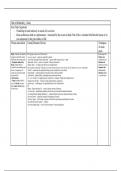
Ode on Melancholy – Keats
Key Points/Arguments
- Wondering the earth aimlessly in search of a loved one
- Keats aestheticises death as a phenomenon – intoxicated by the swoom of death. Part of this is a broader belief that the beauty of art
can compersate for the grim realities of life.
Themes and context Literary/Dramatic Devices Techniques
of whole
poem
Hegal – dialectics, the dynamic S1- begging someone not to kill themselves Keats merges the
struggle towards truth, intense ‘no, no, no, go not’ – negatives, apostrophic, spondee Pindaric ode
backwards and forwards mode. ‘wolf’s bane/ ruby grape/ beetle/ death-moth’ – semantic field of natural sources = death (celebratory) and
- Persephone abducted by ‘death-moth’ ‘downy’ – plosive d’s soporific drowsy and narcotics Horatian ode
Hades, mother Demeter ‘shade to shade’ – no change, just oblivion (no contradistinction) (reflective) to form
searches for her and brings bad S2 - fraudulent relationship paradoxical, weather brings depression and is the also the only thing that can recover bad feelings Romantic Ode
harvest. Compromise of 6 ‘fit shall’ – contrast between implication feeling will go eventually but it is inevitable (fundamentally
months on earth and 6 months ‘droop-headed’ – compound adjective personifies clouds as being crestfallen dialectical, public
in underworld = ‘April shroud’ – pathetic fallacy, relationship between mood and seasons vs. private form)
winter/summer ‘or’ – nor’s switch to or’s suggesting policy-syndetic list – catalogue of things that can lighten mood
- Cupid accidentally falls in ‘Emprison her soft hand’ – reference to hades and Persephone, juxtaposition
love with Psyche, he leaves ‘peerless eyes’ – conflicting pun ‘unparalleled beauty’ and ‘without friends’
then wonders earth looking S3
for her forever. ‘Beauty – Beauty that must die’ – caesura, chiasmic structure, dichotomy
‘ever at his lips’ – enjambement emphasises lips but also gives potential for departure/separation
‘Joy/ aching Pleasure/ Delight/ Melancholy’ – capitalised abstract nouns show deadly enticement of beauty
‘her sovran shrine’ – melancholy feminised suggestion of hysteria
‘burst Joy’s grape’ – de flowering orgasm is the end of the good moment and high point of action
‘his sould shalt taste the sadness ‘ – sibilance
‘her cloudy trophies hung’ – reversal of power dynamic sexual implictaions
Key Points/Arguments
- Wondering the earth aimlessly in search of a loved one
- Keats aestheticises death as a phenomenon – intoxicated by the swoom of death. Part of this is a broader belief that the beauty of art
can compersate for the grim realities of life.
Themes and context Literary/Dramatic Devices Techniques
of whole
poem
Hegal – dialectics, the dynamic S1- begging someone not to kill themselves Keats merges the
struggle towards truth, intense ‘no, no, no, go not’ – negatives, apostrophic, spondee Pindaric ode
backwards and forwards mode. ‘wolf’s bane/ ruby grape/ beetle/ death-moth’ – semantic field of natural sources = death (celebratory) and
- Persephone abducted by ‘death-moth’ ‘downy’ – plosive d’s soporific drowsy and narcotics Horatian ode
Hades, mother Demeter ‘shade to shade’ – no change, just oblivion (no contradistinction) (reflective) to form
searches for her and brings bad S2 - fraudulent relationship paradoxical, weather brings depression and is the also the only thing that can recover bad feelings Romantic Ode
harvest. Compromise of 6 ‘fit shall’ – contrast between implication feeling will go eventually but it is inevitable (fundamentally
months on earth and 6 months ‘droop-headed’ – compound adjective personifies clouds as being crestfallen dialectical, public
in underworld = ‘April shroud’ – pathetic fallacy, relationship between mood and seasons vs. private form)
winter/summer ‘or’ – nor’s switch to or’s suggesting policy-syndetic list – catalogue of things that can lighten mood
- Cupid accidentally falls in ‘Emprison her soft hand’ – reference to hades and Persephone, juxtaposition
love with Psyche, he leaves ‘peerless eyes’ – conflicting pun ‘unparalleled beauty’ and ‘without friends’
then wonders earth looking S3
for her forever. ‘Beauty – Beauty that must die’ – caesura, chiasmic structure, dichotomy
‘ever at his lips’ – enjambement emphasises lips but also gives potential for departure/separation
‘Joy/ aching Pleasure/ Delight/ Melancholy’ – capitalised abstract nouns show deadly enticement of beauty
‘her sovran shrine’ – melancholy feminised suggestion of hysteria
‘burst Joy’s grape’ – de flowering orgasm is the end of the good moment and high point of action
‘his sould shalt taste the sadness ‘ – sibilance
‘her cloudy trophies hung’ – reversal of power dynamic sexual implictaions