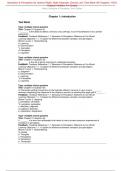
Chapter 13: Coping and Stress Williams: Basic Geriatric Nursing, 7th Edition
MULTIPLE CHOICE 1. When are stress-related physical, behavioral, and cognitive changes more likely to occur? a. When the stress has a sudden onset b. When stress is low level but constant c. When stress is varied and cumulative d. When stress is suppressed or denied ANS: C 2. How does the body respond physically to stress? a. Decreased heart rate b. Decreased production of digestive enzymes c. Decreased blood glucose levels d. Decreased blood pressure ANS: B 3. A woman is in the emergency department after a car wreck. She is breathing rapidly and complains of dizziness and tingling in her extremities. She says, “I think I’m having a heart attack!” The nurse is aware that the symptoms may be related to which of the following? a. A transient ischemic attack b. Hyperventilation c. Hypotension d. Asthma ANS: B 4. The student sitting in class waiting for the final examination develops nausea and excessive gas. What is a probable cause of these symptoms? a. Increase in the blood glucose level b. Increase in heart rate c. Reduction of peristalsis d. Decrease in adrenalin ANS: C
Written for
- Institution
-
College Of Southern Nevada
- Course
-
NURS 101
Document information
- Uploaded on
- June 15, 2023
- Number of pages
- 5
- Written in
- 2022/2023
- Type
- Exam (elaborations)
- Contains
- Unknown
Subjects
- nurs 101
- 7th edition
-
chapter 13 coping and stress
-
williams basic geriatric nursing