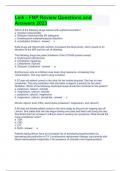
Leik - FNP Review Questions and Answers 2023
Leik - FNP Review Questions and Answers 2023 Which of the following drugs interact with warfarin/coumadin? a. Imodium (loperamide) b. Diltiazem Hydrochloride SR (diltiazem) c. trimethoporim-sulfamethoxazole (Bactrim) d. sumatriptan (Imitrex) c Sulfa drugs will interact with warfarin (increases the blood level), which results in an elevation of the INR and the risk of bleeding. The following drugs are potent inhibitors of the CYP450 system except: a. Erythromycin (Erythrocin) b. Cimetidine (Tagamet) c. Ceftazidime (Tazicef) d. Diltiazem (Cardizem) a Erythromycin acts as inhibitors slow down drug clearance, increasing drug concentration. This may lead to drug overdose. A 57 year old patient comes to the clinic for her routine physical. She has no new complaints. The only medication that she takes is digoxin (Lanoxin) for her atrial fibrillation. Which of the following electrolyte levels should be monitored in this patient? a. potassium, calcium, chloride b. magnesium, calcium, chloride c. potassium, calcium, magnesium d. magnesium, calcium, phosphate c Monitor digoxin level, EKG, electrolytes (potassium, magnesium, and calcium) A 48 year old female patient comes to the clinic today to discuss her ongoing use off Lithium. She states that she has begun feeling very tired and feels cold during the day. She thinks that her increase in Lithium dose is causing her symptoms. What should the nurse practitioner order? a. TSH b. CBC c. LFT d. BUN a Patients taking lithium have an increased risk of developing hypothyroidism by decreasing the production of T4. Levothyroxine replacement therapy concurrently with lithium administration especially in the presence of clinically overt hypothyroidism. A patient has recently been prescribed omeprazole (Prilosec) for GERD. He also takes lisinopril (Zestril). His PMH includes migraines, hypertension, and chronic kidney disease. The nurse practitioner notes: a. The patient should stop taking the omeprazole (Prilosec) due his diagnosis of chronic kidney disease. b. The patient should stop taking omeprazole (Prilosec) due to drug interaction with lisinopril (Zestril). c. The patient may continue taking the omeprazole (Prilosec) but should monitor blood pressure. d. The patient may continue taking omeprazole (Prilosec) as prescribed. a Studies suggest that PPIs may increase the risk of kidney disease. Using PPIs may also cause acute interstitial nephritis. A patient that has already been diagnosed with CKD should not take PPIs. A patient taking Warfarin (Coumadin) is having abdominal surgery in one month. She wants to know when she should stop taking her Warfarin (Coumadin). The nurse practitioner advises: a. The day before scheduled surgery. b. Do not stop taking Warfarin (Coumadin) c. 3 days before surgery. d. 7 days before surgery. d Patients should discontinue warfarin 7 days before surgery. A 71 year old patient has been diagnosed with stage III congestive heart failure. Which of the following class of medications may cause an exacerbation of congestive heart failure> a. Thiazolidinediones b. Narcotics c. NSAIDs d. ACE Inhibitors a Improved glycemic control decreases the risk of end organ damage and heart failure in patients with diabetes. Thiazolidinediones are very useful drugs, particularly for patients with marked insulin resistance and hyperlipidemia. However, they do precipitate edema and heart failure. The edema can be severe enough to lead to discontinuation of the drug, and the risk of heart failure limits the population in which they can be used. They can be used safely in some cardiac patients but, as noted in the article, they should be avoided or used with caution in patients with CHF. Patients taking a TZD who subsequently develop edema should be carefully evaluated for CHF. NY Health Association Class III or IV heart failure should not use TZDs. Which of the following medications may have a high risk of weight gain? a. Bupropion (Wellbutrin) b. Metformin (Glucophage) c. Quetiapine (Seroquel) d. Topiramate (Topamax) c High risk of weight gain, higher mortality in elderly patients. Weight should be monitored every 3 months, monitor TSH and lipids. A patient is newly prescribed risedronate (actonel). What should the nurse practitioner include in patient education regarding this medication? a. Take the medication in the evening with a large glass of water. b. Take the medication upon wakening with a large glass of water. c. Take the medication with a meal. d. Take the medication 30 minutes after eating. b Risedronate (actonel) is a bisphosphonate that is use to treat osteoporisis/penia. Patients should be advised to take risedronate (actonel) upon awakening with a glass of water, before breakfast. They should not lie down for 30 minutes afterward. Should not mix with other drugs. Bisphosphonates are contraindicated in which of the following conditions except: a. CKD b. GERD c. Celiac Disease d. Espohageal Stricture c Osteoporosis is a complication of untreated celiac disease. Bisphosphonates, such as fosamax and actonel, are used to prevent or treat osteoporisis/penia. A patient has been taking simvastatin (Zocor), 40 mg, two times per day for the past 2 weeks. He returns to the clinic with complaints of muscle pain and tenderness. Which of the following should the nurse practitioner do? a. Tell the patient that it is normal to have these side effects when taking a new medication and they should resolve within 4 weeks. b. Prescribe 600 mg/day of ibuprofen to improve pain. c. Prescribe physical therapy for 4 weeks. d. Send the patient to the emergency room for immediate evaluation. d The patient is presenting with signs of potential rhabdomyolysis. The risk of rhabdomyolysis increases with high dose Zocor (80 mg). Rhabdomyolysis can be life-threatening and the patient needs prompt emergent evaluation. A patient has been diagnosed with atrial fibrillation. The nurse practitioner knows that which of the following medication is not considered first-line drug for heart rate control: a. Digoxin b. Atenolol (Tenormin) c. Verapamil hydrochloride (Calan SR) d. Metoprolol (Toprol) a Digoxin is not considered first-line drug for heart rate control in patients with atrial fibrillation. Digoxin has a very narrow therapeutic range. A 41 year old patient has been presribed Digoxin (Lanoxin) following a diagnosis of heart failure due to left ventricular systolic dysfunction. The patient presents to the clinic today with nausea and vomiting, abdominal pain, and visual changes. What does the nurse practitioner suspect? a. The patient is presenting with a potential allergy to Digoxin (Lanoxin) and tells the patient to follow-up with his cardiologist. b. Send the patient to get an upper endoscopy and prescribe Zofran until symptoms resolve. c. Tell the patient to follow-up with their cardiologist for a new medication. d. Send the patient to the emergency room for immediate evaluation. d The patient is presenting with signs and symptoms of acute digoxin overdose and needs detailed evaluation. Initial symptoms are typical GI complaints, arrhythmias, confusion, and visual changes. Labs the should be ordered in suspected digoxin toxicity are electrolytes, creatinine, and serial EKGs. The nurse practitioner knows that Warfarin/Coumadin has a duration of action for: a. 1-2 days b. 2-5 days c. 5-7 days d. 7-10 days b 2-5 days for a single dose Which of the following should a patient avoid when taking an ACE inhibitor? a. Calcium b. Potassium c. Iron d. Magnesium b Avoid mixing with potassium supplements and patients should be careful with potassium-sparing diuretics. ACE inhibitor due to its effect on aldosterone. Suppression of angiotensin II leads to a decrease in aldosterone levels. Since aldosterone is responsible for increasing the excretion of potassium, ACE inhibitors can cause retention of potassium. A 65 year old African American male comes to the clinic today for a blood pressure check. He has been taking vasotec (Enalapril), 40 mg, daily for the past 3 months but his blood pressure remains elevated despite patient remaining compliant. The nurse practitioner decides to: a. Increase his vasotec (Enalapril) dose to 40 mg, twice per day b. Add Valsartan (Diovan), 40 mg, daily c. Add amlodipine (Norvasc), 10 mg, daily d. Educate patient on sodium restriction and other lifestyle changes. c Add a calcium channel blocker is an appropriate next step for blood pressure control. Vasotec is an ACE inhibitor and should never be combined with an ARB (valsartan/diovan). The patient is already on the recommended maximum dose of vasotec (Enalapril). Spironolactone (aldactone) should not be combined with which of the following except? a. Valsartan (Diovan) b. Amlodipine (Norvasc) c. Ibuprofen D. Benazepril (Lotensin) b Valsartain (diovan) is a ARB and Benazepril (lotensin) is an ACE. Both of which should not be taken with a potassium-sparing medication. There is a higher risk of hyperkalemia. NSAID use may also contribute to hyperkalemia. A 66 year old male comes to the clinic with concerns about erectile disfunction. He is extremely distressed and would like to discuss using Tadalafil (Cialis) since that is what his brother recommended. Which of the following in the patients PMH is a contraindication for using Tadalafil (Cialis)? a. The patient had a MI 3 months ago. b. The patient had nephrolithiasis one month ago. c. The patient complains of nasal congestion. d. The patient takes calcium supplements. a Using cialis (or viagra, levitra) is contraindicated in patients that have had an MI or stroke within 3-6 months. While cialis can cause nasal congestion, it is not a contraindication. Which of the following foods should a patient avoid when taking warfarin (coumadin)? a. kale, spinach, broccoli b. liver, beans c. fish, beef, pork d. carrots, corn, peas a Patients should avoid foods high in vitamin K when taking warfarin as it may reduce anticoagulant effects of warfarin (decrease INR). Mayonnaise, canola oil, and soybean oil also have high levels of vitamin K Which of the following ethnicities may require a lower starting dose of Warfarin (Coumadin)? a. African Americans b. Asians c. Caucasians d. Hispanic b may require a lower starting and maintenance doses of warfarin. Which of the following blood pressure medication is most useful in a patient with osteoporosis? a. Indapamide (Lozol) b. Capoten (captopril) c. Tamusolin (Flomax) d. Metoprolol (Topolol) a Patients with both hypertension and osteoporisis have an extra benefit from thiazides. Thiazide diuretics reduce calcium exceretion by the kidneys and stimulate osteoblasts. Beta blockers are contraindicated in patients with which of the following except: a. First degree AV block b. Second degree AV block, type 1 c. Second degree AV block, type 2 d. Third degree AV block a BB should never be given to patients with AV blocks other than type 1. They are also contraindicated in shock, hypotension, severe bradycardia, and chronic pulmonary disease Which of the following beta blockers are considered cardioselective? a. Propranolol b. Carvedilol (Coreg) c. Nadolol d. Metoprolol d Metoprolol is considered cardioselective because it blocks beta-1 receptors, which are found mainly in the heart. They are also more potent. A 60 year old patient comes to the clinic with complaints of dizziness and near-syncopal events. Which of the following medications does the nurse practitioner suspects may be causing her symptoms? a. Metoprolol b. Lisionopril (Zestril) c. Losartan (Cozaar) d. Aliskiren (Tekturna) a Beta blockers can cause bradycardia, which can lead to near-syncopal events. A 33 year old, obese patient with a history of diabetes, hypertension, and migraines comes to the clinic for a check-up. She recently found out that she was 12 weeks pregnant with her third child. What medications would the nurse practitioner discontinue immediatly? a. Metformin b. Methyldopa c. Losartan (Cozaar) d. Sumatriptan (Imatrex) c ACE/ARBS contraindicated in pregnancy. Usage of ACE inhibitors and ARBs during the second and third trimesters of pregnancy also causes serious problems, though of a different type. Used later in pregnancy, these drugs cause serious kidney problems in the baby, including impaired renal function or kidney failure Which of the following are preferred hypertensive drug treatments in patients with diabetes except? a. Losartan (Cozaar) b. Benazepril (Lotensin) c. Atenolol d. Valsartan (Diovan) c ACE/ARBS are preferred drugs for hypertension in diabetics and for patients with CKD. A postpartum mother has come to the clinic to assess her blood pressure that was a concern during her pregnancy. Which of the following questions is important for the nurse practitioner to ask before starting a treatment plan? a. "How are you managing your hypertension at home?" b. "Are you breastfeeding or bottle feeding?" c. "Have you been diagnosed with postpartum depression?" d. "What is your diet like?" b A nurse practitioner needs to find out if a patient is breastfeeding before prescribing a medication as many medications are excreted in breast milk. ACE/ARBS should be avoided in breast feeding mothers.
Written for
- Institution
- LEIK FNP
- Course
- LEIK FNP
Document information
- Uploaded on
- June 15, 2023
- Number of pages
- 95
- Written in
- 2022/2023
- Type
- Exam (elaborations)
- Contains
- Questions & answers
Subjects
-
leik fnp review questions and answers 2023
-
which of the following drugs interact with warfari
-
the following drugs are potent inhibitors of the c
-
a patient taking warfarin coumadin is having abd
-
wh

Also available in package deal