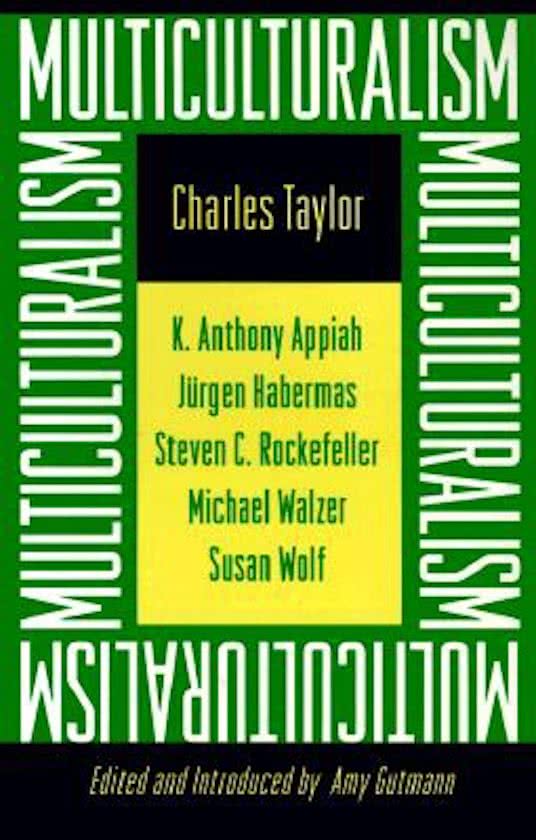
Samenvatting Charles Taylor – Multiculturalism
The Politics of Recognition
I – The Emergence of Authenticity
The demand for recognition serves as driving force for political nationalist movements.
It is common among minority groups due to the link between recognition and identity.
o Identity: person’s understanding of who they are, their fundamental characteristics.
o It is partly shaped by (mis)recognition of others which in the worst case can lead to
harm, oppression and the feeling of a reduced mode of being.
o F.e. women adopt an internal image of their own inferiority in patriarchal societies,
making it impossible to advance even when the barriers are removed.
Two developments led to the focus on identity and recognition:
1. Collapse of social hierarchies, which used to be the basis for honour (inequality).
o It was replaced by dignity in the universalist and egalitarian sense (equality).
o This required a democratic culture with equal recognition of all
Identity was individualized, particular to me with an inner voice.
o Originally this inner voice bestows us with right and wrong, not mere calculation.
F.e. God as moral authority, following him is all to be a full human being.
o With dignity came the idea that morals are something to one needs to acquire to be
a full human being, making feelings independent and of crucial moral significance.
Rousseau: moral salvation comes from authentic moral contact with ourselves.
Herder: each person has his own “measure”, a self-appointed moral significance.
o The level of contact with this is determined by outside pressures of conformity and
the internal risk of becoming too instrumental.
o Being true to oneself is to be true to one’s own originality, to be discovered by self.
Herder also applies this to culture as a whole.
2. In the time of social hierarchies identity was fixed by an individual’s social position
o When authenticity emerges it allows one to discover the own original way of being.
The human life has a dialogical character. Identity is expressed through human “languages”.
o These languages are learned through interaction with significant others.
o Our identity is defined in dialogue/conflict with significant others.
o This goes against the monological ideal to confine one to the genesis (parents).
o Humans should strive for the broadest possible definition so that relationships fulfil
but not define ourselves (f.e. getting control over the influence of one’s parents).
This dependence on others existed before the emergence of authenticity, but recognition
there was built into the socially derived identity that everyone took for granted.
o Internally derived original identity lacks this recognition and a person can only win it
through exchange, if at all. Before it was too unproblematic to be thematized.
Rousseau: criticizes hierarchical honour (corruption) in favour of a republican society in
which all share equally in the light of public attention.
This is true both on a intimate and social level:
o Intimate: identity is vulnerable to recognition given or withheld by significant others.
o Social: politics of equal recognition demand a healthy democratic society.
The Politics of Recognition
I – The Emergence of Authenticity
The demand for recognition serves as driving force for political nationalist movements.
It is common among minority groups due to the link between recognition and identity.
o Identity: person’s understanding of who they are, their fundamental characteristics.
o It is partly shaped by (mis)recognition of others which in the worst case can lead to
harm, oppression and the feeling of a reduced mode of being.
o F.e. women adopt an internal image of their own inferiority in patriarchal societies,
making it impossible to advance even when the barriers are removed.
Two developments led to the focus on identity and recognition:
1. Collapse of social hierarchies, which used to be the basis for honour (inequality).
o It was replaced by dignity in the universalist and egalitarian sense (equality).
o This required a democratic culture with equal recognition of all
Identity was individualized, particular to me with an inner voice.
o Originally this inner voice bestows us with right and wrong, not mere calculation.
F.e. God as moral authority, following him is all to be a full human being.
o With dignity came the idea that morals are something to one needs to acquire to be
a full human being, making feelings independent and of crucial moral significance.
Rousseau: moral salvation comes from authentic moral contact with ourselves.
Herder: each person has his own “measure”, a self-appointed moral significance.
o The level of contact with this is determined by outside pressures of conformity and
the internal risk of becoming too instrumental.
o Being true to oneself is to be true to one’s own originality, to be discovered by self.
Herder also applies this to culture as a whole.
2. In the time of social hierarchies identity was fixed by an individual’s social position
o When authenticity emerges it allows one to discover the own original way of being.
The human life has a dialogical character. Identity is expressed through human “languages”.
o These languages are learned through interaction with significant others.
o Our identity is defined in dialogue/conflict with significant others.
o This goes against the monological ideal to confine one to the genesis (parents).
o Humans should strive for the broadest possible definition so that relationships fulfil
but not define ourselves (f.e. getting control over the influence of one’s parents).
This dependence on others existed before the emergence of authenticity, but recognition
there was built into the socially derived identity that everyone took for granted.
o Internally derived original identity lacks this recognition and a person can only win it
through exchange, if at all. Before it was too unproblematic to be thematized.
Rousseau: criticizes hierarchical honour (corruption) in favour of a republican society in
which all share equally in the light of public attention.
This is true both on a intimate and social level:
o Intimate: identity is vulnerable to recognition given or withheld by significant others.
o Social: politics of equal recognition demand a healthy democratic society.