Section 1: Physical Chemistry
Energetics
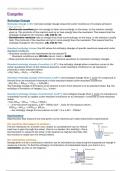
Enthalpy Change
Enthalpy change (∆H): the heat energy change measured under conditions of constant pressure.
(Unit: kJ mol-1)
• Exothermic reactions give out energy to their surroundings, so the temp. in the reaction usually
goes up. The products of the reaction end up w/ less energy than the reactants. This means that the
enthalpy change for the reaction, ∆H, will be -ve.
• Endothermic reactions take in energy from their surroundings, so the temp. in the reaction usually
falls. The products of the reaction end up w/ more energy than the reactants. This means that the
enthalpy change for the reaction, ∆H, will be +ve.
Standard enthalpy values: the ∆H values for enthalpy changes of speci c reactions measured under
standard conditions.
• Standard conditions are represented by the symbol Ɵ.
- Standard conditions are 100 kPa (about 1atm) + 298K.
• State symbols should always be included in chemical equations to represent enthalpy changes.
Standard enthalpy change of reaction (∆rHƟ): the enthalpy change when a reaction occurs in the
molar quantities shown in the chemical equation, under standard conditions w/ all reactants +
products in their standard states.
• E.g. CaO(s) + H2O(l) → Ca(OH)2(s)
Standard enthalpy change of formation (∆fHƟ): the enthalpy change when 1 mole of a compound is
formed from its constituent elements in their standard states under standard conditions.
• E.g. 2C(s) + 3H2(g) + ½O2(g) → C2H5OH(l)
The enthalpy change of formation of an element is zero if the element is in its standard state. E.g. the
enthalpy of formation of oxygen, O2(g) , is zero.
Standard enthalpy change of combustion (∆cHƟ): the enthalpy change when 1 mole of a substance is
completely burned in oxygen under standard conditions w/ all reactants + products in their standard
states.
• E.g. CH4(g) + 2O2(g) → CO2(g) + 2H2O(l)
• ∴ if for the above equation, ∆cHƟ = -890kJ mol-1 , then for the equation below…
2CH4(g) + 4O2(g) → 2CO2(g) + 4H2O(l)
… the enthalpy change for the reaction is ∆rHƟ = 2 x ∆cHƟ = -1780kJ
Calorimetry
Experiments that measure the heat given out by reactions.are called calorimetry experiments.
For reactions that happen in solution…
Put the reactants (w/ a known conc./mass) in a polystyrene cup (to reduce
heat loss or gain through the sides), that is in a beaker (for stability). Use a
thermometer to measure the temp. of the mixture at regular intervals. Stir
the solution to make sure it’s evenly heated.
For combustion reactions…
Energy given out by a combustion reaction can be calculated by measuring the temperature change it
causes as it burns. To nd the enthalpy of combustion of a ammable liquid, you burn it in a
calorimeter, as seen in the diagram:
fi fl fi
Energetics
Enthalpy Change
Enthalpy change (∆H): the heat energy change measured under conditions of constant pressure.
(Unit: kJ mol-1)
• Exothermic reactions give out energy to their surroundings, so the temp. in the reaction usually
goes up. The products of the reaction end up w/ less energy than the reactants. This means that the
enthalpy change for the reaction, ∆H, will be -ve.
• Endothermic reactions take in energy from their surroundings, so the temp. in the reaction usually
falls. The products of the reaction end up w/ more energy than the reactants. This means that the
enthalpy change for the reaction, ∆H, will be +ve.
Standard enthalpy values: the ∆H values for enthalpy changes of speci c reactions measured under
standard conditions.
• Standard conditions are represented by the symbol Ɵ.
- Standard conditions are 100 kPa (about 1atm) + 298K.
• State symbols should always be included in chemical equations to represent enthalpy changes.
Standard enthalpy change of reaction (∆rHƟ): the enthalpy change when a reaction occurs in the
molar quantities shown in the chemical equation, under standard conditions w/ all reactants +
products in their standard states.
• E.g. CaO(s) + H2O(l) → Ca(OH)2(s)
Standard enthalpy change of formation (∆fHƟ): the enthalpy change when 1 mole of a compound is
formed from its constituent elements in their standard states under standard conditions.
• E.g. 2C(s) + 3H2(g) + ½O2(g) → C2H5OH(l)
The enthalpy change of formation of an element is zero if the element is in its standard state. E.g. the
enthalpy of formation of oxygen, O2(g) , is zero.
Standard enthalpy change of combustion (∆cHƟ): the enthalpy change when 1 mole of a substance is
completely burned in oxygen under standard conditions w/ all reactants + products in their standard
states.
• E.g. CH4(g) + 2O2(g) → CO2(g) + 2H2O(l)
• ∴ if for the above equation, ∆cHƟ = -890kJ mol-1 , then for the equation below…
2CH4(g) + 4O2(g) → 2CO2(g) + 4H2O(l)
… the enthalpy change for the reaction is ∆rHƟ = 2 x ∆cHƟ = -1780kJ
Calorimetry
Experiments that measure the heat given out by reactions.are called calorimetry experiments.
For reactions that happen in solution…
Put the reactants (w/ a known conc./mass) in a polystyrene cup (to reduce
heat loss or gain through the sides), that is in a beaker (for stability). Use a
thermometer to measure the temp. of the mixture at regular intervals. Stir
the solution to make sure it’s evenly heated.
For combustion reactions…
Energy given out by a combustion reaction can be calculated by measuring the temperature change it
causes as it burns. To nd the enthalpy of combustion of a ammable liquid, you burn it in a
calorimeter, as seen in the diagram:
fi fl fi