Unit 4: Macbeth
February 27th – March 15th, 2023
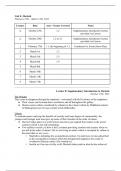
Lecture Date Acts + Scenes Covered Notes
0 October 27th 1.2 Supplementary introductory lecture
provided via Canvas
0 October 29th 1.2 to 2.1 Supplementary introductory lecture
provided via Canvas
1 February 27th 1.1, the beginning of 1.2 Conducted via Zoom (Snow Day)
2 March 1st 1.2
3 March 3rd 1.3
4 March 6th 1.4
5 March 8th
6 March 10th
7 March 13th
8 March 15th
Lecture 0: Supplementary Introduction to Macbeth
October 27th, 2021
The Witches
They seem to disappear through the trapdoors—associated with Hell (valence of the trapdoors).
● Their voices can be heard above and below and all throughout the gallery.
● Hecate scenes widely considered by scholars to have been written by Middleton instead
of Shakespeare (see: he uses certain words differently).
Liberty
To maintain peace and reap the benefits of security and some degree of commonality, the
younger and stronger men must give up some of their freedom in the order of nature.
● Macbeth takes place in a world where men have just stepped from nature to the social
contract (which is not self-sustaining).
● Two realities coexist: (a) how is the Leviathan providing comfort and security when we
are still in the order of nature? (b) we are living in nature which is corrupted by culture to
the point that we are worse.
○ Macbeth is defending the sociopolitical contract. Up until now, he has subscribed
to the sociopolitical contract which has brought him happiness (he could’ve
overthrown Duncan earlier if he wanted to).
○ Insofar as it has any civility at all, Macbeth takes pride in what he has achieved.
, ● Macbeth has come to realize that, if he doesn’t subscribe to the sociopolitical order, he
can become King. Why should he limit himself when he’s at the top of natural order?
○ It’s only natural and just that Duncan rewards his subjects for their work.
More
Once enough is not enough – once you take more, there is no limit.
● Part of what the play focuses on is limitlessness. When you remove the limits in which
you have confined yourself; to have equal power to others; limiting what you can think,
you are effectively pushing yourself into a frenzy.
● Limits are things that are easy to scoff at: the play shows us what happens when you
remove limits on yourself.
● Limitlessness is not what Macbeth thinks it’ll be.
Macbeth exists outside of humanity because he has broken his own humanity to create something
greater, What does it mean to live in a world when the distinctive human aspect of language has
been sacrificed and destabilized?
1.2
Paradox: before we meet Macbeth, we meet a bloody man (the red man stained with war).
● It’s like the baby, untimely cut out of the side of the mother.
● The hypermasculine is beginning to relinquish its tie to humanity.
Duncan’s first words are a question. He is obviously not a general.
● The King stands for the link between the Divine and the political order—he must keep
himself pristine and sacred (he cannot get his hands bloodied).
● Duncan is not a general in a warrior culture where people are promoted on their ability
to kill and protect others – the younger and stronger men have to subscribe to the social
order in order to be protected.
● Duncan increasingly sounds like a child being told a bedtime story.
“As two spent swimmers that do cling together / And choke their art” (1.2.8-9)
● It seems as though any side could win (in Shakespeare’s time)
● To us, we must wonder: is any side better than the other? Both sides are bracing
themselves up the other that they are trying to destroy—both end up losing.
“The multiplying villainies of nature” (1.2.12): if the other states in Scotland aren’t going to
invade you, an opportunistic invader from outside your country will (Western Isles)
● Nature is not always sweet – nature can be villainous, too.
“And Fortune on his damned quarry smiling / Showed like a reel’s whore; but all’s too weak, /
For brave Macbeth” (1.2.14-6): Fortune seems to be favouring the other side.
● Yet, Macbeth is somehow stronger than Fortune itself. He is strong enough to bring down
a seemingly undefeatable enemy.
○ It’s so disappointing that Macbeth becomes Fortune’s slave later (he thinks that he
is the favourite and is just slowly pushing things to get his fortune faster)
“Till he unseamed him from the nave to th’ chops, / And fixed his head upon our battlements”
(1.2.22-3): Macbeth is fighting for the divine (King), but makes the inverted cross.
● This is also foreshadowing: all of this happens to Macbeth.
● As Macbeth does this to Macdonald, Macduff does this to Macbeth (why do they all start
with ‘Mac-’?).
February 27th – March 15th, 2023
Lecture Date Acts + Scenes Covered Notes
0 October 27th 1.2 Supplementary introductory lecture
provided via Canvas
0 October 29th 1.2 to 2.1 Supplementary introductory lecture
provided via Canvas
1 February 27th 1.1, the beginning of 1.2 Conducted via Zoom (Snow Day)
2 March 1st 1.2
3 March 3rd 1.3
4 March 6th 1.4
5 March 8th
6 March 10th
7 March 13th
8 March 15th
Lecture 0: Supplementary Introduction to Macbeth
October 27th, 2021
The Witches
They seem to disappear through the trapdoors—associated with Hell (valence of the trapdoors).
● Their voices can be heard above and below and all throughout the gallery.
● Hecate scenes widely considered by scholars to have been written by Middleton instead
of Shakespeare (see: he uses certain words differently).
Liberty
To maintain peace and reap the benefits of security and some degree of commonality, the
younger and stronger men must give up some of their freedom in the order of nature.
● Macbeth takes place in a world where men have just stepped from nature to the social
contract (which is not self-sustaining).
● Two realities coexist: (a) how is the Leviathan providing comfort and security when we
are still in the order of nature? (b) we are living in nature which is corrupted by culture to
the point that we are worse.
○ Macbeth is defending the sociopolitical contract. Up until now, he has subscribed
to the sociopolitical contract which has brought him happiness (he could’ve
overthrown Duncan earlier if he wanted to).
○ Insofar as it has any civility at all, Macbeth takes pride in what he has achieved.
, ● Macbeth has come to realize that, if he doesn’t subscribe to the sociopolitical order, he
can become King. Why should he limit himself when he’s at the top of natural order?
○ It’s only natural and just that Duncan rewards his subjects for their work.
More
Once enough is not enough – once you take more, there is no limit.
● Part of what the play focuses on is limitlessness. When you remove the limits in which
you have confined yourself; to have equal power to others; limiting what you can think,
you are effectively pushing yourself into a frenzy.
● Limits are things that are easy to scoff at: the play shows us what happens when you
remove limits on yourself.
● Limitlessness is not what Macbeth thinks it’ll be.
Macbeth exists outside of humanity because he has broken his own humanity to create something
greater, What does it mean to live in a world when the distinctive human aspect of language has
been sacrificed and destabilized?
1.2
Paradox: before we meet Macbeth, we meet a bloody man (the red man stained with war).
● It’s like the baby, untimely cut out of the side of the mother.
● The hypermasculine is beginning to relinquish its tie to humanity.
Duncan’s first words are a question. He is obviously not a general.
● The King stands for the link between the Divine and the political order—he must keep
himself pristine and sacred (he cannot get his hands bloodied).
● Duncan is not a general in a warrior culture where people are promoted on their ability
to kill and protect others – the younger and stronger men have to subscribe to the social
order in order to be protected.
● Duncan increasingly sounds like a child being told a bedtime story.
“As two spent swimmers that do cling together / And choke their art” (1.2.8-9)
● It seems as though any side could win (in Shakespeare’s time)
● To us, we must wonder: is any side better than the other? Both sides are bracing
themselves up the other that they are trying to destroy—both end up losing.
“The multiplying villainies of nature” (1.2.12): if the other states in Scotland aren’t going to
invade you, an opportunistic invader from outside your country will (Western Isles)
● Nature is not always sweet – nature can be villainous, too.
“And Fortune on his damned quarry smiling / Showed like a reel’s whore; but all’s too weak, /
For brave Macbeth” (1.2.14-6): Fortune seems to be favouring the other side.
● Yet, Macbeth is somehow stronger than Fortune itself. He is strong enough to bring down
a seemingly undefeatable enemy.
○ It’s so disappointing that Macbeth becomes Fortune’s slave later (he thinks that he
is the favourite and is just slowly pushing things to get his fortune faster)
“Till he unseamed him from the nave to th’ chops, / And fixed his head upon our battlements”
(1.2.22-3): Macbeth is fighting for the divine (King), but makes the inverted cross.
● This is also foreshadowing: all of this happens to Macbeth.
● As Macbeth does this to Macdonald, Macduff does this to Macbeth (why do they all start
with ‘Mac-’?).