

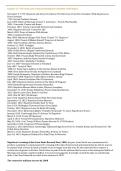
Chapter 21: The army and conquest during the Consulate and Empire
November 9, 1799: Napoleon and Sieyes Overthrow The Directory, Form The Consulate, With Napoleon As
First Consulate
1799: Second Coalition Formed
June 1800: Battle of Marengo (France V. Austrians) – French Win Handily.
1801: Concordat (France and Rome)
February 1801: Treaty of Luneville Ends Second Coalition
1802: Napoleon Elected "Consul for Life"
March 1802: Peace of Amiens With Britain
1803: Louisiana Purchase
May 1804: Napoleon Changes Title From "Consul" To "Emperor"
August 1804: Francis II Makes Himself "Emperor of Austria"
1805: Third Coalition (Britain, Austria, Russia)
October 21, 1805: Trafalgar
December 2, 1805: Battle of Austerlitz
1806: Berlin Decree (Begins Continental System)
1806: Holy Roman Empire Replaced by Confederacy of The Rhine
October 1806: Prussia Badly Wounded at Jena And Auerstadt
1807: Napoleon, aided by Spain, Invades Portugal
1807: Baron Stein "Abolished" Serfdom
June 14, 1807: Russians Defeated at Friedland
July 1807: Treaty of Tilsit
1808: J.G. Fichte Gives Address to The German Nation In Berlin
1808: Stein Exiled from Prussia At Napoleon's Command
1808: Joseph Bonaparte, Napoleon's Brother, Becomes King Of Spain
September 1808: Napoleon's Allies Meet At Erfurt, Saxony
April 1809: Austria Proclaims War Of Liberation
July 1809: Napoleon Defeats Austria At The Battle Of Wagram
1810: Hardenberg Becomes Prussian Chancellor
1810: Napoleon Marries Marie Louise, Divorces Josephine
December 31, 1810: Russia Withdraws From Continental System
1811: Marie Louise Gives Birth To An Heir
1812: War Of 1812 (US-Britain)
June 1812: Napoleon Enters Russia With The Grand Army
September 14, 1812: Napoleon Enters Moscow
December 1812: Napoleon Rushes Back To Paris
June 1813: Wellington Threatens France From Spain
October 1813: Napoleon Loses At Battle Of Leipzig
November 1813: Metternich Makes "Frankfurt Proposals" To Leave Napoleon In Power.
January 1814: Castlereagh Goes To Europe To Negotiate
March 9, 1814: Treaty Of Chaumont
April 4, 1814: Treaty Of Fontainebleau. Napoleon Abdicates.
May 30, 1814: (1st) Treaty Of Paris (France Reverts To 1792 Borders)
September 1814: Congress Of Vienna Begins
January 3, 1815: Metternich, Castlereigh, Talleyrand Sign Secret Pact To Combat Russia And Prussia Over The
Polish-Saxon Question
March 1, 1815: Napoleon Escapes From Elba, Returns To France.
June 18, 1815: Napoleon Defeated For Final Time At Waterloo
Napoleon’s crossing of the Great Saint-Bernard Pass, 1800: Jacques-Louis David was commissioned to
produce a painting to commemorate N’s crossing of the Alps. N intervened and insisted that he did not want to
be painted with a sword in hand as battles were no longer won that way. He also asked David to capture ‘a
certain idea of genius’ in his face. David chose to paint N in the uniform that he wore at the subsequent Battle of
Marengo and astride a spirited stallion. It was pure propaganda: N actually crossed the Alps on a lumbering
mule; a fact that N himself recorded in his memoirs in 1832
The reason for military success by 1808
, Napoleon’s military success, 1799-1802
Shortly before N seized power in November 1799, the Second Coalition had been weakened by the Russian
withdrawal at Zurich in September 1799. Nevertheless, N still faced the formidable combination of Austria,
Prussia and Britain (as well as other lesser foes). In 1800, he chose to mount a ‘surprise’ attack against the
Austrians south of the Alps, in north Italy. In May, he led 50,000 men through the Swiss Alps and across the
Great Saint-Bernard Pass, but the crossing took longer than expected and the Austrians were waiting for him.
N’s men were outnumbered and exhausted when the Austrians attacked them at Marengo. They looked set to
lose, until the timely arrival of reserve troops enabled the French to win – sign of N’s good general-ship as he
knows when to ask for help
In November, a second army was sent against the Austrians, travelling north of the Alps towards Vienna. This
too was victorious at Hohenlinden (Dec 1800) and Austria was forced to sign the Treaty of Lunéville in
February 1801. By this, France was allowed to keep all its former gains (Belgium, the left bank of the Rhine and
Northern Italy), as well as taking new lands in Tuscany, while Austria lost all its land in Italy except Venice and
the Dalmatian coast. This left just Britain at war with France. By 1802, exhaustion on both sides led to the peace
of Amiens
The Peace of Amiens and renewed war with Britain, 1802-05
By the Peace of Amiens, France agreed to leave the United Provinces, Naples and the Papal States in return for a
number of British withdrawals:
All overseas territory taken by Britain in the past 9 years (including several West Indian islands) were
to be returned to the French
Minorca was to be returned to Spain and Cape Colony in South Africa to the Dutch
Egypt was to be returned to the Turks
Malta was to be returned to the Knights of Saint John
Britain would keep Sri Lanka (taken from the Dutch) and Trinidad (which had previously been Spanish)
The peace did not last. Neither side fully honoured its terms (N remained in the United Provinces and the
British stayed in Malta). In May 1803, Britain declared war again. N spent some time planning an invasion of
Britain but abandoned this when he faced a renewed threat from Austria in the late summer of 1805. In any
case, an invasion was fraught with difficulties because of the strength of the British Navy. This became all too
clear when the British Admiral Nelson destroyed a joint Franco-Spanish fleet at Trafalgar in October 1805.
The invasion of Britain at the Battle of Trafalgar: between 1803 and 1805, N created a massive ‘Army of
England’ comprising 193,000 men and 9149 horses. It was camped along the Channel coast where 2443 boats
were built to transport it. This operation would require at least 4 days, so it became essential to distract the
British Navy. Admiral Pierre-Charles Villeneuve lured the British Admiral Horatio Nelson to the West Indies
and back, but N postponed his invasion to deal with Austria in August 1805. In October, Nelson’s fleet trapped
the combined Spanish and French navies in Cape Trafalgar (off south-west Spain) and on 21 st October, 27
British ships under Nelson defeated 33 French and Spanish ships under Villeneuve in the Battle of Trafalgar.
The Franco-Spanish fleet lost 22 ships, while the British, employing new tactics, lost none. This confirmed
British naval superiority and, despite Nelson’s death, ended N’s hopes of invading Britain
Napoleon’s military success, 1805-08
William Pitt (British PM) worked hard to finance a new (third) coalition again France from 1804 and succeeded
in forging an alliance with Russia in April1805, and Austria a few months later. Prussia initially remained
neutral, probably because its ruler, Frederick-William, had hopes of seizing British Hanover. This allowed N to
concentrate his forces against the Austrians and Russians.
October 1805: N surrounded and defeated the Austrians at Ulm on the River Danube, capturing more
than 50,000 troops with minimal French losses; in November, he entered Vienna unopposed
December 1805: He inflicted a crushing defeat on a larger Austro-Russian force (90,000 men to the
French 68,000) at Austerlitz. This ended Austria’s part in the coalition and forced the Russians to
November 9, 1799: Napoleon and Sieyes Overthrow The Directory, Form The Consulate, With Napoleon As
First Consulate
1799: Second Coalition Formed
June 1800: Battle of Marengo (France V. Austrians) – French Win Handily.
1801: Concordat (France and Rome)
February 1801: Treaty of Luneville Ends Second Coalition
1802: Napoleon Elected "Consul for Life"
March 1802: Peace of Amiens With Britain
1803: Louisiana Purchase
May 1804: Napoleon Changes Title From "Consul" To "Emperor"
August 1804: Francis II Makes Himself "Emperor of Austria"
1805: Third Coalition (Britain, Austria, Russia)
October 21, 1805: Trafalgar
December 2, 1805: Battle of Austerlitz
1806: Berlin Decree (Begins Continental System)
1806: Holy Roman Empire Replaced by Confederacy of The Rhine
October 1806: Prussia Badly Wounded at Jena And Auerstadt
1807: Napoleon, aided by Spain, Invades Portugal
1807: Baron Stein "Abolished" Serfdom
June 14, 1807: Russians Defeated at Friedland
July 1807: Treaty of Tilsit
1808: J.G. Fichte Gives Address to The German Nation In Berlin
1808: Stein Exiled from Prussia At Napoleon's Command
1808: Joseph Bonaparte, Napoleon's Brother, Becomes King Of Spain
September 1808: Napoleon's Allies Meet At Erfurt, Saxony
April 1809: Austria Proclaims War Of Liberation
July 1809: Napoleon Defeats Austria At The Battle Of Wagram
1810: Hardenberg Becomes Prussian Chancellor
1810: Napoleon Marries Marie Louise, Divorces Josephine
December 31, 1810: Russia Withdraws From Continental System
1811: Marie Louise Gives Birth To An Heir
1812: War Of 1812 (US-Britain)
June 1812: Napoleon Enters Russia With The Grand Army
September 14, 1812: Napoleon Enters Moscow
December 1812: Napoleon Rushes Back To Paris
June 1813: Wellington Threatens France From Spain
October 1813: Napoleon Loses At Battle Of Leipzig
November 1813: Metternich Makes "Frankfurt Proposals" To Leave Napoleon In Power.
January 1814: Castlereagh Goes To Europe To Negotiate
March 9, 1814: Treaty Of Chaumont
April 4, 1814: Treaty Of Fontainebleau. Napoleon Abdicates.
May 30, 1814: (1st) Treaty Of Paris (France Reverts To 1792 Borders)
September 1814: Congress Of Vienna Begins
January 3, 1815: Metternich, Castlereigh, Talleyrand Sign Secret Pact To Combat Russia And Prussia Over The
Polish-Saxon Question
March 1, 1815: Napoleon Escapes From Elba, Returns To France.
June 18, 1815: Napoleon Defeated For Final Time At Waterloo
Napoleon’s crossing of the Great Saint-Bernard Pass, 1800: Jacques-Louis David was commissioned to
produce a painting to commemorate N’s crossing of the Alps. N intervened and insisted that he did not want to
be painted with a sword in hand as battles were no longer won that way. He also asked David to capture ‘a
certain idea of genius’ in his face. David chose to paint N in the uniform that he wore at the subsequent Battle of
Marengo and astride a spirited stallion. It was pure propaganda: N actually crossed the Alps on a lumbering
mule; a fact that N himself recorded in his memoirs in 1832
The reason for military success by 1808
, Napoleon’s military success, 1799-1802
Shortly before N seized power in November 1799, the Second Coalition had been weakened by the Russian
withdrawal at Zurich in September 1799. Nevertheless, N still faced the formidable combination of Austria,
Prussia and Britain (as well as other lesser foes). In 1800, he chose to mount a ‘surprise’ attack against the
Austrians south of the Alps, in north Italy. In May, he led 50,000 men through the Swiss Alps and across the
Great Saint-Bernard Pass, but the crossing took longer than expected and the Austrians were waiting for him.
N’s men were outnumbered and exhausted when the Austrians attacked them at Marengo. They looked set to
lose, until the timely arrival of reserve troops enabled the French to win – sign of N’s good general-ship as he
knows when to ask for help
In November, a second army was sent against the Austrians, travelling north of the Alps towards Vienna. This
too was victorious at Hohenlinden (Dec 1800) and Austria was forced to sign the Treaty of Lunéville in
February 1801. By this, France was allowed to keep all its former gains (Belgium, the left bank of the Rhine and
Northern Italy), as well as taking new lands in Tuscany, while Austria lost all its land in Italy except Venice and
the Dalmatian coast. This left just Britain at war with France. By 1802, exhaustion on both sides led to the peace
of Amiens
The Peace of Amiens and renewed war with Britain, 1802-05
By the Peace of Amiens, France agreed to leave the United Provinces, Naples and the Papal States in return for a
number of British withdrawals:
All overseas territory taken by Britain in the past 9 years (including several West Indian islands) were
to be returned to the French
Minorca was to be returned to Spain and Cape Colony in South Africa to the Dutch
Egypt was to be returned to the Turks
Malta was to be returned to the Knights of Saint John
Britain would keep Sri Lanka (taken from the Dutch) and Trinidad (which had previously been Spanish)
The peace did not last. Neither side fully honoured its terms (N remained in the United Provinces and the
British stayed in Malta). In May 1803, Britain declared war again. N spent some time planning an invasion of
Britain but abandoned this when he faced a renewed threat from Austria in the late summer of 1805. In any
case, an invasion was fraught with difficulties because of the strength of the British Navy. This became all too
clear when the British Admiral Nelson destroyed a joint Franco-Spanish fleet at Trafalgar in October 1805.
The invasion of Britain at the Battle of Trafalgar: between 1803 and 1805, N created a massive ‘Army of
England’ comprising 193,000 men and 9149 horses. It was camped along the Channel coast where 2443 boats
were built to transport it. This operation would require at least 4 days, so it became essential to distract the
British Navy. Admiral Pierre-Charles Villeneuve lured the British Admiral Horatio Nelson to the West Indies
and back, but N postponed his invasion to deal with Austria in August 1805. In October, Nelson’s fleet trapped
the combined Spanish and French navies in Cape Trafalgar (off south-west Spain) and on 21 st October, 27
British ships under Nelson defeated 33 French and Spanish ships under Villeneuve in the Battle of Trafalgar.
The Franco-Spanish fleet lost 22 ships, while the British, employing new tactics, lost none. This confirmed
British naval superiority and, despite Nelson’s death, ended N’s hopes of invading Britain
Napoleon’s military success, 1805-08
William Pitt (British PM) worked hard to finance a new (third) coalition again France from 1804 and succeeded
in forging an alliance with Russia in April1805, and Austria a few months later. Prussia initially remained
neutral, probably because its ruler, Frederick-William, had hopes of seizing British Hanover. This allowed N to
concentrate his forces against the Austrians and Russians.
October 1805: N surrounded and defeated the Austrians at Ulm on the River Danube, capturing more
than 50,000 troops with minimal French losses; in November, he entered Vienna unopposed
December 1805: He inflicted a crushing defeat on a larger Austro-Russian force (90,000 men to the
French 68,000) at Austerlitz. This ended Austria’s part in the coalition and forced the Russians to


