Preliminary Reference (Art.267 TFEU)
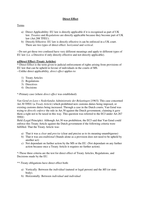
*-Art.267 TFEU: The Court of Justice of the European Union shall have jurisdiction to give preliminary
rulings concerning:
a) The interpretation of the Treaties;
b) The validity and interpretation of acts of the institutions, bodies, offices or agencies of the Union;
Where such a question is raised before any court or tribunal of a Member State, that court or tribunal
may, if it considers that a decision on the question is necessary to enable it to give judgment, request the Court
to give a ruling thereon.
Where any such question is raised in a case pending before a court or tribunal of a Member State
against whose decisions there is no judicial remedy under national law, that court or tribunal shall bring the
matter before the Court.
If such a question is raised in a case pending before a court or tribunal of a Member State with regard
to a person in custody, the Court of Justice of the European Union shall act with the minimum of delay.
--It is with preliminary reference under art.267 TFEU that the remedies of direct and indirect
effect and state liability were created for breaches of EU law. Therefore, it is essential to
providing an effective remedy to breaches of EU and maintaining supremacy of EU law over
national legislation since it is a bridge between the EU and MS legal systems.
-In this procedure, the CJEU (ECJ) provides the interpretation (under art.267 TFEU), and the
national court is then given the responsibility to apply that interpretation to the case.
--This ensures that a consistent approach to interpretation of EU law is maintained, and it
creates a clear link between national and EU law.
Steps to Preliminary Reference Procedure
a) Matter goes before national court of MS.
b) National court proceedings suspended.
c) Question sent to CJEU under Art.267 TFEU preliminary reference.
d) CJEU gives interpretation.
e) Matter returned to national court.
f) National court applies CJEU interpretation.
Which Bodies Can Make a Reference to the CJEU
*-Art.267 TFEU refers to ‘any court or tribunal’.
--This has been further defined through case law:
Ven Gend en Loos [1962]: Established by the CJEU that not only judicial, but also
administrative, tribunals were acceptable.
**-The key elements to what the EU considers to be a court or a tribunal are:
1) Independence form the parties.
2) Performance of a judicial function.
3) Permanence.
-It does not matter if the MS considers it to be a court or tribunal. All that matters is that the
EU considers it as such.
--This usually does not cause problems as the elements of a MS court or tribunal and the EU
elements are almost identical. However, issues stem from when the potential court or tribunal
*-Art.267 TFEU: The Court of Justice of the European Union shall have jurisdiction to give preliminary
rulings concerning:
a) The interpretation of the Treaties;
b) The validity and interpretation of acts of the institutions, bodies, offices or agencies of the Union;
Where such a question is raised before any court or tribunal of a Member State, that court or tribunal
may, if it considers that a decision on the question is necessary to enable it to give judgment, request the Court
to give a ruling thereon.
Where any such question is raised in a case pending before a court or tribunal of a Member State
against whose decisions there is no judicial remedy under national law, that court or tribunal shall bring the
matter before the Court.
If such a question is raised in a case pending before a court or tribunal of a Member State with regard
to a person in custody, the Court of Justice of the European Union shall act with the minimum of delay.
--It is with preliminary reference under art.267 TFEU that the remedies of direct and indirect
effect and state liability were created for breaches of EU law. Therefore, it is essential to
providing an effective remedy to breaches of EU and maintaining supremacy of EU law over
national legislation since it is a bridge between the EU and MS legal systems.
-In this procedure, the CJEU (ECJ) provides the interpretation (under art.267 TFEU), and the
national court is then given the responsibility to apply that interpretation to the case.
--This ensures that a consistent approach to interpretation of EU law is maintained, and it
creates a clear link between national and EU law.
Steps to Preliminary Reference Procedure
a) Matter goes before national court of MS.
b) National court proceedings suspended.
c) Question sent to CJEU under Art.267 TFEU preliminary reference.
d) CJEU gives interpretation.
e) Matter returned to national court.
f) National court applies CJEU interpretation.
Which Bodies Can Make a Reference to the CJEU
*-Art.267 TFEU refers to ‘any court or tribunal’.
--This has been further defined through case law:
Ven Gend en Loos [1962]: Established by the CJEU that not only judicial, but also
administrative, tribunals were acceptable.
**-The key elements to what the EU considers to be a court or a tribunal are:
1) Independence form the parties.
2) Performance of a judicial function.
3) Permanence.
-It does not matter if the MS considers it to be a court or tribunal. All that matters is that the
EU considers it as such.
--This usually does not cause problems as the elements of a MS court or tribunal and the EU
elements are almost identical. However, issues stem from when the potential court or tribunal