Environmental Psychology Elective
Week 1. Setting the scene
Gifford, R. (2013). Dragons, mules, and honeybees: Barriers, carriers, and unwitting enablers of
climate change action. Bulletin of the Atomic Scientists, 69, 41-48.
Not everyone wants to get engaged in actions that help to stop the climate change. Only 60% of the
people care about climate change, even though the carbon dixocide is super bad. There are some
structural reasons, like low income, which limits one’s ability to purchase f.a. solar panels. Other
reasons for this are called “Dragons of inactions”. These so-called dragons can be divided into seven
different “genera”, each with multiple “species” of barriers for these behaviors.
1. limited cognition. Human brain has not evolved in a long time.
a. Less rational: cannot think about the future to much
b. Being blunt/ ingnorant: unaware of environmental realities. Don’t know what actions to
undertake or what the benefit of said actions are.
c. perceived or real uncertainty: not sure if it is really happening
d. temporally and spatially discounting events and outcomes: things are worse in other
countries anyways.
e. Optimism: not thinking it will affect you.
f. perceived lack of control: my actions will not help
2. Ideologies that foster inaction: aspects of a persons life that reduce action
a. religious views: a religious deity of Mother Nature is in complete control.
b. political views
c. Mechanical innovation: technology alone can solve the problems.
d. Free-market ideology: earning money can seem more important
e. System justification: defend the societal status quo.
3. Other people: effects of being a social animals.
a. comparing to similar others to create social norms. They don’t take action, so I won’t
either. Perceived inequity: they don’t change so why should I.
4. Sunk Costs: investments of money and time can be harmful for the environment. For
example owning a car, habits.
a. Conflicting goals and aspirations: wanting to buy a big house is not compatible with
combating climate change.
b. lack of attachement to one’s place of residence. Only nature-based (compared to civic-
based) attachment helps environmental behavior.
5. Disbelief, distrust and denial. disbelief with others’ views in general or distrust with politicans
etc. The idea that policies threaten their freedom (of choice) can easily slide into denial that
climate change is occuring.
6. Perceived risk
a. Functional risk: an electric vehicle can have battery problems
b. Physical risk: Electric vehicle is not crash safe, neither is riding a bicycle
c. Financial risk: expensive. Will my insurance cover this
d. Social risk: judgment by others
e. Psychological risk: risk damage to self-esteem
, f. Temporal risk: put in time, maybe not the desired results.
7. Limited behavior
a. Tokenism “I recycle, so I have done my part”
b. Rebound effect: Buying a fuel efficient vehicle and driving farther than before.
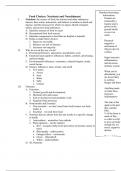
Green are the most common dragons found in an experiment, yellow are the most important
dragons found in survey studies
“Mules” are people that try to help the environment. “honeybees” also try to help the environment,
but without intending to do so (cycling to work for health reasons). There are few people that are
either mules or honeybees, therefore, five strategies were identified to enhance climate action.
1. Gaining better understanding of the barriers that different groups of people face
2. Educating people about the differential efficacy of pro-environmental actions
3. Improving education about climate change and communicating the problem more effectively
4. Designing, implementing and evaluating more effective interventions
5. Working with other experts and policy makers
Wohlwill, J. F. (1970). The emerging discipline of environmental psychology. American Psychologist,
25, 303-312
Enivornmental psychology is a response to concern about the quality of the environment. It it
problem orientated, applied and inclined to cooperate with other disciplines. It is about social
dilemma’s.
Behavior is related to characteristics and attributes of the physical environment. There are three
forms of this relationship:
1. environment imposes constraints and determines particular aspects of behaviors. The
environment is also instrumental for certain behavior. E.g. bomen om in te klimmen, behavioral
consequences of architectural designs, The effect of crowding on behavior.
2. long term exposure to a certain environment can cause generalized effects (e.g. sleeping pattern
because of day time). Less well known relationship because it is hard to investigate on.
3. Behavior can be directed at particular attributes of the environment. Environment is focal.
Adjusting and adaptation to environmental conditions. E.g. tourism. Most important
a. Affect seems to be related to complexity, diversity, novelty and category of the
environment. The more complex an environment, the more exploratory responses. Low or
intermediate level of complexity: highest affective/ evaluative responses.
b. Environment determines approach and avoidance reactions. Immigrating and vacationing
c. Adaptation. Most research about the sensory intensity dimension. Not sure how long one
needs to be in the same environment for adaptation (residue) or what the limitations are of
the individuals tolerance.there is also a difference between adaptation (getting used to the
warm weather) and adjustment (installing air-conditioning).
There are some other important questions that Wohlwill does not answer, for example; How does
culture play a role? What are individual differences that play a role (To what content is nature a part
Week 1. Setting the scene
Gifford, R. (2013). Dragons, mules, and honeybees: Barriers, carriers, and unwitting enablers of
climate change action. Bulletin of the Atomic Scientists, 69, 41-48.
Not everyone wants to get engaged in actions that help to stop the climate change. Only 60% of the
people care about climate change, even though the carbon dixocide is super bad. There are some
structural reasons, like low income, which limits one’s ability to purchase f.a. solar panels. Other
reasons for this are called “Dragons of inactions”. These so-called dragons can be divided into seven
different “genera”, each with multiple “species” of barriers for these behaviors.
1. limited cognition. Human brain has not evolved in a long time.
a. Less rational: cannot think about the future to much
b. Being blunt/ ingnorant: unaware of environmental realities. Don’t know what actions to
undertake or what the benefit of said actions are.
c. perceived or real uncertainty: not sure if it is really happening
d. temporally and spatially discounting events and outcomes: things are worse in other
countries anyways.
e. Optimism: not thinking it will affect you.
f. perceived lack of control: my actions will not help
2. Ideologies that foster inaction: aspects of a persons life that reduce action
a. religious views: a religious deity of Mother Nature is in complete control.
b. political views
c. Mechanical innovation: technology alone can solve the problems.
d. Free-market ideology: earning money can seem more important
e. System justification: defend the societal status quo.
3. Other people: effects of being a social animals.
a. comparing to similar others to create social norms. They don’t take action, so I won’t
either. Perceived inequity: they don’t change so why should I.
4. Sunk Costs: investments of money and time can be harmful for the environment. For
example owning a car, habits.
a. Conflicting goals and aspirations: wanting to buy a big house is not compatible with
combating climate change.
b. lack of attachement to one’s place of residence. Only nature-based (compared to civic-
based) attachment helps environmental behavior.
5. Disbelief, distrust and denial. disbelief with others’ views in general or distrust with politicans
etc. The idea that policies threaten their freedom (of choice) can easily slide into denial that
climate change is occuring.
6. Perceived risk
a. Functional risk: an electric vehicle can have battery problems
b. Physical risk: Electric vehicle is not crash safe, neither is riding a bicycle
c. Financial risk: expensive. Will my insurance cover this
d. Social risk: judgment by others
e. Psychological risk: risk damage to self-esteem
, f. Temporal risk: put in time, maybe not the desired results.
7. Limited behavior
a. Tokenism “I recycle, so I have done my part”
b. Rebound effect: Buying a fuel efficient vehicle and driving farther than before.
Green are the most common dragons found in an experiment, yellow are the most important
dragons found in survey studies
“Mules” are people that try to help the environment. “honeybees” also try to help the environment,
but without intending to do so (cycling to work for health reasons). There are few people that are
either mules or honeybees, therefore, five strategies were identified to enhance climate action.
1. Gaining better understanding of the barriers that different groups of people face
2. Educating people about the differential efficacy of pro-environmental actions
3. Improving education about climate change and communicating the problem more effectively
4. Designing, implementing and evaluating more effective interventions
5. Working with other experts and policy makers
Wohlwill, J. F. (1970). The emerging discipline of environmental psychology. American Psychologist,
25, 303-312
Enivornmental psychology is a response to concern about the quality of the environment. It it
problem orientated, applied and inclined to cooperate with other disciplines. It is about social
dilemma’s.
Behavior is related to characteristics and attributes of the physical environment. There are three
forms of this relationship:
1. environment imposes constraints and determines particular aspects of behaviors. The
environment is also instrumental for certain behavior. E.g. bomen om in te klimmen, behavioral
consequences of architectural designs, The effect of crowding on behavior.
2. long term exposure to a certain environment can cause generalized effects (e.g. sleeping pattern
because of day time). Less well known relationship because it is hard to investigate on.
3. Behavior can be directed at particular attributes of the environment. Environment is focal.
Adjusting and adaptation to environmental conditions. E.g. tourism. Most important
a. Affect seems to be related to complexity, diversity, novelty and category of the
environment. The more complex an environment, the more exploratory responses. Low or
intermediate level of complexity: highest affective/ evaluative responses.
b. Environment determines approach and avoidance reactions. Immigrating and vacationing
c. Adaptation. Most research about the sensory intensity dimension. Not sure how long one
needs to be in the same environment for adaptation (residue) or what the limitations are of
the individuals tolerance.there is also a difference between adaptation (getting used to the
warm weather) and adjustment (installing air-conditioning).
There are some other important questions that Wohlwill does not answer, for example; How does
culture play a role? What are individual differences that play a role (To what content is nature a part