Ecosystems
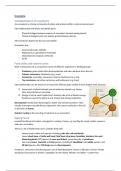
Interdependence of ecosystems
An ecosystem is a living community of plants and animals within a natural environment.
Interrelationships link biotic and abiotic parts:
- Physical linkages between aspects of ecosystem (animals eating plants)
- Chemical linkages (acid rain speeds up dead biomass decay)
All ecosystems depend on the Sun and rainfall.
Ecosystem size:
- Local (small-scale, habitat)
- Regional (e.g. Lake District moorland)
- Global biomes (tropical rainforest)
- Earth
Food chains and nutrient cycles
Biotic components of an ecosystem consist of different organisms in feeding groups:
- Producers: green plants that photosynthesise and take nutrients from the soil
- Primary consumers: herbivores (e.g. cows)
- Carnivores: secondary consumers, feed on herbivores (e.g. fox)
- Top carnivores: eat other carnivores and herbivores (e.g. lions)
Interrelationships can be shown on a food chain. Biomass gets smaller at each trophic level, because:
1) Some parts of plants/animals are not eaten by animals, e.g. bones.
Also, some biomass is excreted
2) Energy is lost at each trophic level. Hunters take a lot of kinetic energy;
herbivores search for plants to eat. Energy lost during respiration.
Decomposers break down dead organic matter and animal excretions. They
include scavengers and detritivores (bacteria), who return nutrients to the soil
in the form of humus.
Nutrient cycling is the recycling of nutrients in an ecosystem.
Epping Forest
Located Northeast of London, managed in a variety of ways, e.g. hunting for royals, timber resource
and now, recreation.
There is a lot of biodiversity and a complex food web:
- Houses many native tree species, including oak, elm, ash and beech
- Lower shrub layer of holly and hazel, field layer of grasses, brambles, bracken, fern and
flowering plants (177 species of moss and lichen)- great diversity of producers
- Has many insect, mammal and bird species, including 9 amphibian and reptile species, and
38 bird species. Also 700 fungi species (decomposers)
Producers, consumers and decomposers are all interdependent, shown in lifecycle of trees. Mostly
deciduous (lose leaves in winter)- adaptation to UK climate. Winters are darker + cooler than
Interdependence of ecosystems
An ecosystem is a living community of plants and animals within a natural environment.
Interrelationships link biotic and abiotic parts:
- Physical linkages between aspects of ecosystem (animals eating plants)
- Chemical linkages (acid rain speeds up dead biomass decay)
All ecosystems depend on the Sun and rainfall.
Ecosystem size:
- Local (small-scale, habitat)
- Regional (e.g. Lake District moorland)
- Global biomes (tropical rainforest)
- Earth
Food chains and nutrient cycles
Biotic components of an ecosystem consist of different organisms in feeding groups:
- Producers: green plants that photosynthesise and take nutrients from the soil
- Primary consumers: herbivores (e.g. cows)
- Carnivores: secondary consumers, feed on herbivores (e.g. fox)
- Top carnivores: eat other carnivores and herbivores (e.g. lions)
Interrelationships can be shown on a food chain. Biomass gets smaller at each trophic level, because:
1) Some parts of plants/animals are not eaten by animals, e.g. bones.
Also, some biomass is excreted
2) Energy is lost at each trophic level. Hunters take a lot of kinetic energy;
herbivores search for plants to eat. Energy lost during respiration.
Decomposers break down dead organic matter and animal excretions. They
include scavengers and detritivores (bacteria), who return nutrients to the soil
in the form of humus.
Nutrient cycling is the recycling of nutrients in an ecosystem.
Epping Forest
Located Northeast of London, managed in a variety of ways, e.g. hunting for royals, timber resource
and now, recreation.
There is a lot of biodiversity and a complex food web:
- Houses many native tree species, including oak, elm, ash and beech
- Lower shrub layer of holly and hazel, field layer of grasses, brambles, bracken, fern and
flowering plants (177 species of moss and lichen)- great diversity of producers
- Has many insect, mammal and bird species, including 9 amphibian and reptile species, and
38 bird species. Also 700 fungi species (decomposers)
Producers, consumers and decomposers are all interdependent, shown in lifecycle of trees. Mostly
deciduous (lose leaves in winter)- adaptation to UK climate. Winters are darker + cooler than