VMware set B questions with correct answers
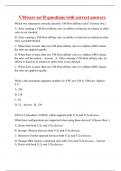
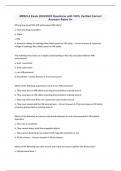
Which two statements correctly describe VM-Host affinity rules? (Choose two.) A. After creating a VM-Host affinity rule, its ability to function in relation to other rules is not checked. B. After creating a VM-Host affinity rule, its ability to function in relation to other rules is predetermined. C. When there is more than one VM-Host affinity rule in a vSphere DRS cluster, the rules are applied equally. D. When there is more than one VM-Host affinity rule in a vSphere DRS cluster, the rules will be ranked. - Answer A. After creating a VM-Host affinity rule, its ability to function in relation to other rules is not checked. C. When there is more than one VM-Host affinity rule in a vSphere DRS cluster, the rules are applied equally. What is the maximum supporter number of vCPU per VM in VMware vSphere 6.5? A. 246 B. 128 C. 64 D. 32 - Answer B. 128 ESXi 6.5 introduces VMFS6, which supports both 512e and 512n devices. What three configurations are supported when using these devices? (Choose three.) A. Hosts with both 512e and 512n devices. B. Storage vMotion between both 512e and 512n devices. C. Datastore Extents spanned between both 512e and 512n devices. D. Storage DRS clusters containing only both 512e and 512n devices. - Answer A. Hosts with both 512e and 512n devices. B. Storage vMotion between both 512e and 512n d
Written for
- Institution
- VCP - VMware Certified Professional
- Course
- VCP - VMware Certified Professional
Document information
- Uploaded on
- May 28, 2023
- Number of pages
- 54
- Written in
- 2022/2023
- Type
- Exam (elaborations)
- Contains
- Questions & answers
Subjects
-
vmware set b questions with correct answers

Also available in package deal