Lymphatic System
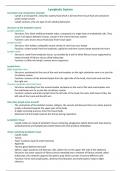
Formation and composition of lymph
- Lymph is a transparent, colourless watery fluid which is derived from tissue fluid and contained
within lymph vessels
- Lymph contains only one type of cell called lymphocytes
Structure of the lymphatic system
Lymph capillaries
- Structure: fine, blind-ended permeable tubes, composed of a single layer of endothelial cells. They
occur in all spaces between tissues, except in the central nervous system
- Function: carry excess tissue fluid away from tissue space
Lymph vessels
- Structure: thin-walled, collapsible vessels similar to veins but carry lymph.
- Function: collect lymph from the lymphatic capillaries and then convey lymph towards the heart
Lymph nodes
- Structure: made from lymphatic tissue, surrounded by a wall of white fibrous tissue supported by
inward strands of fibrous tissue called trabeculae.
- Function: to filter the lymph, remove micro-organisms
Lymph ducts
Right lymphatic duct
- Structure: positioned at the root of the neck and empties on the right subclavian vein to re-join the
circulatory system
- Function: receives all the drained lymph from the right side of the head, chest and neck and from
the right arm
Thoracic lymphatic duct (left duct)
- Structure: extending from the second lumbar vertebrae to the root of the neck and empties into
the subclavian vein to re-join the circulatory system
- Function: collects and drains lymph from the left side of the head, the neck, both lower limbs, the
left side of the trunk and the left arm
How does lymph move around?
- The contraction of the skeletal muscles collapse, the vessels and because there are valves present,
lymph is directed towards the upper part of the body
- A slight oncoming pressure from the tissue fluids
- Movement of the lymph towards the thorax during inspiration
Lymphatic Tissue
- Lymph nodes are made of lymphatic tissue containing, phagocytes (white blood cells that destroy
waste/bacteria) and lymphocytes (white blood cells that produce antibodies)
Areas containing lymphatic tissue
- Lymph nodes
- Tonsils
- Peyer’s patches (wall of small intestine)
- Appendix
- Thymus gland (behind sternum)
- Spleen: organ produces and destroys cells, spleen lies on the upper-left side of the abdomen
Structure: has outer capsule of fibrous tissue extending into a network of fibrous strands called
trabeculae, this network supports the splenic pulp which consists of several different cells
Function: forms new lymphocytes, destroys thrombocytes and erythrocytes, helps to fight
infection.
Formation and composition of lymph
- Lymph is a transparent, colourless watery fluid which is derived from tissue fluid and contained
within lymph vessels
- Lymph contains only one type of cell called lymphocytes
Structure of the lymphatic system
Lymph capillaries
- Structure: fine, blind-ended permeable tubes, composed of a single layer of endothelial cells. They
occur in all spaces between tissues, except in the central nervous system
- Function: carry excess tissue fluid away from tissue space
Lymph vessels
- Structure: thin-walled, collapsible vessels similar to veins but carry lymph.
- Function: collect lymph from the lymphatic capillaries and then convey lymph towards the heart
Lymph nodes
- Structure: made from lymphatic tissue, surrounded by a wall of white fibrous tissue supported by
inward strands of fibrous tissue called trabeculae.
- Function: to filter the lymph, remove micro-organisms
Lymph ducts
Right lymphatic duct
- Structure: positioned at the root of the neck and empties on the right subclavian vein to re-join the
circulatory system
- Function: receives all the drained lymph from the right side of the head, chest and neck and from
the right arm
Thoracic lymphatic duct (left duct)
- Structure: extending from the second lumbar vertebrae to the root of the neck and empties into
the subclavian vein to re-join the circulatory system
- Function: collects and drains lymph from the left side of the head, the neck, both lower limbs, the
left side of the trunk and the left arm
How does lymph move around?
- The contraction of the skeletal muscles collapse, the vessels and because there are valves present,
lymph is directed towards the upper part of the body
- A slight oncoming pressure from the tissue fluids
- Movement of the lymph towards the thorax during inspiration
Lymphatic Tissue
- Lymph nodes are made of lymphatic tissue containing, phagocytes (white blood cells that destroy
waste/bacteria) and lymphocytes (white blood cells that produce antibodies)
Areas containing lymphatic tissue
- Lymph nodes
- Tonsils
- Peyer’s patches (wall of small intestine)
- Appendix
- Thymus gland (behind sternum)
- Spleen: organ produces and destroys cells, spleen lies on the upper-left side of the abdomen
Structure: has outer capsule of fibrous tissue extending into a network of fibrous strands called
trabeculae, this network supports the splenic pulp which consists of several different cells
Function: forms new lymphocytes, destroys thrombocytes and erythrocytes, helps to fight
infection.