

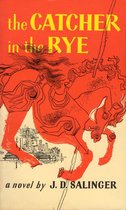
THE CATCHER IN THE RYE, J.D. Salinger (1951)
Bildungsroman - Coming-of-age novel → psychological and moral growth of the protagonist
over a period of time (youth to adulthood). The character experiences some kind of personal
growth, change.
Published in July 1951.
Narrated in first person by Holden Caulfield, providing own commentary on the events and
people he describes
tone → it varies between disgust, cynicism, bitterness, loneliness, sadness and nostalgic
longing, all expressed in a colloquial style.
↳ a bit of a pessimistic tone.
Period of time: a long weekend in New York in the late 1940s or early 1950s.
The story begins in Pennsylvania at Holden’s former school, Pencey Pep. He then recounts
his adventures in New York City. At the beginning of the novel, Holden hints that he has been
hospitalized for a nervous breakdown.
The novel is now considered a masterpiece of American fiction.
It portraits the image of a social outsider.
The Catcher in the Rye is the only novel by J.D. Salinger. He hated being a public person and
did not want fame nor fans. JD Salinger was quite an outsider himself.
She hated celebrities before even the term “celebrity” was introduced. He liked to live a
private life.
He fought in WW2 in the landing of Normandy and he had various love stories.
Historical Setting
- Holden Caulfield’s America (1940s - 50s) was a nation of contrasts. World War II was
over, and the boys had come home, but to what? uncertainty (autobiographical)
- Financially, life had improved significantly for the average worker since the Great
Depression of the 30s, but inflation presented new problems
- President of the USA: Harry S. Truman. The political scene generally moved toward
conservatism near the end of the 1940s and into 1950s (time of period of the novel)
Bildungsroman - Coming-of-age novel → psychological and moral growth of the protagonist
over a period of time (youth to adulthood). The character experiences some kind of personal
growth, change.
Published in July 1951.
Narrated in first person by Holden Caulfield, providing own commentary on the events and
people he describes
tone → it varies between disgust, cynicism, bitterness, loneliness, sadness and nostalgic
longing, all expressed in a colloquial style.
↳ a bit of a pessimistic tone.
Period of time: a long weekend in New York in the late 1940s or early 1950s.
The story begins in Pennsylvania at Holden’s former school, Pencey Pep. He then recounts
his adventures in New York City. At the beginning of the novel, Holden hints that he has been
hospitalized for a nervous breakdown.
The novel is now considered a masterpiece of American fiction.
It portraits the image of a social outsider.
The Catcher in the Rye is the only novel by J.D. Salinger. He hated being a public person and
did not want fame nor fans. JD Salinger was quite an outsider himself.
She hated celebrities before even the term “celebrity” was introduced. He liked to live a
private life.
He fought in WW2 in the landing of Normandy and he had various love stories.
Historical Setting
- Holden Caulfield’s America (1940s - 50s) was a nation of contrasts. World War II was
over, and the boys had come home, but to what? uncertainty (autobiographical)
- Financially, life had improved significantly for the average worker since the Great
Depression of the 30s, but inflation presented new problems
- President of the USA: Harry S. Truman. The political scene generally moved toward
conservatism near the end of the 1940s and into 1950s (time of period of the novel)

