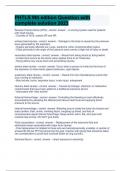
PHTLS 9th edition Question with complete solution 2023
PHTLS 9th edition Question with complete solution 2023Revised Trauma Score (RTS) - A scoring system used for patients with head trauma. - Consists of GCS, systolic BP and RR primary blast injuries - Damage to the body is caused by the pressure wave generated by the explosion - Organs generally affected are: lungs, eardrums, other comprehensible organs - Close proximity to the origin of the pressure wave carries a high risk of injury or death. secondary blast injuries - Result from being struck by flying debris - A blast wind occurs as the shock wave applies force to air molecules. - Flying debris may cause blunt and penetrating injuries. tertiary blast injuries Occur when a person is hurled by the force of the explosion (or blast wind) against stationary, rigid objects. quaternary blast injuries - Result from the miscellaneous events that occur during an explosion - May include: burns, respirator injury, crush injury, entrapment Quinary blast injuries - Caused by biologic, chemical, or radioactive contaminants that have been added to a traditional explosive device - Associated with "dirty bombs" External Hemorrhage Controlling the bleeding is most effectively accomplished by elevating the affected part above heart level and applying direct pressure to the wound. internal hemorrhage Bleeding occurs inside the body into tissues and body cavities. Pain, shock, vomiting blood, coughing up blood, and loss of consciousness signal internal hmorrhage. Keep person warm, flat, and quiet until medical help arrives. DO NOT give fluids. Fluid resuscitation - Replacement of the extensive fluid and electrolyte losses associated with major burn injuries. - Fluid replacement is initiated to those who are hemodynamically unstable. A systolic of at least 90 (80 per PHTLS) should be the goal. Caution with giving fluid should be taken into consideration to avoid fluid overload (listen to lung sounds). Electrical Burns - direct exposure to electricity - Treat by shutting off current, approach only if safe, cool burn with water, check breathing and for signs of bleeding, treat for shock, seek medical attention true electrical burn electric current goes through skin and tissue, has enter and exit pathway, pathway becomes gsngreen/neurotic within a few days, follows pathway of least resistance
Written for
- Institution
- PHTLS 9th edition
- Course
- PHTLS 9th edition
Document information
- Uploaded on
- May 13, 2023
- Number of pages
- 4
- Written in
- 2022/2023
- Type
- Exam (elaborations)
- Contains
- Questions & answers
Subjects
- systolic bp and rr
- primary blast injuries
-
phtls 9th edition question with complete solution 2023
-
revised trauma score rts a scoring system used for patients with head trauma consists of gcs

Also available in package deal