100% satisfaction guarantee Immediately available after payment Both online and in PDF No strings attached 4.2 TrustPilot
logo-home
Exam (elaborations)

WGU C215 Study Guide - Final Exam With 100% Correct Answers

Rating
-
Sold
3
Pages
24
Grade
A+
Uploaded on
08-05-2023
Written in
2022/2023

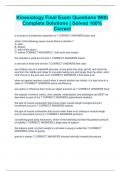
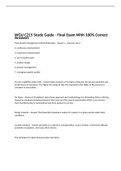
Total Quality Management (TQM) Philosophy - Answer 1. customer focus 2. continuous improvement 3. employee empowerment 4. use of quality tools 5. product design 6. process management 7. managing supplier quality Process Capability Index (Cpk) - Answer Basic function of Six Sigma. Measures the process potential and performance of processes. The higher the range of Cpk, the improved is the ability of the process to complete its necessities. Six Sigma - Answer A disciplined, data-driven approach and methodology for eliminating defects (driving toward six standard deviations between the mean and the nearest specification limit) in any process - from manufacturing to transactional and from product to service. Design Capacity - Answer The theoretical maximum output of a system in a given period under ideal conditions. Location Analysis - Answer proximity to customers, transportation, source of labor, community attitude, proximity to suppliers, and many other factors. The technique for determining location decisions. Line Processes - Answer A type of process used to produce a large volume of a standardized product. ■ Limited customization and high volume Batch Processes - Answer A type of process used to produce a small number of products in groups or batches based on customer orders or specifications. ■ High customization moderate volume Project Processes - Answer A type of process used to make a one-at-a-time product exactly to customer specifications. ■ Most custom and lowest volume Continuous Processes - Answer A type of process that operates continually to produce a high volume of a fully standardized product. - No customization and as high a volume as possible Bottleneck - Answer Longest task in the process. Flexible Manufacturing System (FMS) - Answer A type of automated system that combines the flexibility of intermittent operations with the efficiency of continuous operations. Output/Input Control - Answer A technique for monitoring the flow of jobs between work centers. Value-Added - Answer The net increase created during the transformation of inputs into final outputs. Hybrid Layouts - Answer Layouts that combine characteristics of process and product layouts. - Group technology layouts. - Cell technology layouts. - Grocery stores use hybrid layouts Relationship Chart (REL) - Answer Table that reflects opinions of managers with regard to the importance of having any two departments close together. Rectilinear Distance - Answer The shortest distance between two locations using north-south and east-west movements. From-To Matrix - Answer Table that gives the number of trips or units of product moved between any pair of departments. Block Plan - Answer Schematic showing the placement of resources in a facility. Mean Observed Times - Answer The average of the observation times for each of the work elements. Normal Time - Answer The mean observed time multiplied by the performance rating factor by the frequency of occurrence. Standard Time - Answer The length of time it should take a qualified worker using appropriate process and tools to complete a specific job, allowing time for personal fatigue and unavoidable delays. Just-in-Time (JIT) - Answer A philosophy designed to achieve high-volume production through elimination of waste and continuous improvement. Based on a "pull" system rather than a "push" system. The three elements are just-in-time manufacturing, total quality management, and respect for people. Kanban card - Answer A card that specifies the exact quantity of product that needs to be produced. Tier One Suppliers - Answer Supplies materials or services directly to the processing facility. These are the suppliers that put products in specific containers or packages. Internal Functions companies Tier Two Suppliers - Answer Directly supplies materials or services to a tier-one supplier in the supply chain. Suppliers of the specialty materials for the tier one suppliers to be able to produce the packaging necessary for different products. Think cardboard, plastic, glass, chemicals. Tier Three Suppliers - Answer Directly supplies materials or services to a tier two supplier in the supply chain. These are companies that extract raw materials. Oil, raw chemical materials, wood. Capacity Requirements Planning (CRP) - Answer Determines the labor and machine resources needed to fill the open and planned orders generated by the MRP. Basically, checking if there is enough work scheduled for operations Enterprise Resource Planning (ERP) - Answer Large software programs used for planning and coordinating all resources throughout the entire enterprise. Aggregate Plans - IN A BROAD SENSE - Answer Includes the budgeted levels of finished products, inventory, backlogs, workforce size, and aggregate production rate needed to support the marketing plan. Marketing Plan, TO, Operating and engineering Plans, TO, Start or revision of the strategic business plan. Third-Party Logistics (3PL) - Answer Businesses used to outsource elements of the company's distribution and fulfillment services. They typically specialize in integrated operation, warehousing and transportation services which can be scaled and customized to customers' needs based on market conditions, such as the demands and delivery service requirements for their products and materials. Supply Chain Operations Reference model (SCOR) - Answer the world's leading supply chain framework, linking business processes, performance metrics, practices and people skills into a unified structure. The goals are to increase the speed of system implementations, support organizational learning goals, and improve inventory turns. Project Life Cycle Phases - Answer Conception, Feasibility/Study analysis, Planning, Execution, Termination Master Production Schedule (MPS) - Answer A plan for individual commodities to be produced in each time period.It is usually linked to manufacturing where the plan indicates when and how much of each product will be demanded. It gives production, planning, purchasing, and top management the information needed to plan and control the manufacturing operation. Total Quality Management (TQM) - Answer The meaning of quality as defined by the customer. Advertising revenue model - Answer Provides users with information on services and products and provides an opportunity for suppliers to advertise Affiliate revenue model - Answer Companies receive a referral fee for directing business to an affiliate Appraisal cost - Answer The cost associated with uncovering defects Automated order entry systems - Answer A method using telephone models to send digital orders to suppliers. Backwards integration - Answer Owning or controlling sources of raw materials and components. Benchmarking - Answer Studying other companies business practices for comparison. Bullwhip effect - Answer Inaccurate or distorted demand information created in the supply chain. Business to Business commerce - Answer Businesses buying and selling to other businesses. Business to consumer commerce - Answer Businesses selling to individual consumers. Cause and effect diagrams - Answer A chart that identifies potential causes of particular quality problems. Checklist - Answer A list of common defects and the number of observed occurrences of each. Conformance to specifications - TQM - Answer how well a product or service meets the targets and tolerances set by designers. Continuous improvement - Answer A philosophy of never-ending improvement. Control charts - Answer Charts used to evaluate whether a process is operating within expectations. Crossdocking - Answer Eliminates storage and order picking functions of a distribution warehouse. Customer defined quality - Answer an integrated effort designed to improve quality performance at every level of the organization. Deming Prize - Answer Japanese award for companies to recognize efforts in quality improvement. Distribution management - Answer Responsible for the movement of material from the manufacturer to the customer. Distribution warehouse - Answer Used for short term storage, consolidation, and product mixing. Distributor crossdocking - Answer the receiving and consolidating of inbound products from different vendors into a multi-SKU pallet. E-commerce - Answer Using the internet and web to do business. E-distributors - Answer Independently owned net marketplaces having catalogs representing thousands of suppliers and designed for spot purchases. E-purchasing - Answer Companies that connect onlone MRO suppliers to businesses that pay fees to join the market, usually for long term contractual purchasing. Early supplier involment (ESI) - Answer Involvement of critical suppliers in new product design. Electronic data interchange (EDI) - Answer A form of computer to computer communications that enables sharing business documents. Electronic requests for quotes (eRFQs) - Answer An electronic request for a quote on goods and services. Electronic storefront - Answer online catalogs of products made available to the general public by a single supplier Exchanges - Answer Marketplaces that focus on spot requirements of larger firms in a single industry External Failure costs - Answer Costs associated with failures that occur at the customer site.

Show more Read less
Institution
WGU C215
Course
WGU C215


Whoops! We can’t load your doc right now. Try again or contact support.

Written for

Institution
WGU C215
Course
WGU C215

Document information

Uploaded on
May 8, 2023
Number of pages
24
Written in
2022/2023
Type
Exam (elaborations)
Contains
Questions & answers

Subjects

  • wgu c215
  • wgu c215 study guide

Content preview

WGU C215 Study Guide - Final Exam With 100% Correct Answers Total Quality Management (TQM) Philosophy - Answer 1. customer focus
2. continuous improvement
3. employee empowerment
4. use of quality tools
5. product design
6. process management
7. managing supplier quality
Process Capability Index (Cpk) - Answer Basic function of Six Sigma. Measures the process potential and performance of processes. The higher the range of Cpk, the improved is the ability of the process to complete its necessities.
Six Sigma - Answer A disciplined, data-driven approach and methodology for eliminating defects (driving toward six standard deviations between the mean and the nearest specification limit) in any process - from manufacturing to transactional and from product to service.
Design Capacity - Answer The theoretical maximum output of a system in a given period under ideal conditions.
Location Analysis - Answer proximity to customers, transportation, source of labor, community attitude, proximity to suppliers, and many other factors.
The technique for determining location decisions. Line Processes - Answer A type of process used to produce a large volume of a standardized product.
■ Limited customization and high volume
Batch Processes - Answer A type of process used to produce a small number of products in groups or batches based on customer orders or specifications.
■ High customization moderate volume
Project Processes - Answer A type of process used to make a one-at-a-time product exactly to customer specifications.
■ Most custom and lowest volume
Continuous Processes - Answer A type of process that operates continually to produce a high volume of a fully standardized product.
- No customization and as high a volume as possible
Bottleneck - Answer Longest task in the process.
Flexible Manufacturing System (FMS) - Answer A type of automated system that combines the flexibility of intermittent operations with the efficiency of continuous operations.
Output/Input Control - Answer A technique for monitoring the flow of jobs between work centers.
Value-Added - Answer The net increase created during the transformation of inputs into final outputs.
Hybrid Layouts - Answer Layouts that combine characteristics of process and product layouts. - Group technology layouts.
- Cell technology layouts.
- Grocery stores use hybrid layouts
Relationship Chart (REL) - Answer Table that reflects opinions of managers with regard to the importance
of having any two departments close together.
Rectilinear Distance - Answer The shortest distance between two locations using north-south and east-
west movements.
From-To Matrix - Answer Table that gives the number of trips or units of product moved between any pair of departments.
Block Plan - Answer Schematic showing the placement of resources in a facility.
Mean Observed Times - Answer The average of the observation times for each of the work elements.
Normal Time - Answer The mean observed time multiplied by the performance rating factor by the frequency of occurrence.
Standard Time - Answer The length of time it should take a qualified worker using appropriate process and tools to complete a specific job, allowing time for personal fatigue and unavoidable delays.
Just-in-Time (JIT) - Answer A philosophy designed to achieve high-volume production through elimination of waste and continuous improvement. Based on a "pull" system rather than a "push" system. The three elements are just-in-time manufacturing, total quality management, and respect for people.
Kanban card - Answer A card that specifies the exact quantity of product that needs to be produced.

Get to know the seller

Seller avatar
Reputation scores are based on the amount of documents a seller has sold for a fee and the reviews they have received for those documents. There are three levels: Bronze, Silver and Gold. The better the reputation, the more your can rely on the quality of the sellers work.
Exampool NURSING
View profile
Follow You need to be logged in order to follow users or courses
Sold
219
Member since
2 year
Number of followers
147
Documents
3592
Last sold
2 weeks ago
Power-horse Library

HELLO Dear ones On this Account you will find all Study related Materials ,EXAMS, STUDY GUIDES, CASES,NOTEBOOKS and many more. well come as we study for Excellency.

3.9

32 reviews

5
16
4
2
3
10
2
2
1
2

Recently viewed by you

Why students choose Stuvia

Created by fellow students, verified by reviews

Quality you can trust: written by students who passed their tests and reviewed by others who've used these notes.

Didn't get what you expected? Choose another document

No worries! You can instantly pick a different document that better fits what you're looking for.

Pay as you like, start learning right away

No subscription, no commitments. Pay the way you're used to via credit card and download your PDF document instantly.

Student with book image

“Bought, downloaded, and aced it. It really can be that simple.”

Alisha Student

Frequently asked questions