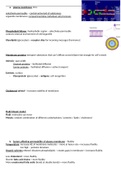
a. plasma membrane 7nm
selectively permeable – control entry/exit of substances
organelle membranes: compartmentalise individual cell processes
Phospholipid bilayer: hydrophobic region – selectively-permeable
controls internal environment of cell/organelle
Glycolipids (glycocalyx) – receptor sites for incoming messages (hormones)
Membrane proteins transport substances that can’t diffuse across bilayer fast enough for cell’s needs
Intrinsic: span width
Channel proteins – facilitated diffusion
Carrier proteins – facilitated diffusion + active transport
Extrinsic: surface
- Glycoprotein (glycocalyx) – antigens: cell recognition
Cholesterol animal – increases stability of membrane
Fluid-Mosaic model
Fluid: molecules can move
Mosaic: random combination of different carbohydrates / proteins / lipids / cholesterol
b. factors affecting permeability of plasma membrane – fluidity
Temperature: increases KE of membrane molecules – move at faster rate = increases fluidity
too high – proteins denature
Organic solvents ethanol: dissolves phospholipids – creates gaps in membrane = increases fluidity
Less cholesterol = more fluidity
Shorter fatty acid chains = more fluidity
More unsaturated fatty acids (bends at double bonds) = more fluidity
selectively permeable – control entry/exit of substances
organelle membranes: compartmentalise individual cell processes
Phospholipid bilayer: hydrophobic region – selectively-permeable
controls internal environment of cell/organelle
Glycolipids (glycocalyx) – receptor sites for incoming messages (hormones)
Membrane proteins transport substances that can’t diffuse across bilayer fast enough for cell’s needs
Intrinsic: span width
Channel proteins – facilitated diffusion
Carrier proteins – facilitated diffusion + active transport
Extrinsic: surface
- Glycoprotein (glycocalyx) – antigens: cell recognition
Cholesterol animal – increases stability of membrane
Fluid-Mosaic model
Fluid: molecules can move
Mosaic: random combination of different carbohydrates / proteins / lipids / cholesterol
b. factors affecting permeability of plasma membrane – fluidity
Temperature: increases KE of membrane molecules – move at faster rate = increases fluidity
too high – proteins denature
Organic solvents ethanol: dissolves phospholipids – creates gaps in membrane = increases fluidity
Less cholesterol = more fluidity
Shorter fatty acid chains = more fluidity
More unsaturated fatty acids (bends at double bonds) = more fluidity