HESI PN Medical Surgical Exam
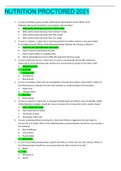
A male client with diabetes mellitus calls the clinic to report left calf pain after walking around the block. Which additional information should the PN report to the healthcare provider? Muscle cramps occur at night when sleeping. Muscles are deconditioned from lack of regular exercise. Shooting pain occurs down the back of one leg when walking. The pain is immediately relieved when he sits down. The pain is immediately relieved when he sits down. Rationale Atherosclerosis secondary to diabetes mellitus increases the client's risk for peripheral arterial disease, which is manifested by pain precipitated by walking. The pain is immediately relieved when the clients sits down to rest(intermittent claudication) (D) and should be reported. (A, B, and C) occur from different problems. The practical nurse (PN) is reviewing preoperative instructions with a male client who is having surgery today. What question should the PN ask the client to best evaluate his understanding of the surgery? Do you understand why you are having surgery? Have you undergone this type of surgery in the past? What do you know about the surgery you are having? What symptoms brought you to the hospital for surgery? What do you know about the surgery you are having? Rationale Although it is the surgeon's responsibility to explain the surgery to the client, it is a nursing responsibility to determine whether the client understands what he has been told about his surgery. Asking open-ended questions is an important step in eliciting what the client understands (C). (A and B) are closed end questions and will elicit one word responses. (D) asks the client to explain the admission related to his need for surgery, but not his understanding about the procedure. Which finding is most important for the practical nurse (PN) to explore further for a client who had a total abdominal hysterectomy and bilateral oophorectomy yesterday? Right calf is 24 cm and the left calf is 21 cm. No bowel sounds or gurgles auscultated in the abdomen. No urine output 3 hours after the catheter is removed. Dried blood 3 cm in size noted on the abdominal dressing. Right calf is 24 cm and the left calf is 21 cm. Rationale A client with major abdominal surgery is at risk for the complication of deep vein thrombosis (DVT) due to immobility, dehydration, and manipulation of major vessels. Unilateral leg swelling (A) is a classic sign of a DVT. Not having bowel sounds one day postoperatively (B) after a major abdominal surgery is an expected finding. (C) is not unexpected 3 hours after removal of a urinary catheter, and the PN should encourage the client to void 6 to 8 hours after the removal of a catheter before taking more aggressive actions. A small amount of dried blood is an expected finding (D). Which finding for a client who is 1-day postoperative for a partial thyroidectomy requires immediate follow-up by the practical nurse (PN)? Which finding for a client who is 1-day postoperative for a partial thyroidectomy requires immediate follow-up by the practical nurse (PN)? High pitched expiratory sound. Throat pain rated "9." Voice is hoarse. Capillary refill is 4 seconds. High pitched expiratory sound. Rationale Stridor indicates airway obstruction, which is a postoperative complication after thyroidectomy (A). (B, C, and D) should be addressed after preparing for interventions related to airway obstruction. The practical nurse (PN) is evaluating the self-care of a client who is recovering at home after a laryngectomy. Which finding indicates to the PN that the client needs additional information? A cool mist humidifier is at the bedside. The salt water solution is dated 3 days ago. A Medic Alert bracelet is on the client's wrist. The client's stoma is covered with a crocheted scarf. The salt water solution is dated 3 days ago. Rationale Salt water solution (B) should be changed daily to prevent bacterial growth. (A, C, and D) are within accepted parameters for care. Which information should the practical nurse (PN) offer a female client who is at risk for recurrent urinary tract infection (UTI)? (Select all that apply.) Select all that apply Use vinegar solution douche regularly. Avoid wearing tight-fitting jeans. Limit caffeine and alcohol. Void before and after intercourse. Wipe the perineum from front to back. Avoid wearing tight-fitting jeans. Limit caffeine and alcohol. Void before and after intercourse. Wipe the perineum from front to back. Rationale Correct selections are (B, C, D, and E). Voiding before and after intercourse (D), avoiding caffeine and alcohol (C), and not wearing tight jeans (B), as well as wiping the perineal area from front to back (E), reduce UTI risk. Frequent douching (A) does not reduce a client's risk for frequent UTIs. The practical nurse is caring for a client who is admitted with signs of possible acute brain attack (stroke) three hours ago. The client's blood pressure is 170/96, regular radial pulse 76 beats/minute, respirations are nonlabored at 11 breaths/minute, and a SpO2 of 99%. What action is most important for the PN to implement? Call healthcare provider for antihypertensive. Assess the client for Brudzinski's sign. Continue to monitor client's blood pressure. Monitor client's IV fluid intake and urine output. Continue to monitor client's blood pressure. Rationale The goals for management of a client with a suspected stroke is continuous monitor of blood pressure (C) and neurological deterioration to determine eligibility for reperfusion therapy. Antihypertensives are indicated if the systolic is 180- 230 or diastolic is 105-140, so (A) is not indicated at this time. (B) is most likely associated with meningeal irritation related to meningitis. Although (D) is a basic component of client care, the priority is monitoring the client's blood pressure. A client with cholelithiasis is admitted with jaundice due to obstruction of the common bile duct. Which finding is most important for the practical nurse to report to the healthcare provider? Pain radiating to the right shoulder. Clay-colored stool. Hard, rigid abdomen. Vomiting bile-stained emesis. Hard, rigid abdomen. Rationale As bile accumulates due to obstruction of the common bile duct, the gallbladder distends and can perforate, which is manifested by a distended, hard, rigid abdomen (C) that should be reported immediately to the healthcare provider. Radiating pain (A) and clay-colored stool (B) are manifestations associated with obstructive jaundice due to cholelithiasis. (D) indicates the obstruction of the common bile duct is reduced. Which findings should the practical nurse identify in a client with anemia due to a vitamin B 12 deficiency? Select all that apply Gradual weight gain. Smooth, beefy-red oral cavity. Macrocytic red blood cells (RBC). Paresthesia of hands and feet. Leukopenia. Smooth, beefy-red oral cavity. Paresthesia of hands and feet. Rationale Correct choices are (B and D). Vitamin B 12 deficiency anemia is due to a dietary deficiency or failure to absorb vitamin B12 from the intestinal tract as a result of partial gastrectomy or pernicious anemia. Manifestations of pernicious anemia include glossitis (a smooth, beefy-red tongue) (B), fatigue, paresthesia (D), pallor and jaundice, and weight loss, not (A). The results of a complete blood count (CBC) that show macrocytic anemia (C), leukopenia (E) and thrombocytopenia are indicative of bone marrow failure, not vitamin B12 deficiency. An older client with presbyopia receives a prescription for corrective lenses. Which information should the practical nurse provide that explains the expected results of the corrective lenses? Helps to sharpen distance vision. Improves both near and distance vision. Corrects vision for reading and close work. Assists with bilateral accommodation. Corrects vision for reading and close work. Rationale Due to aging of the lenses and loss of elasticity, presbyopic changes reduce the lenses' ability to accommodate, which makes close vision blurry. Corrective lenses improve visual acuity for reading and in close work (C). (A, B, and D) are inaccurate.
Written for
- Institution
-
Chamberlain College Of Nursing
- Course
-
PN MED SURG.
Document information
- Uploaded on
- May 1, 2023
- Number of pages
- 32
- Written in
- 2022/2023
- Type
- Exam (elaborations)
- Contains
- Questions & answers
Subjects
-
hesi pn medical surgical exam
-
a male client with diabetes mellitus calls the clinic to report left calf pain after walking around the block which additional information should the pn report to the he