Native American Revision:
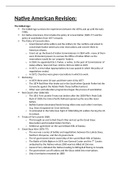
The Gilded Age:
The Gilded Age surmises the experiences between the 1870s and up until the early
1900s.
For Native Americans, this includes the policy of concentration (1865-77) and the
policy of assimilation from 1877 onwards.
The Policy of Concentration:
o Grant blamed white settlers and the military for the conflicts and aimed to
concentrate Native Americans onto reservations and convert them to
American citizens.
o Grant set up the Board of Indian Commissioners in 1869 with– many of them
were Protestant powers to oversee the Office of Indian Affairs so the
reservations would be run ‘properly’ leaders.
o In 1869, he appointed Ely S. Parker, a native, to the post of Commissioner of
Indian Affairs. Wars fell from 1010 to 58 from 1869 to 1870.
o In 1871, a new Indian Appropriations Act was passed in which the policy of
negotiations ended.
o In 1872, Churches were given reservations in which to work.
Reckoning:
o In 1876 there were 32 wars and there were 43 by 1877.
o The 1874 Red River War broke out in the South when Quanah Parker led the
Comanche against the Adobe Walls (Texas buffalo hunters)
o Other wars and education programmes began the process of assimilation.
Red Cloud’s War (1866-68):
o The 1851 Fort Laramie Treaty was broken after the 1858 Pike’s Peak Gold
Rush of 1858; the Union Pacific Railroad opened up the area like never
before.
o Buffalo hunters decimated herds forcing tribes onto each other’s territory
(e.g. Sioux trespassed on Crow territory).
o It culminated in the Fetterman Fight of 1866 killing 81 soldiers forcing the US
to retreat.
Treaty of Fort Laramie 1868:
o This brought an end to Red Cloud’s War and set up the Great Sioux
Reservation and Unceded Indian Territory.
o Settled an agreement on the sacred Black Hills of Dakota.
Great Sioux War (1876-77):
o The war was a series of battles and negotiations between the Lakota Sioux,
Northern Cheyenne, and the US government.
o The US government desire ownership of the sacred Black Hills of Dakota.
o The Battle of Little Bighorn in 1876 saw General Custer and the 7 th Cavalry
ambushed by the Natives whose 2000 warriors killed all 256 men.
o General Terry defeated the Natives leading to Sitting Bull fleeing to Canada.
o The government cut off rations and the Sioux ceded into reservations.
o Only 6 territories remained by 1889.
, Americanisation:
o Conversion to Christianity and training to become farmers.
o Carlisle School set up in 1879 and 200 children died from malnourishment –
parents arrested if they refused to send their children.
o Reservations corrupt and humiliating.
o Starvation and diseases on reservations – whooping cough, measles, typhoid.
o The laws of the United States would replace tribal laws.
o Braves no longer able to show their skill through hunting and medicine men
no longer allowed to mix their herbal remedies.
o Forced to become monogamous.
o The power of tribal chiefs replaced by an Indian Agent appointed by the
Indian Bureau.
o Number of Native Americans inhabiting the Plains fell from 240,000 in 1860
to 100,000 by 1900.
o Navajo was one of the only successful experiences with their land growing
from 4 million acres in 1868 to 10.5 million acres by the 1930s as a reward for
successfully taking a flock of sheep from 15,000 to 1.7 million by 1892.
Dawes Act 1887:
o Attempted to break Native Americans completely by making them behave
like white Americans.
o The Act effectively ended any hope for keeping the Native way of life by
dividing up their reservations into 160 acre farmsteads.
o Assimilation and the liquidation of reservations
o Detribalisation ended tribal sovereignty and governance.
o Individualisation end communal ownership of land.
o Farmers to become self-supporting ending any federal aid.
o In 1881, the NA estate amounted to 155,632,312 acres and, by 1900, this had
fallen to 77,365,373 acres.
o Approximately 50% of NA land lost by 1900.
o Undermined cohesiveness of community and culture, detribalisation,
impoverishment, and increased dependency.
o Alice Fletcher, leader of a group called ‘Friends of the Indian’, helped to
frame the Dawes Act of 1887.
o The Dawes Act allocated land to the male head of the family which affected
the status of women in matrilocal tribes such as the Iroquois or Cherokee.
o Resistance came from the ‘Five Civilised Tribes’ in Oklahoma.
o The Curtis Act of 1898 aimed to terminate the remaining rights of tribes to
self-govern by 1906.
o Between 1898 and 1907, 100,000 Native Americans from Oklahoma were
assigned lands and 2 million acres opened up to white settlers after the
proposal from the Native Americans to form a separate state called Sequoyah
was rejected at the Muskogee Convention in 1905.
Wounded Knee:
o 29th December 1890; the massacre of Sioux warriors, women, and children
along Wounded Knee Creek in southwestern South Dakota marking the final
The Gilded Age:
The Gilded Age surmises the experiences between the 1870s and up until the early
1900s.
For Native Americans, this includes the policy of concentration (1865-77) and the
policy of assimilation from 1877 onwards.
The Policy of Concentration:
o Grant blamed white settlers and the military for the conflicts and aimed to
concentrate Native Americans onto reservations and convert them to
American citizens.
o Grant set up the Board of Indian Commissioners in 1869 with– many of them
were Protestant powers to oversee the Office of Indian Affairs so the
reservations would be run ‘properly’ leaders.
o In 1869, he appointed Ely S. Parker, a native, to the post of Commissioner of
Indian Affairs. Wars fell from 1010 to 58 from 1869 to 1870.
o In 1871, a new Indian Appropriations Act was passed in which the policy of
negotiations ended.
o In 1872, Churches were given reservations in which to work.
Reckoning:
o In 1876 there were 32 wars and there were 43 by 1877.
o The 1874 Red River War broke out in the South when Quanah Parker led the
Comanche against the Adobe Walls (Texas buffalo hunters)
o Other wars and education programmes began the process of assimilation.
Red Cloud’s War (1866-68):
o The 1851 Fort Laramie Treaty was broken after the 1858 Pike’s Peak Gold
Rush of 1858; the Union Pacific Railroad opened up the area like never
before.
o Buffalo hunters decimated herds forcing tribes onto each other’s territory
(e.g. Sioux trespassed on Crow territory).
o It culminated in the Fetterman Fight of 1866 killing 81 soldiers forcing the US
to retreat.
Treaty of Fort Laramie 1868:
o This brought an end to Red Cloud’s War and set up the Great Sioux
Reservation and Unceded Indian Territory.
o Settled an agreement on the sacred Black Hills of Dakota.
Great Sioux War (1876-77):
o The war was a series of battles and negotiations between the Lakota Sioux,
Northern Cheyenne, and the US government.
o The US government desire ownership of the sacred Black Hills of Dakota.
o The Battle of Little Bighorn in 1876 saw General Custer and the 7 th Cavalry
ambushed by the Natives whose 2000 warriors killed all 256 men.
o General Terry defeated the Natives leading to Sitting Bull fleeing to Canada.
o The government cut off rations and the Sioux ceded into reservations.
o Only 6 territories remained by 1889.
, Americanisation:
o Conversion to Christianity and training to become farmers.
o Carlisle School set up in 1879 and 200 children died from malnourishment –
parents arrested if they refused to send their children.
o Reservations corrupt and humiliating.
o Starvation and diseases on reservations – whooping cough, measles, typhoid.
o The laws of the United States would replace tribal laws.
o Braves no longer able to show their skill through hunting and medicine men
no longer allowed to mix their herbal remedies.
o Forced to become monogamous.
o The power of tribal chiefs replaced by an Indian Agent appointed by the
Indian Bureau.
o Number of Native Americans inhabiting the Plains fell from 240,000 in 1860
to 100,000 by 1900.
o Navajo was one of the only successful experiences with their land growing
from 4 million acres in 1868 to 10.5 million acres by the 1930s as a reward for
successfully taking a flock of sheep from 15,000 to 1.7 million by 1892.
Dawes Act 1887:
o Attempted to break Native Americans completely by making them behave
like white Americans.
o The Act effectively ended any hope for keeping the Native way of life by
dividing up their reservations into 160 acre farmsteads.
o Assimilation and the liquidation of reservations
o Detribalisation ended tribal sovereignty and governance.
o Individualisation end communal ownership of land.
o Farmers to become self-supporting ending any federal aid.
o In 1881, the NA estate amounted to 155,632,312 acres and, by 1900, this had
fallen to 77,365,373 acres.
o Approximately 50% of NA land lost by 1900.
o Undermined cohesiveness of community and culture, detribalisation,
impoverishment, and increased dependency.
o Alice Fletcher, leader of a group called ‘Friends of the Indian’, helped to
frame the Dawes Act of 1887.
o The Dawes Act allocated land to the male head of the family which affected
the status of women in matrilocal tribes such as the Iroquois or Cherokee.
o Resistance came from the ‘Five Civilised Tribes’ in Oklahoma.
o The Curtis Act of 1898 aimed to terminate the remaining rights of tribes to
self-govern by 1906.
o Between 1898 and 1907, 100,000 Native Americans from Oklahoma were
assigned lands and 2 million acres opened up to white settlers after the
proposal from the Native Americans to form a separate state called Sequoyah
was rejected at the Muskogee Convention in 1905.
Wounded Knee:
o 29th December 1890; the massacre of Sioux warriors, women, and children
along Wounded Knee Creek in southwestern South Dakota marking the final