Endocrine control of Testis Function
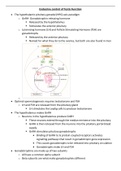
• The hypothalamic pituitary gonadal (HPG) axis paradigm
o GnRH- Gonadotrophin releasing hormone
▪ Released by the hypothalamus
▪ Stimulates the anterior pituitary
o Luteinising hormone (LH) and Follicle Stimulating Hormone (FSH) are
gonadotrophs
▪ Released by the anterior pituitary
▪ Named for what they do to the ovaries, but both are also found in men
o
• Optimal spermatogenesis requires testosterone and FSH
o LH and FSH are released from the pituitary gland
▪ LH stimulates the Leydig cells to produce testosterone
• The hypothalamus makes GnRH
o Neurons in the hypothalamus produce GnRH
▪ These neurons extend through the median eminence into the pituitary
▪ GnRH is then released from the neurons into the pituitary portal blood
supply
▪ GnRH stimulates pituitary gonadotrophs
• Binding of GnRH to G protein coupled receptors activates
signalling pathways that result in gonadotropin gene expression
• This causes gonadotrophs to be released into pituitary circulation
• Gonadotrophs make LH and FSH
• Gonadotrophins are made up of two subunits
o All have a common alpha subunit
o Beta subunits are what make gonadotrophins different
, ▪ LH and HCG have similar beta subunits so both can bind to the same
receptors
▪
• LH receptor (LHCGR) is expressed in Leydig cells
o LHCGR- Luteinising hormone/ chorionic gonadotrophin receptor
o Specifically found in Leydig cells
o LH signalling stimulates steroidogenesis
▪ Steroidogenesis occurs without LH, but at much lower levels
▪ LHCGR signalling induces phosphorylation of StAR and transcription of
steroidogenic enzymes (P450scc)
• StAR upregulates the action and transcription of steroidogenic
enzymes
• This causes testosterone production
o Testosterone levels are 100x higher in the testis than in the
blood
•
• Effects of inactivating LH-beta and LHCGR mutations
o LHCGR-/- receptor knockout- causes human males to have female external
genitalia
▪ Undescended testis form, low testosterone levels and high LH levels
• The hypothalamic pituitary gonadal (HPG) axis paradigm
o GnRH- Gonadotrophin releasing hormone
▪ Released by the hypothalamus
▪ Stimulates the anterior pituitary
o Luteinising hormone (LH) and Follicle Stimulating Hormone (FSH) are
gonadotrophs
▪ Released by the anterior pituitary
▪ Named for what they do to the ovaries, but both are also found in men
o
• Optimal spermatogenesis requires testosterone and FSH
o LH and FSH are released from the pituitary gland
▪ LH stimulates the Leydig cells to produce testosterone
• The hypothalamus makes GnRH
o Neurons in the hypothalamus produce GnRH
▪ These neurons extend through the median eminence into the pituitary
▪ GnRH is then released from the neurons into the pituitary portal blood
supply
▪ GnRH stimulates pituitary gonadotrophs
• Binding of GnRH to G protein coupled receptors activates
signalling pathways that result in gonadotropin gene expression
• This causes gonadotrophs to be released into pituitary circulation
• Gonadotrophs make LH and FSH
• Gonadotrophins are made up of two subunits
o All have a common alpha subunit
o Beta subunits are what make gonadotrophins different
, ▪ LH and HCG have similar beta subunits so both can bind to the same
receptors
▪
• LH receptor (LHCGR) is expressed in Leydig cells
o LHCGR- Luteinising hormone/ chorionic gonadotrophin receptor
o Specifically found in Leydig cells
o LH signalling stimulates steroidogenesis
▪ Steroidogenesis occurs without LH, but at much lower levels
▪ LHCGR signalling induces phosphorylation of StAR and transcription of
steroidogenic enzymes (P450scc)
• StAR upregulates the action and transcription of steroidogenic
enzymes
• This causes testosterone production
o Testosterone levels are 100x higher in the testis than in the
blood
•
• Effects of inactivating LH-beta and LHCGR mutations
o LHCGR-/- receptor knockout- causes human males to have female external
genitalia
▪ Undescended testis form, low testosterone levels and high LH levels