Nurs 6501 pathophysiology midterm exam with verified solutions available
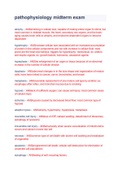
atrophy - ANSshrinking in cellular size; capable of making entire organ to shrink, but most common in skeletal muscle, the heart, secondary sex organs, and the brain; aging causes brain cells to atrophy, and endocrine dependent organs to become dependent hypertrophy - ANSincrease cellular size associated with an increased accumulation of protein in the cellular components and not with increase in cellular fluid; most prone are the heart and kidneys; triggers for hypertrophy- mechanical, ex. stretch, and trophic signals, ex. growth factors, hormones, vasoactive agents hyperplasia - ANSthe enlargement of an organ or tissue because of an abnormal increase in the number of cellular division dysplasia - ANSabnormal changes in in the size shape and organization of mature cells; have been linked to cancer; cervix, bronchioles, and breast metaplasia - ANSreversible replacement of one mature cell type by another; ex. esophagus after reflux, and bronchial mucosa due to smoking hypoxia - ANSlack of sufficient oxygen; can cause cell injury; most common cause of cellular injury ischemia - ANShypoxia caused by decreased blood flow; most common type of hypoxia adaption types - ANSatrophy, hypertrophy, hyperplasia, metaplasia reversible cell injury - ANSloss of ATP, cellular swelling, detachment of ribosomes, autophagy of lysosome irreversible cell injury - ANSstructurally when severe vacuolization of mitochondria occurs and calcium moves into cell necrosis - ANScommon type of cell death with severe cell swelling and breakdown of organelles apoptosis - ANSprogrammed cell death; cellular self destruction for elimination of unwanted cell populations autophagy - ANSeating of self; recycling factory
Written for
- Institution
- Nurs 6501
- Course
- Nurs 6501
Document information
- Uploaded on
- April 24, 2023
- Number of pages
- 11
- Written in
- 2022/2023
- Type
- Exam (elaborations)
- Contains
- Questions & answers
Subjects
- nurs 6501
-
nurs 6501 pathophysiology midterm exam with verified solutions available
-
atrophy ansshrinking in cellular size capable of making entire organ to shrink
-
but most common in skeletal muscl

Also available in package deal