CWEL License Exam Confirmed A+
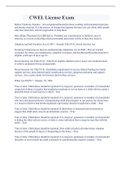
CWEL License Exam Define Vicarious Trauma: - An occupational hazard for those working with traumatized persons and trauma material. It is the process of change that happens because you care about other people who have been hurt, and are responsible to help them. Inter-Ethnic Placement Act (IEPAp24) - Prohibits any consideration is children's race or ethnicity as a factor in deciding which permemant placement will be in their best interest. Adoption and Safe Families Act of 1997 - Amends Title IV-E, Social Security Act. Fostering Connections to Success and Increasing Adoptions Act of 2008 - This act extends assistance for foster care maintenance, adoption assistance, and kinship guardianship program to eligible youth age 18 up to age 21. Social Security Act Tittle IV-E - Title IV-E eligible children receive foster care reimbursement to achieve permanent living arrangements. Social Security Act Title IV-B - Establishes requirement to receive federal funding for family support services, time-limited family reunification services, adoption promotion and support services. Also creates funds for General child welfare services. When was DCFS ? - January 1st, 1964 True or false: Child abuse should be reported if A caregiver, paramour or member of a household suspected of abuse or neglect that resulted in moderate to severe harm to a child who has made a plausible threat of such harm to a child? - True True or false: Child abuse should be reported if A caregiver, paramour or member of a household who has a documented history of perpetuating child abuse/neglect or any person for whom there is a reason to believe that he/she neglected a previously abused or neglected a child. - True True or false: Child abuse should be reported if child abuse is suspected and circumstances suggest that child safety may be an immediate concern. - True True or false: Child abuse should be reported if A caregiver, paramour or member of a household is hiding the child, refuses access, or there is some indication that a caregiver may flee with the child. - True True or false: Child abuse should be reported if the child is fearful of his/her home situation because of the people living in or frequenting in the home. - True True or false: Child abuse should be reported if A caregiver, paramour or member of a household describes or acts towards the child constantly in a predominantly negative manner. - True True or false: Child abuse should be reported if A caregiver, paramour or member of a household has dangerously unrealistic expectations for the child. - True True or false: Child abuse should be reported if A caregiver, paramour or member of a household expresses credible fear that he/she may cause moderate to severe harm to a child. - True True or false: Child abuse should be reported if A caregiver, paramour or member of a household has not, will not, or is unable to provide sufficient supervision to protect child from potentially moderate to severe harm. - True True or false: Child abuse should be reported if A caregiver, paramour or member of a household refuses to or is unable to meet a child medical or mental healthcare needs and such lack of care may result in moderate to severe harm to the child. - True True or false: Child abuse should be reported if A caregiver, paramour or member of a household refuses or is unable to meet the child's need for food, clothing, shelter, and/or appropriate environmental living conditions. - True True or false: Child abuse should be reported if A caregiver, paramour or member of a household whose alleged or observed substance abuse may seriously affect his/her ability to supervise, protect or care for the child. - True True or false: Child abuse should be reported if A caregiver, paramour or member of a household whose alleged or observed mental/physical illness or developmental disabilities may seriously impair or affect his/her ability to care for a child. - True True or false: Child abuse should be reported if the presence of violence, including domestic violence affects a caregivers ability to provide care for a child and/or protection of a child from moderate to sever harm. - True True or false: Child abuse should be reported if A caregiver, paramour or member of a household engaged in or credibly alleged to be engaged in human trafficking. - True Role of child welfare professional - To achieve those outcomes in a timely and effective manner. Who needs a Child Welfare License? - Child Protection Investigators and Supervisors, Child Welfare Specialists and Supervisor employed by DCFS. What does Social Work Practice require? - Child safety, permanency, and well-being for children, family, and parents. What are the outcomes of all Child Welfare practice? - Permanency, safety, and the well-being of 1st Principle of Social Work: - Engaging in a supportive relationship and treating them with positive regard. 2nd Principle of Social Work: - Building on clients' apparent strengths and motivations. 3rd Principle of Social Work: - Helping clients recognize their conditions,, decisions, and patterns of behaviors and supporting them in the change process. 4th Principle of Social Work: - Consistency, honesty, and trustworthiness in the delivery of Child Welfare services. 5th Principle of Social Work: - Treating clients as individuals and families as unique units with respect for individuals, groups, and cultural density. 6th Principle of Social Work: - Acceptance is demonstrated by treating parents as individuals and families with dignity and positive regard. 7th Principle of Social Work: - Respecting families' rights to be involved in planning and decision-making processes. 8th Principle of Social Work: - Maintaining a commitment to a high standard of personal and professional conduct. 9th Principle of Social Work: - Clear expectations of the knowledge, skills, and values necessary for child welfare professionals to capably serve children and families. 10th Principle of Social Work: - Training, supervision, and evaluation that enable and enhance the ability of staff to perform competently and in accordance with these principles and expectations. 11th Principle of Social Work: - Timely decisions, based on the above set of principles that establish conditions encouraging and affording a sense of permanency in children's lives while ensuring their safety, health, and well-being. 1st Core Principle of Child Welfare Practices: - Serve as an agent of change. 2nd Core Principle of Child Welfare Practices: - Form a helping relationship with the child and their family. 3rd Core Principle of Child Welfare Practices: - Conduct initial and ongoing assessment. 4th Core Principle of Child Welfare Practices: - Provide information about the impact of trauma on the child 5th Core Principle of Child Welfare Practices: - Advocate fore the child and family. 6th Core Principle of Child Welfare Practices: - Provide behavioral support. 7th Core Principle of Child Welfare Practices: - Linkage to appropriate services. 8th Core Principle of Child Welfare Practices: - Coordinate all child and family services. 9th Core Principle of Child Welfare Practices: - Demonstrate cultural competence. Define Family-Centered Practice: - A way of working with families across systems. Define Family Connectedness: - The focus of identifying and promoting family connections from the first contact child welfare has through the whole life of a case. True or False: Visits can minimize the impact of trauma and promote lasting connections? - True True or Fasle: Maintaining family connections and promoting family involvement can lead to positive outcomes for all family members and build upon protective factors and resiliencies. - True Child and Family Team Meeting should be the _______________________________ - Center of our casework activities. Obtaining more information about the family's history and potential members for the Child and Family Team is called: - Engagement Family members being provided with all of the information disclosed to them in order to make their own decisions is called: - Full Disclosure Parents selecting who they want to be a part of their Child and Family Team is called: - Open Participation Involvement of the family in all aspects of case planning is called: - Collaboration The focus of all Child and Family Team Meetings is called: - Planning for Permanency. Define Trauma - A serious or critical bodily injury, wound, or shock. Nationally ____ out of _____ children report witnessing violence. - 4 out of 10 The Psychological First Aid approach assists with: - - Reducing initial distress - Fostering short term adaptive functioning - Fostering long-term adaptive functioning What are the different types of Child Trauma? - - Sexual Abuse - Physical Abuse - Psychological Maltreatment - Neglect - Community Violence - School Violence - Domestic Violence - Traumatic Grief - Natural or Man-Made Disaster - Terrorism - Medical Trauma - Refugee Trauma Define ACES: - Adverse Childhood Experiences Attachment (Birth-2 1/2 years): - Cannot trust or expect basic needs will be met; listless; unresponsive; irritable; labile, inability to calm, agitation, inconsolable, spacing out, looking away. Regulation of Emotions (Birth-2 1/2 years): - Listless, unresponsive, irritable, difficult to console. Cognition and Dissociation (Birth-2 1/2 years) : - Delays in speech and motor development; does not respond to interaction with adults. Self-Concept (Birth-2 1/2 years): - Awareness of self, development of a sense of worth and goal directed behavior. Physical & Health (Birth-2 1/2 years): - Failure to Thrive, developmental delays, hypersensitivity to physical contact, suppressed immune system. What are the three types of stress: - - Positive Stress - Tolerable Stress - Toxic Stress Define Positive Stress: - Moderate, short-lived stress responses. Define Tolerable Stress: - More intense stress responses that allow enough time to recover, or occur in a relatively safe environment with the presence of supportive adults. Define Toxic Stress: - Strong, frequent or prolonged activation of the body's stress management system, without access to supportive adults. First step to reduce impact of Trauma: - Identify trauma when it occurs and prevent it from reoccurring. Second step to reduce impact of Trauma: - Provide early intervention to trauma victims. Third step to reduce impact of Trauma: - Provide the child with a healthy and responsive caregiver as soon as possible.
Written for
- Institution
- CWEL License
- Course
- CWEL License
Document information
- Uploaded on
- April 17, 2023
- Number of pages
- 28
- Written in
- 2022/2023
- Type
- Exam (elaborations)
- Contains
- Questions & answers
Subjects
-
cwel license exam confirmed a

Also available in package deal