Composition of Blood
P1. Explain the structure and function of the main components of blood
Structure & Function of Erythrocytes
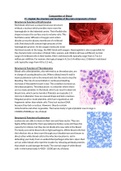
Red blood cells have a unique biconcave structure
without a nucleus which provides more room for
haemoglobin in the indented centre. Their flexible disc
shape increases the surface area to volume ratio. This
facilitates easier diffusion of oxygen and carbon
dioxide across the plasma membrane of red blood
cells. Red blood cells contain high amounts of the
haemoglobin protein. As the oxygen molecules enter
the blood vessels in the lungs, the RBC binds with oxygen. Haemoglobin is also responsible for
the characteristic red colour of blood. Men, women, and children all have a different normal
range of red blood cells in their bodies. Men's red blood cells typically range from 4.7 to 6.1
million per millilitre. For women, the typical range is 4.2 to 5.4 million mcL. Children's red blood
cells typically range from 4.0 to 5.5 mcL.
Structure & Function of Thrombocytes
Blood cells called platelets, also referred to as thrombocytes, are
in charge of causing blood to clot. When a blood vessel’s wall is
injured, platelets rush to the wound and clot the area to stop the
bleeding. The risk of uncontrolled or continuous bleeding
increases if the platelet count is low. This condition is known as
thrombocytopenia. Thrombocytosis is a disorder where there
are too many platelets in the blood, which can result in aberrant
blood clots, which can be harmful. Platelets are typically 2-3
microns in diameter, have an unusual shape and lack a nucleus.
Megakaryocytes create platelets, which are organised as cell
fragments rather than whole cells. They lack nuclear DNA
because they lack a nucleus. However, they do contain
mitochondria and other organelles. The human body's typical platelet count range is
150000-450000 per mL of blood.
Structure & Function of Leukocytes
Leukocytes are able to move on their own and have nuclei. They are
highly differentiated for their specialised activities; some still have the
capacity for mitosis, but they do not divide into new cells in the blood.
The body uses white blood cells to fight pathogens. White blood cells find
the infection site as they travel through your bloodstream and tissues to
direct other white blood cells to the infection location to aid in
defending your body from an unidentified pathogen infection. Upon their
arrival, white blood cells repel the invader by releasing antibody proteins
that attach to and damage the body. The normal range of white blood
cells in the human body is 4500- 11000 per mL of blood.
, Structure & Function of Basophils
Basophils are one of the various types of white blood cells that are present in the human body.
Basophils make up fewer than 1% of the entirety of the white
blood cells. They’re involved in the immune system to defend the
body from harmful microorganisms in the environment and are
produced in the bone marrow. Mononuclear cells known as
basophils range from varying sizes between 12 and 15μm.
Basophils are usually round however, their shape changes once
they enter body tissues. The nucleus is typically shaped in a
bi-lobed or S-shaped structure. A basic dye such as hematoxylin
is used to give the nucleus a purplish, black appearance. As
basophils have a short lifespan of 1-2 days, they are difficult to
research and so they are disposed of.
Basophils have the ability to degranulate, or release the granules that are stored in their
cytoplasm. This is usually a response to foreign invaders or allergic reactions. The chemicals
that are essential for mediating an immune reaction are heparin, histamine, serotonin and
antibodies. Each of these substances have a specific purpose. For example, heparin is a
naturally occurring blood thinner that helps to keep clots from forming. Basophils are also
responsible for identifying and eliminating cancer cells during their immune monitoring
process as they’re the only white blood cells capable of doing so.
Structure & Function of Neutrophils
Neutrophils have a structure of a multi lobed-nucleus. Much like
basophils, neutrophils also range from 12-15μm. It is composed of 3-5
lobes joined together by slender strands of genetic material. This
makes it seem like neutrophils have more than one nucleus which is
not the case however, this makes them easier to identify under a
microscope. It is still unknown as to why neutrophils have a unique
nuclear shape. The cytoplasm of neutrophils contains 3 types of
granules that each have a specific purpose. Gelatinase granules assist
the neutrophils with exiting the bloodstream and move through the
tissues to arrive at the site of infection. Azurophilic and specific
granules are composed of antimicrobial proteins that assist the neutrophils to eliminate
microbes. The primary function of the neutrophils is to kill as many microbes as possible. They
make up 60% of the blood. Neutrophils are the first cells to migrate to a site of infection and
are also prepared to die a few hours after they are produced. However, neutrophils are
constantly being produced by the bone marrow.
P1. Explain the structure and function of the main components of blood
Structure & Function of Erythrocytes
Red blood cells have a unique biconcave structure
without a nucleus which provides more room for
haemoglobin in the indented centre. Their flexible disc
shape increases the surface area to volume ratio. This
facilitates easier diffusion of oxygen and carbon
dioxide across the plasma membrane of red blood
cells. Red blood cells contain high amounts of the
haemoglobin protein. As the oxygen molecules enter
the blood vessels in the lungs, the RBC binds with oxygen. Haemoglobin is also responsible for
the characteristic red colour of blood. Men, women, and children all have a different normal
range of red blood cells in their bodies. Men's red blood cells typically range from 4.7 to 6.1
million per millilitre. For women, the typical range is 4.2 to 5.4 million mcL. Children's red blood
cells typically range from 4.0 to 5.5 mcL.
Structure & Function of Thrombocytes
Blood cells called platelets, also referred to as thrombocytes, are
in charge of causing blood to clot. When a blood vessel’s wall is
injured, platelets rush to the wound and clot the area to stop the
bleeding. The risk of uncontrolled or continuous bleeding
increases if the platelet count is low. This condition is known as
thrombocytopenia. Thrombocytosis is a disorder where there
are too many platelets in the blood, which can result in aberrant
blood clots, which can be harmful. Platelets are typically 2-3
microns in diameter, have an unusual shape and lack a nucleus.
Megakaryocytes create platelets, which are organised as cell
fragments rather than whole cells. They lack nuclear DNA
because they lack a nucleus. However, they do contain
mitochondria and other organelles. The human body's typical platelet count range is
150000-450000 per mL of blood.
Structure & Function of Leukocytes
Leukocytes are able to move on their own and have nuclei. They are
highly differentiated for their specialised activities; some still have the
capacity for mitosis, but they do not divide into new cells in the blood.
The body uses white blood cells to fight pathogens. White blood cells find
the infection site as they travel through your bloodstream and tissues to
direct other white blood cells to the infection location to aid in
defending your body from an unidentified pathogen infection. Upon their
arrival, white blood cells repel the invader by releasing antibody proteins
that attach to and damage the body. The normal range of white blood
cells in the human body is 4500- 11000 per mL of blood.
, Structure & Function of Basophils
Basophils are one of the various types of white blood cells that are present in the human body.
Basophils make up fewer than 1% of the entirety of the white
blood cells. They’re involved in the immune system to defend the
body from harmful microorganisms in the environment and are
produced in the bone marrow. Mononuclear cells known as
basophils range from varying sizes between 12 and 15μm.
Basophils are usually round however, their shape changes once
they enter body tissues. The nucleus is typically shaped in a
bi-lobed or S-shaped structure. A basic dye such as hematoxylin
is used to give the nucleus a purplish, black appearance. As
basophils have a short lifespan of 1-2 days, they are difficult to
research and so they are disposed of.
Basophils have the ability to degranulate, or release the granules that are stored in their
cytoplasm. This is usually a response to foreign invaders or allergic reactions. The chemicals
that are essential for mediating an immune reaction are heparin, histamine, serotonin and
antibodies. Each of these substances have a specific purpose. For example, heparin is a
naturally occurring blood thinner that helps to keep clots from forming. Basophils are also
responsible for identifying and eliminating cancer cells during their immune monitoring
process as they’re the only white blood cells capable of doing so.
Structure & Function of Neutrophils
Neutrophils have a structure of a multi lobed-nucleus. Much like
basophils, neutrophils also range from 12-15μm. It is composed of 3-5
lobes joined together by slender strands of genetic material. This
makes it seem like neutrophils have more than one nucleus which is
not the case however, this makes them easier to identify under a
microscope. It is still unknown as to why neutrophils have a unique
nuclear shape. The cytoplasm of neutrophils contains 3 types of
granules that each have a specific purpose. Gelatinase granules assist
the neutrophils with exiting the bloodstream and move through the
tissues to arrive at the site of infection. Azurophilic and specific
granules are composed of antimicrobial proteins that assist the neutrophils to eliminate
microbes. The primary function of the neutrophils is to kill as many microbes as possible. They
make up 60% of the blood. Neutrophils are the first cells to migrate to a site of infection and
are also prepared to die a few hours after they are produced. However, neutrophils are
constantly being produced by the bone marrow.